Omega Seamaster 120M - versions, wear and buying advice
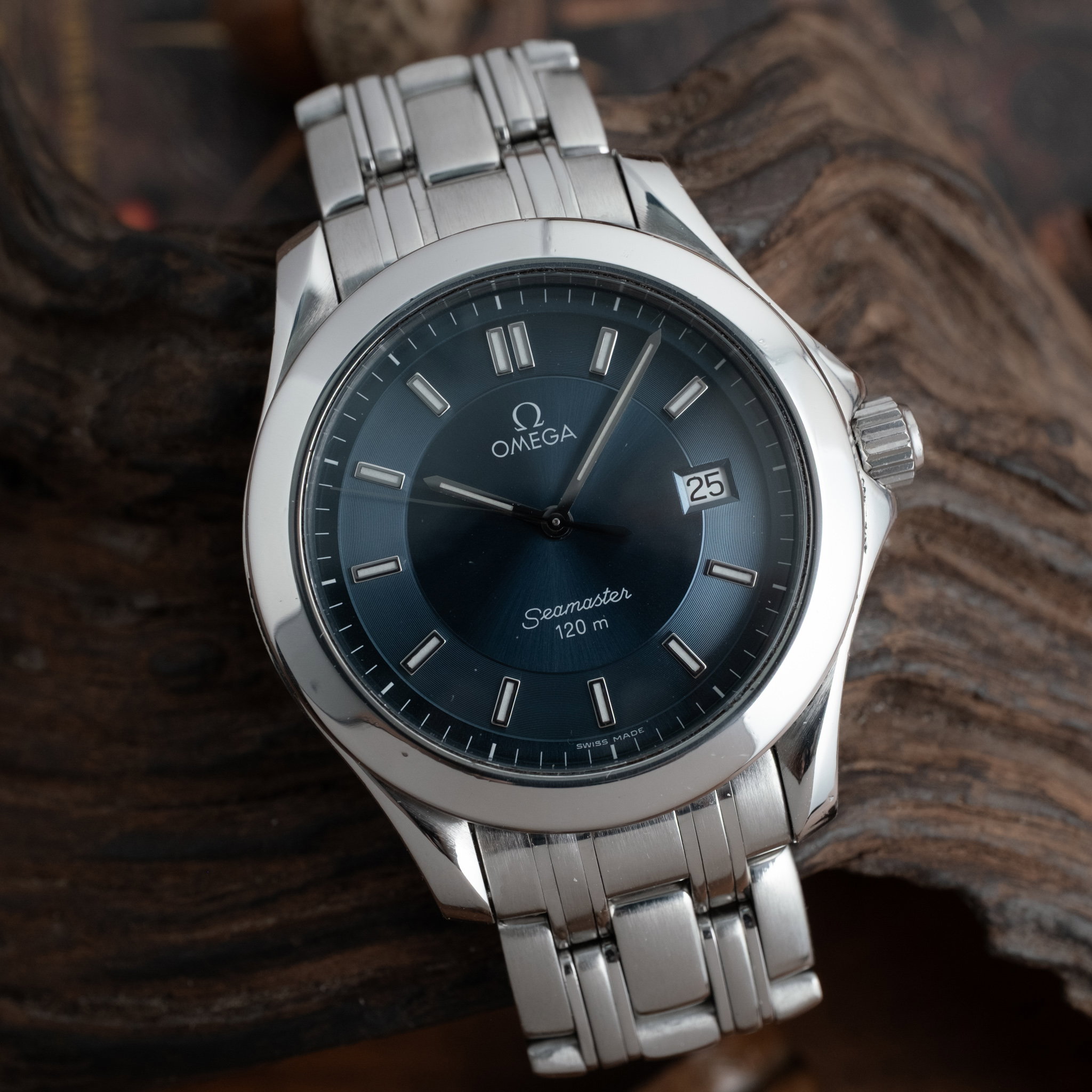
The vintage Omega Seamaster 120M to buy is the 38 mm steel quartz version with an untouched wave dial, crisp case geometry and a tight signed bracelet.
Live now
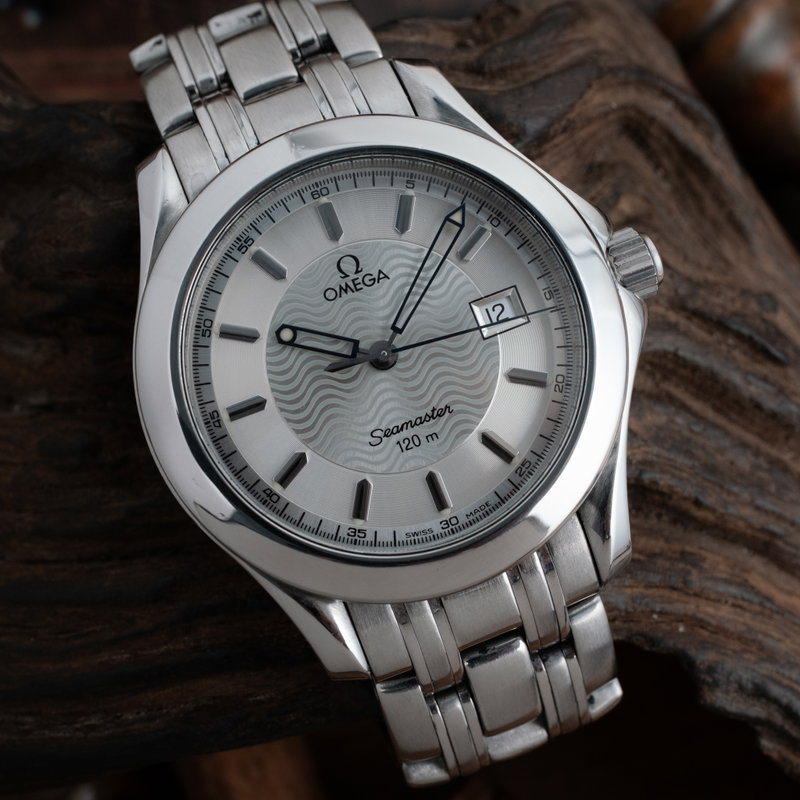
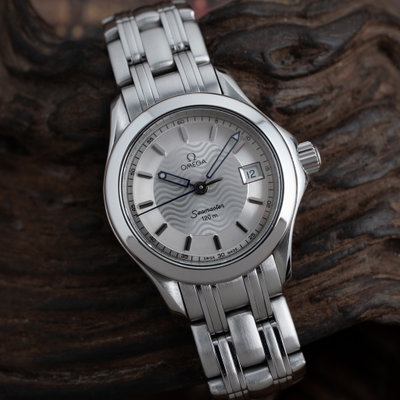
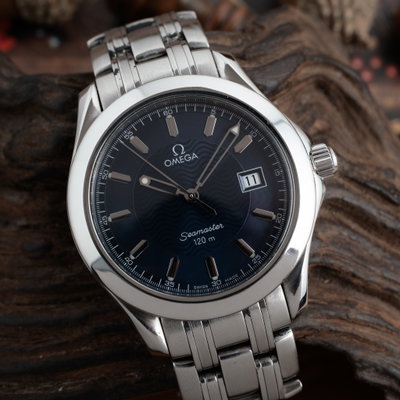
The 38 mm Seamaster 120m is the version most buyers mean, while the 28 mm execution turns the same idea into a much smaller watch rather than a reduced mechanical equivalent.
On the 38 mm watch, choose between blue and silver wave dials, then put dial condition, case geometry and bracelet integrity ahead of cosmetic shine. The caliber matters for correct configuration, but a refinished dial or heavily softened case costs more than the movement distinction adds.
Known production year
1998-1998
Case sizes handled
28 mm and 38 mm, excluding crown
Case material
Stainless steel
38 mm movement
Quartz, Omega caliber 1538
| 28 mm movement | Quartz, Omega caliber 1424 |
| Dial configurations | Blue or silver wave pattern with applied indices |
| Hand style | Skeletonized hands with luminous tips |
| Bracelet | Signed multi-link stainless steel bracelet |
What it was built for
Its wave dial and luminous furniture carry the aquatic identity, but the smooth case profile and multi-link bracelet make it less bulky than a professional dive-watch format. The 38 mm case therefore works with casual clothing and a shirt cuff without losing the legibility of its applied indices.
The date sits at 3 o'clock on the blue 38 mm execution, while skeletonized hands keep more of the textured dial visible. Silver dials use the same wave pattern with either metal-toned or blue hands among the watches handled. Those combinations should be judged as complete configurations, because swapping hands can create a period-correct watch that is still franken.
On the wrist
At 38 mm excluding the crown, the steel Seamaster 120M wears as the full-size choice and gives the wave pattern room to register without turning the dial into decoration. The linked steel bracelet keeps the watch visually integrated, although stretch and poor end-link fit can make an otherwise clean example feel tired.
Its smaller dial compresses the same silver wave texture, applied indices and luminous indications into a distinctly different proportion, while caliber 1424 replaces the caliber 1538 found in the 38 mm watches handled. Choose it because that scale suits your wrist, not because the larger version has surface wear.
Where to start
Start with the 38 mm steel watch with caliber 1538, an untouched blue or silver wave dial and the signed multi-link bracelet. Between a glossy polished example and one retaining crisp lug geometry at the same level, take the sharper case. The dial carries the greater premium, however: a redial costs more than light case marks, and mismatched lume can indicate relume or substituted hands.
Heavy polishing leaves soft lugs, bracelet stretch changes how the watch sits, and damaged wave texture cannot be corrected without replacing or refinishing the dial. A service dial is a genuine factory replacement, not a redial, but it still needs to be disclosed because it changes what survives from the watch as sold. The service history is unknown unless paperwork establishes it.
The 28 mm caliber 1424 execution is the better route only when its scale is the point. For the broadest daily use, the 38 mm caliber 1538 watch argues more convincingly, especially with clean dial printing, intact luminous plots and a bracelet whose clasp and end links fit correctly. Buy the dial first, then the case, then bracelet tightness.
Dating this watch
| Serial range / caliber | Year | Note |
|---|---|---|
| 1,000,000 | 1902 | approximate, ±1-3 years |
| 2,000,000 | 1908 | approximate, ±1-3 years |
| 3,000,000 | 1912 | approximate, ±1-3 years |
| 4,000,000 | 1916 | approximate, ±1-3 years |
| 5,000,000 | 1923 | approximate, ±1-3 years |
| 6,000,000 | 1925 | approximate, ±1-3 years |
| 7,000,000 | 1929 | approximate, ±1-3 years |
| 8,000,000 | 1935 | approximate, ±1-3 years |
| 9,000,000 | 1939 | approximate, ±1-3 years |
| 10,000,000 | 1944 | approximate, ±1-3 years |
| 11,000,000 | 1947 | approximate, ±1-3 years |
| 12,000,000 | 1950 | approximate, ±1-3 years |
| 13,000,000 | 1952 | approximate, ±1-3 years |
| 14,000,000 | 1954 | approximate, ±1-3 years |
| 15,000,000 | 1956 | approximate, ±1-3 years |
| 16,000,000 | 1958 | approximate, ±1-3 years |
| 17,000,000 | 1960 | approximate, ±1-3 years |
| 18,000,000 | 1961 | approximate, ±1-3 years |
| 19,000,000 | 1962 | approximate, ±1-3 years |
| 20,000,000 | 1963 | approximate, ±1-3 years |
| 21,000,000 | 1964 | approximate, ±1-3 years |
| 22,000,000 | 1965 | approximate, ±1-3 years |
| 24,000,000 | 1966 | approximate, ±1-3 years |
| 25,000,000 | 1967 | approximate, ±1-3 years |
| 26,000,000 | 1968 | approximate, ±1-3 years |
| 28,000,000 | 1969 | approximate, ±1-3 years |
| 31,000,000 | 1970 | approximate, ±1-3 years |
| 32,000,000 | 1971 | approximate, ±1-3 years |
| 33,000,000 | 1972 | approximate, ±1-3 years |
| 35,000,000 | 1973 | approximate, ±1-3 years |
| 37,000,000 | 1974 | approximate, ±1-3 years |
| 39,000,000 | 1975 | approximate, ±1-3 years |
| 40,000,000 | 1976 | approximate, ±1-3 years |
| 41,000,000 | 1977 | approximate, ±1-3 years |
| 42,000,000 | 1978 | approximate, ±1-3 years |
| 43,000,000 | 1979 | approximate, ±1-3 years |
| 44,000,000 | 1980 | approximate, ±1-3 years |
| 45,000,000 | 1982 | approximate, ±1-3 years |
| 46,000,000 | 1984 | approximate, ±1-3 years |
| 47,000,000 | 1985 | approximate, ±1-3 years |
| 48,000,000 | 1986 | approximate, ±1-3 years |
| 49,000,000 | 1988 | approximate, ±1-3 years |
| 50,000,000 | 1990 | approximate, ±1-3 years |
| 53,000,000 | 1993 | approximate, ±1-3 years |
| 54,000,000 | 1995 | approximate, ±1-3 years |
| 56,000,000 | 1996 | approximate, ±1-3 years |
| 58,000,000 | 1998 | approximate, ±1-3 years |
| 60,000,000 | 2000 | approximate, ±1-3 years |
Dating data comes from our decoder tables; treat years as approximate.
What to check before you buy
- Wave dial and printing: The blue or silver dial should retain a consistent repeating wave texture, applied indices and clean printed text. Flat texture, uneven lettering or disturbed minute markings can indicate a redial rather than honest ageing.
- Hands and luminous material: The 38 mm configurations handled use skeletonized hands with luminous tips and luminous dial plots. Compare their ageing and fit: mismatched colour can indicate relume or replacement, while blue hands are known on a silver-dial configuration.
- Movement and case size pairing: The 38 mm steel watches handled use quartz caliber 1538, while the 28 mm steel execution uses caliber 1424. A different pairing requires explanation because these sizes are not simply identical watches in scaled cases.
- Case geometry: The steel case should retain defined lug geometry and distinct brushed and polished surfaces. Rounded lugs or blurred transitions indicate polishing, which cannot be reversed and should reduce the premium paid for a clean dial.
- Bracelet fit and signing: Known 38 mm examples use a signed multi-link steel bracelet, with a gold-tone logo clasp insert on some watches. End links should meet the case cleanly, and excess lateral play should be treated as bracelet stretch rather than patina.
Recent Omega results
11 Omega watches auctioned
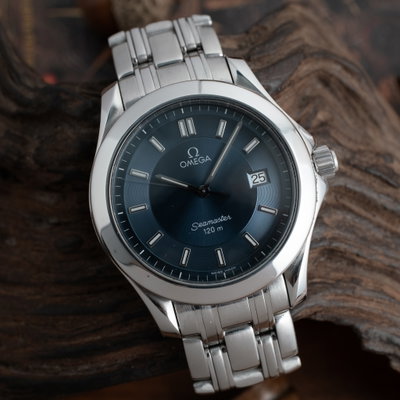
Omega · Seamaster 120M · 196 1501 · 1998
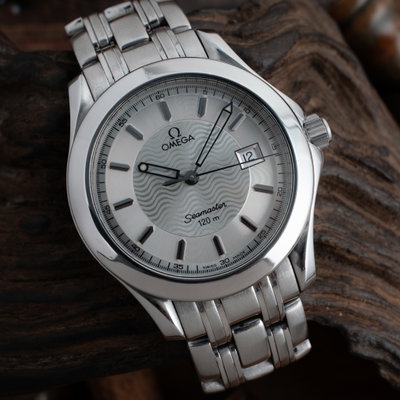
Omega · Seamaster 120m · 196 1501
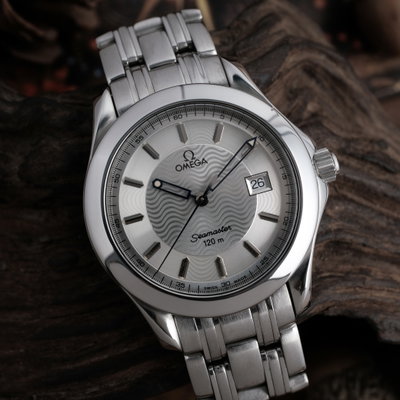
Omega · Seamaster 120M · 196 1501 / 396 1501
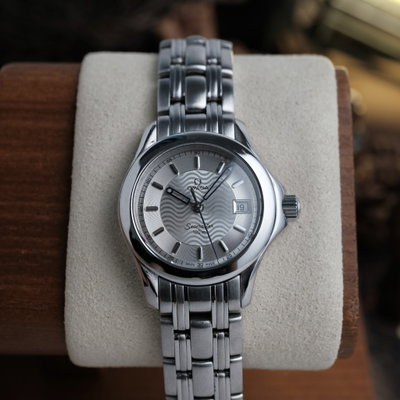
Omega · Seamaster 120M · 596 1502 · 1998
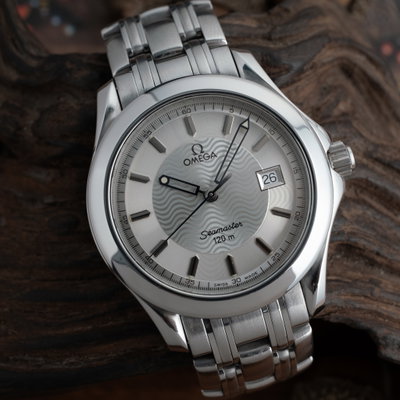
Omega · Seamaster 120M · 196 1501
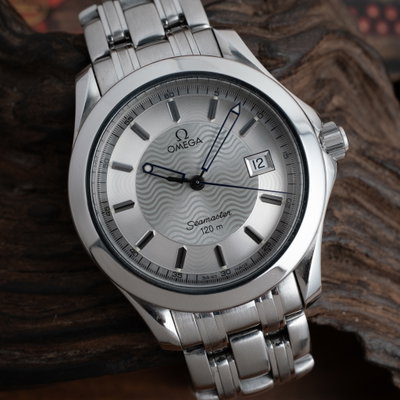
Omega · Seamaster 120M · 196 1501
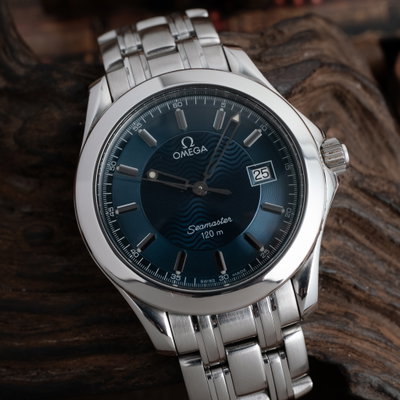
Omega · Seamaster 120M · 196 1501 · 1998
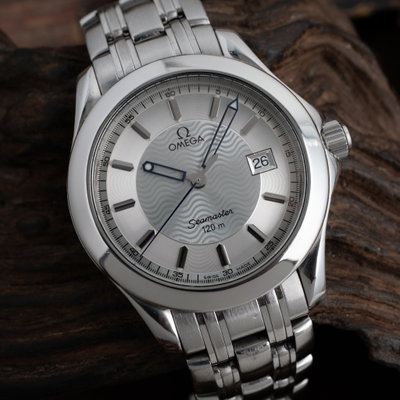
Omega · Seamaster 120m · 196 1501 · 1998
We auction more than 100 vintage watches a week.
Get first access: new Omega watch drops and alerts before auctions end.
More Omega references
Related pages
Frequently asked questions
Ready to hunt for your own?
More than 100 vintage watches go under the hammer every week.