Seiko Lord Matic 5606-7010 - What to Know Before Buying
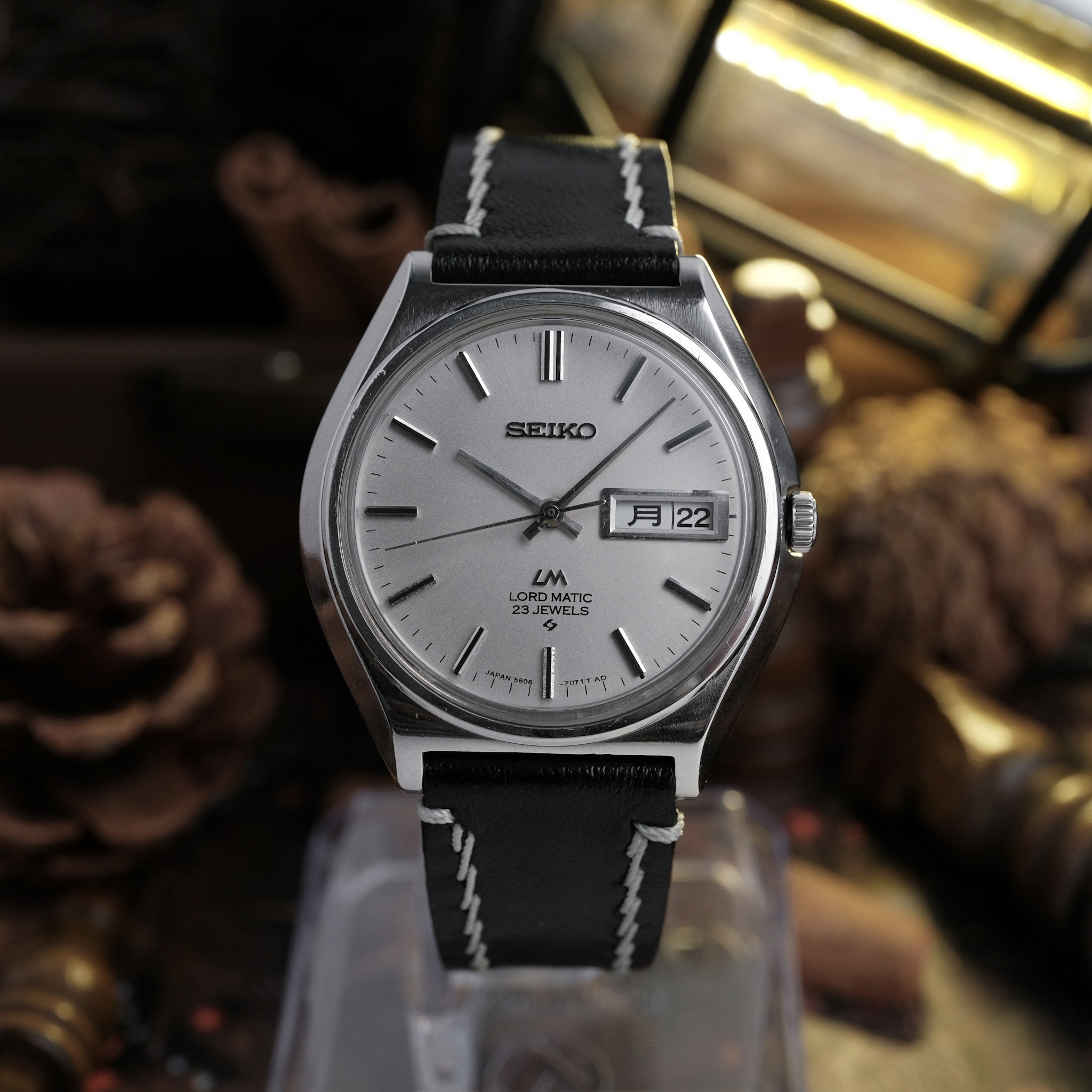
The Seiko Lord Matic 5606-7010 is a 1968-1972 automatic whose value depends chiefly on dial texture, case geometry and a correct caliber 5606.
We auction more than 100 vintage watches a week.
Get first access: new Seiko 5606-7010 drops and alerts before auctions end.
Browse 27 live Seiko auctionsThe Lord Matic 5606-7010 belongs to Seiko's late-1960s and early-1970s middle ground between the accessible Seiko 5 and the King Seiko and Grand Seiko families. Produced from at least 1968 through 1972, it pairs an automatic caliber 5606 with a stainless-steel case and a day-date display. This was a refined daily watch rather than a dress watch reduced to decoration.
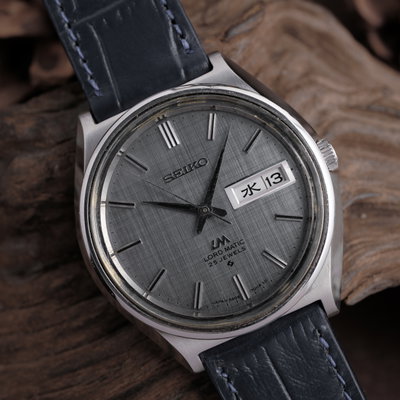
The version to want has a silver dial whose original surface remains legible - sunburst, vertical-brushed or linen-textured - and case lines that have not been rounded away. Examples measure 36 or 37 mm excluding the crown, but the buying decision rests less on that difference than on the dial and case. A flat redial or heavily polished case removes the qualities that distinguish this reference.
Reference
5606-7010
Model
Lord Matic
Known production years
1968-1972
Case material
Stainless steel
| Case width | 36 or 37 mm, excluding the crown |
| Movement | Automatic Seiko caliber 5606 |
| Jewel counts handled | 23 or 25 jewels |
| Display | Day-date |
| Dial variants handled | Silver sunburst, vertical-brushed silver and silver linen-textured |
| Hour markers | Applied faceted indices |
What it was built for
The 5606-7010 put the automatic caliber 5606, a day-date display and applied faceted indices into a stainless-steel Lord Matic intended for regular professional wear. Its place below King Seiko and Grand Seiko, and above Seiko 5, explains the balance: the watch is restrained enough for daily use, while the dial treatment and case geometry carry more visual work than ornament would.
Known 5606-7010 production runs from 1968 through 1972, placing the reference across the turn into the 1970s. Silver dials came with materially different surfaces, including sunburst, vertical brushing and linen texture. Those are not interchangeable descriptions - a linen dial scatters light in a fine grid, while the vertically brushed version reads in one direction.
Where the value sits
The dial carries the largest share of value. Between comparable 5606-7010 examples, an intact linen or vertically brushed surface deserves a premium over a refinished dial because a redial erases the reference's most visible distinction. Minor micro-oxidation beside the day-date aperture is less damaging than a complete refinish when the original texture and applied faceted indices remain intact.
Case geometry creates the next meaningful spread. Strong lines suit the angular dial furniture, while repeated polishing leaves soft or mushy lugs and removes definition that cannot be returned at service. Between a sharp 36 mm example with honest wear and a rounded 37 mm example with more shine, take the smaller watch. Jewel count alone should not decide it - handled examples contain both 23-jewel and 25-jewel caliber 5606 movements.
What goes wrong
A refinished dial is the costliest fault because it replaces the sunburst, vertical-brushed or linen surface with an approximation. Oxidation can also develop around the day-date aperture, and the hands may corrode even where the dial remains clean. Neither issue should be disguised as patina: attractive ageing is even, while local staining and visible hand oxidation are damage.
Over-polishing is the principal case risk on this stainless-steel reference, first softening the lines that give the 5606-7010 its shape. Replacement crowns and mixed components require caution because period-correct is not the same as original, and a franken watch may combine genuine Seiko parts that never shipped together. The service history is unknown unless paperwork accompanies the watch, so caliber 5606 condition must be judged by current operation rather than seller wording.
Dating this watch
| Serial range / caliber | Year | Note |
|---|---|---|
| 5606 | 1968-1976 | caliber production window |
Dating data comes from our decoder tables; treat years as approximate.
What to check before you buy
- Dial surface and printing: The 5606-7010 is established with silver sunburst, vertical-brushed and linen-textured surfaces. The claimed texture should remain coherent across the dial; lost texture or flat replacement printing can indicate a redial.
- Hands and applied indices: Applied faceted indices belong to the established configuration. Oxidised hands can remain original, so damage is not proof of replacement; mismatched ageing between hands, indices and dial instead calls for closer comparison.
- Case geometry: The stainless-steel case should retain defined lines rather than soft or mushy lugs. Polishing does not make the watch fake, but rounded geometry lowers value and can obscure the shape expected of the 5606-7010.
- Crown and case construction: A 1972 example establishes monocoque construction, but the evidence supplied does not establish one crown profile for every year. A replacement crown should be disclosed, and period-correct must not be presented as original.
- Movement identity: The watch should contain an automatic Seiko caliber 5606. Both 23-jewel and 25-jewel versions occur in handled examples, so rejecting either count in isolation risks misidentifying a correct movement.
- Franken and married combinations: A genuine Seiko dial, case and caliber can still form a franken or married watch if the parts did not ship together. Confirm the complete 5606-7010 configuration rather than treating one correct component as proof of the whole.
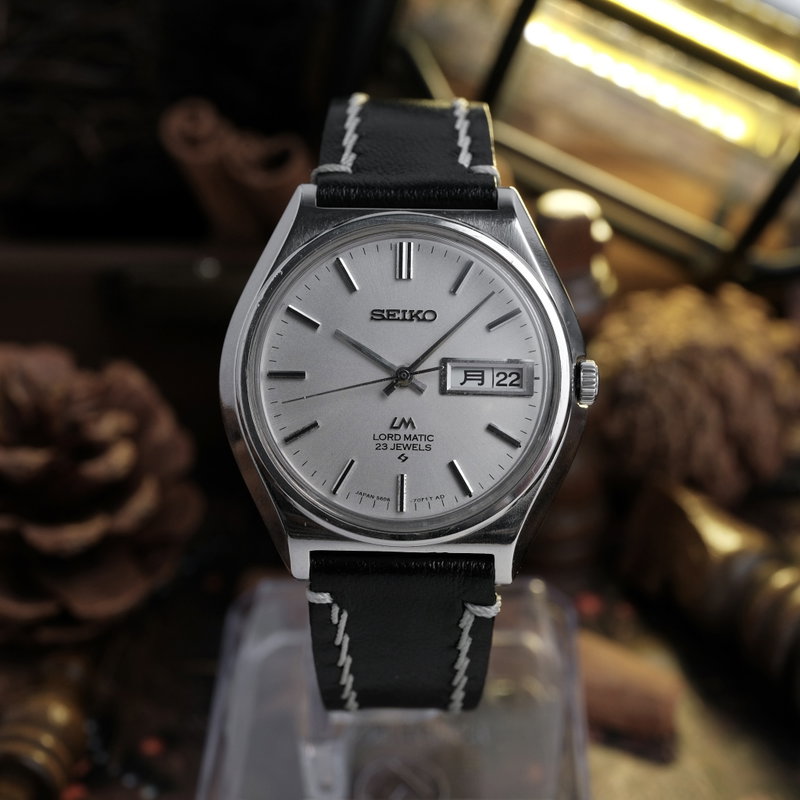
Other 5606-7010 examples we auctioned
13 Seiko 5606-7010 auctioned
More Seiko references
Related pages
Frequently asked questions
Ready to hunt for your own?
More than 100 vintage watches go under the hammer every week.