Vintage King Seiko: Versions, Value and Buying Advice
A vintage King Seiko is best bought for its dial, sharp case geometry and correct movement, with honest steel or gold-filled examples ahead of worn plating.
Live now
King Seiko began as Daini Seikosha's answer to Suwa's Grand Seiko, and the early watches make that rivalry tangible. The formula was a precise manual-wind dress watch with a silver dial, applied faceted indices and sharply formed lugs rather than added complication.
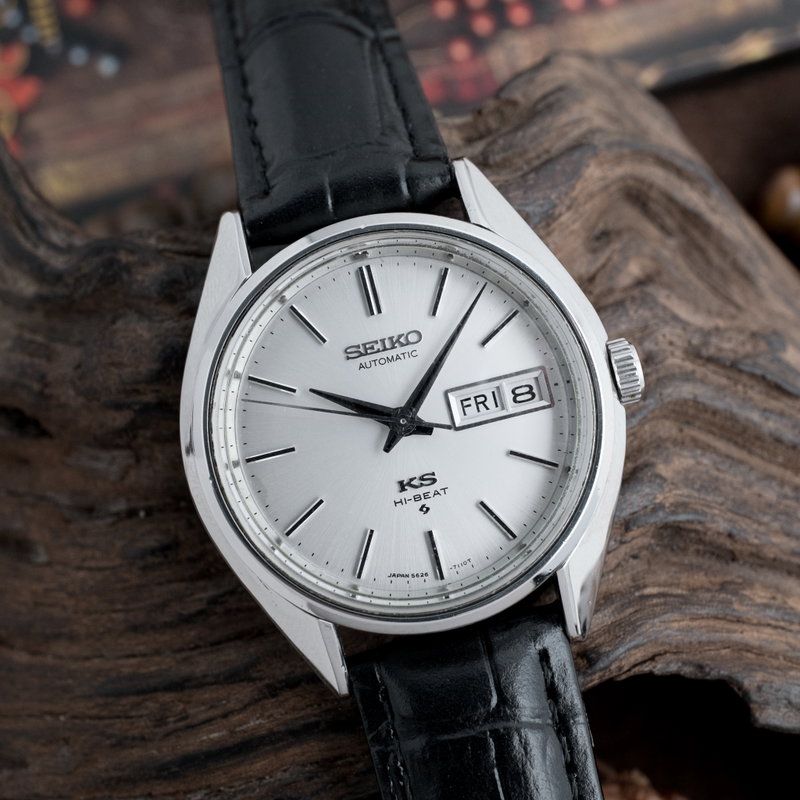
The model changed substantially between 1961 and 1978. Early examples such as J14102E are compact, gold-filled and manual-winding, while later watches such as 5626-7000 use an automatic caliber and more architectural cases. A used King Seiko therefore needs to be judged as a particular generation, not merely by the name on its dial.
Known production-year range
1961 to 1978
Handled case sizes
34 mm, 35 mm and 36 mm, excluding the crown
Winding types
Manual-wind and automatic
Known calibers
4502, 5621, 5625 and 5626
| Case materials handled | 14K gold-filled, gold-tone stainless steel and gold-plated stainless steel |
| Dial configurations handled | Silver sunburst or silver with fine vertical graining, with applied faceted indices |
The model landscape
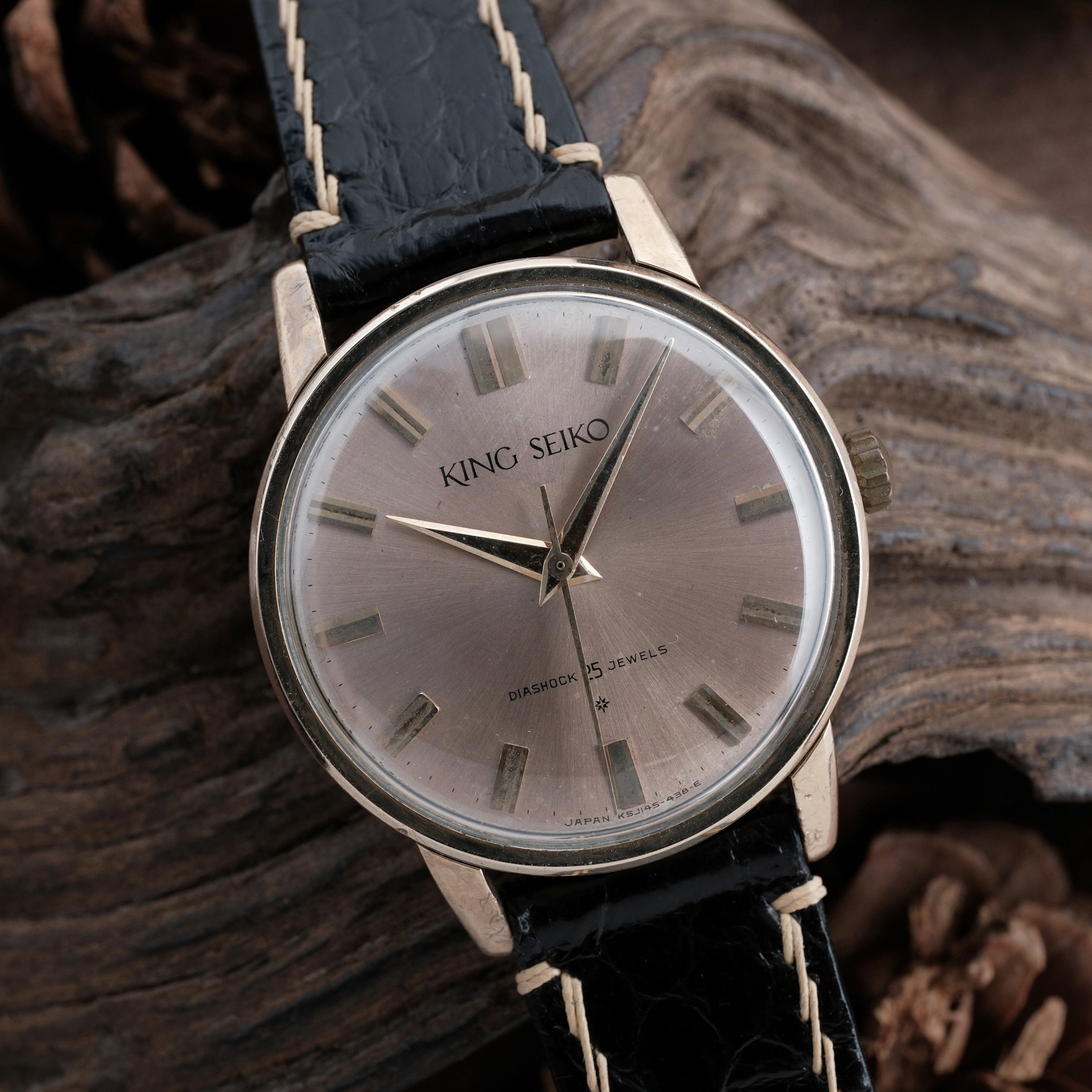
The early King Seiko is the purer dress watch. J14102E measures 34 mm, while J14102 reaches 35 mm, so both wear compactly and let the faceted indices and double marker at twelve dominate the view. Their 14K gold-filled cases are preferable to later plating when the outer surface remains intact, because plating worn through at the lugs cannot be returned by routine servicing.
By 1971, 5626-7000 paired a 36 mm case with automatic caliber 5626. That extra millimetre and the sharper case architecture give the later watch more wrist presence, but its gold plating introduces another condition variable. Against a spotted automatic example, take the cleaner early dial unless automatic winding is essential.
Where the value sits
The dial carries the widest value spread. Silver sunburst and vertically grained dials can develop spotting, including concentrated marks in one quadrant or across one side; that is damage, not patina. A redial costs more in value than modest case wear, while a genuine service dial is a different category and must not be described as original to the watch.
Case material sets the next division. A gold-filled J14102 with an intact surface deserves a premium over a plated case with exposed base metal, while crisp lug facets matter more than superficial shine. Of the King Seiko watches we have handled, softened lugs and damaged dials create more disagreement than ordinary wear.
What goes wrong
Lead with the worst fault: dial spotting is common enough to demand a clear description of its location and extent. Gold plating can wear through at the lug tips, repeated polishing can soften the faceted case, and the shield medallion on early casebacks can be damaged or absent. None is corrected by a movement service.
Movement swaps create a separate risk. Caliber 5626 belongs to later automatic watches, while the early gold-filled examples handled here use 25-jewel manual-wind movements. A watch assembled from period-correct parts that never shipped together is franken; a case and movement joined from different watches are married. Without service documentation, the service history is unknown.
Dating this watch
| Serial range / caliber | Year | Note |
|---|---|---|
| 4502 | 1968-1973 | caliber production window |
| 5621 | 1968-1975 | caliber production window |
| 5625 | 1968-1975 | caliber production window |
| 5626 | 1968-1975 | caliber production window |
Dating data comes from our decoder tables; treat years as approximate.
What to check before you buy
- Dial and indices: Early J14102 variants should have a silver or silvered dial, applied faceted gold-tone indices and a double marker at twelve. Refinished printing or replaced furniture materially weakens the watch.
- Caseback medallion: Early King Seiko examples handled here carry the shield medallion on the caseback. Its presence supports the correct configuration, although it cannot by itself establish that every component is original.
- Case material and geometry: Confirm that a J14102 variant described as gold-filled is marked and constructed accordingly, then assess the sharply faceted lugs. Soft edges indicate polishing, while exposed base metal indicates irreversible surface loss.
- Movement coherence: The early gold-filled watches use 25-jewel manual-wind movements, while 5626-7000 uses automatic caliber 5626. A mismatch can indicate a franken or married watch rather than a factory configuration.
Recent Seiko results
65 Seiko watches auctioned
Seiko · King Seiko · J14102E · 1962
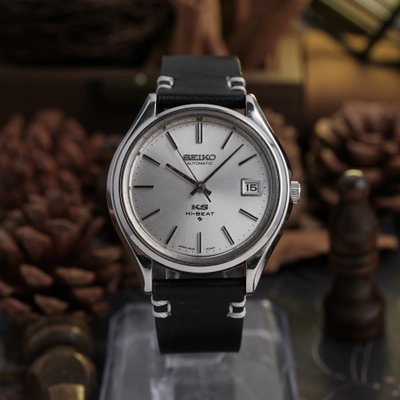
Seiko · King Seiko · 5625-7122 · 1973
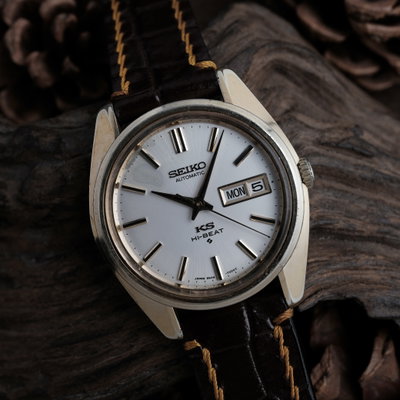
Seiko · King Seiko · 5626-7000 · 1971
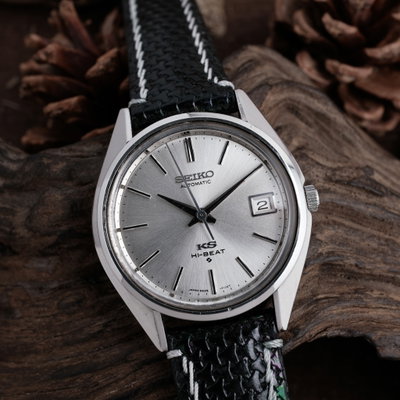
Seiko · King Seiko · 5625-7113 · 1973
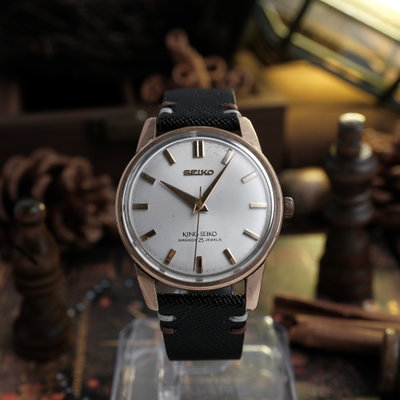
Seiko · King Seiko · 442000 · 1964
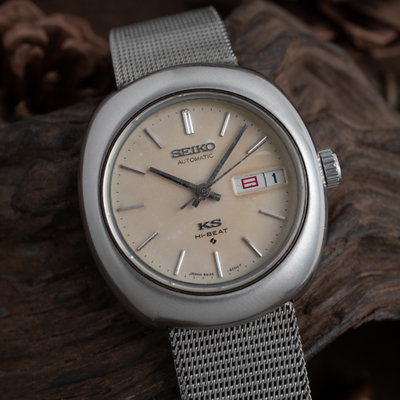
Seiko · King Seiko · 5626-6000 · 1970
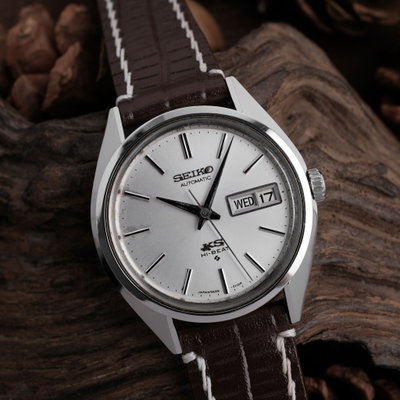
Seiko · King Seiko · 5626-7113 · 1973
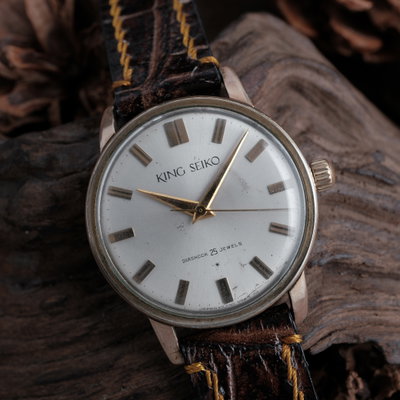
Seiko · King Seiko · J14102 · 1963
We auction more than 100 vintage watches a week.
Get first access: new Seiko watch drops and alerts before auctions end.
More Seiko references
Related pages
Frequently asked questions
Ready to hunt for your own?
More than 100 vintage watches go under the hammer every week.