Grand Seiko 6146-8000 Reference Guide
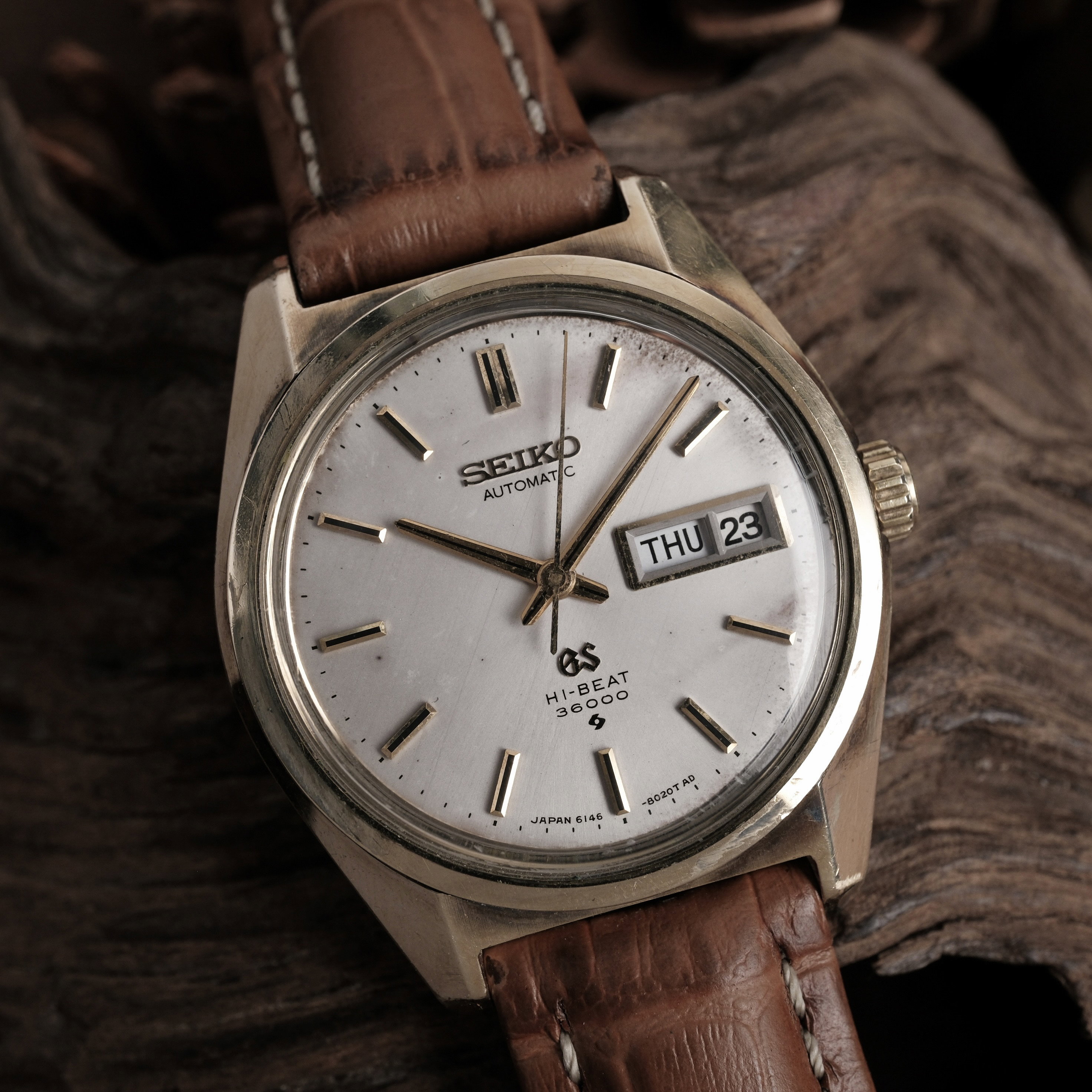
The Grand Seiko 6146-8000 to buy is a 1968-1969 steel example with a clean silver sunburst dial, sharp facets and the correct 6146A movement.
We auction more than 100 vintage watches a week.
Get first access: new Seiko 6146-8000 drops and alerts before auctions end.
Browse 24 live Seiko auctionsThe Grand Seiko 6146-8000 is a late-1960s automatic Hi-Beat watch built around the 25-jewel caliber 6146A running at 36,000 beats per hour. Examples handled from 1968 and 1969 combine a silver sunburst dial with sharply faceted case architecture, making case definition and dial condition central to the buying decision.
Steel is the safest place to start. Gold-capped examples add warmth, but the cap introduces another irreversible condition variable, while heavy dial spotting overwhelms the reference's precise geometry. Among the Grand Seiko and Grand Seiko Hi-Beat examples we have photographed, the strongest watches pair a clean dial with crisp facets and a legible caseback medallion.
Reference
6146-8000
Model
Grand Seiko
Known production years
1968-1969
Movement
Automatic caliber 6146A
| Jewel count | 25 jewels |
| Frequency | 36,000 beats per hour |
| Handled case sizes | 36 mm and 37 mm, excluding the crown |
| Case materials | Stainless steel and gold-capped stainless steel |
| Dial | Silver sunburst with applied faceted indices |
The model landscape
The 6146-8000 exists in both stainless-steel and gold-capped stainless-steel form. Handled examples measure 37 mm excluding the crown, although one 1969 gold-capped watch measured 36 mm. That difference matters less than the case surfaces: broad, flat facets need sharp boundaries, and softened transitions remove much of the design's visual structure.
The steel version is the clearer recommendation against a similarly preserved gold-capped example. Steel removes the risk of cap wear and lets the angular case do the work, while the silver sunburst dial and applied faceted indices remain the principal visual elements. Choose gold-capped only when the cap is intact and the dial is materially cleaner than the available steel alternative.
On the wrist
At 37 mm excluding the crown, the 6146-8000 has more presence than many late-1960s watches without relying on a large diameter. Its flat planes and sharply defined facets catch light across the case, while the silver sunburst dial and applied indices keep the display legible. The 36 mm gold-capped example wears slightly more compactly, but case definition changes the impression more than that single millimetre.
The automatic 6146A runs at 36,000 beats per hour, which is the mechanical reason to choose this Grand Seiko Hi-Beat over a lower-frequency vintage watch. Service history remains unknown unless documentation accompanies an individual watch. A clean timegrapher result can describe present performance, but it cannot establish when the movement was last serviced.
What goes wrong
Heavy stippled spotting across the silver dial is the largest visible fault found on handled examples, followed by faint peripheral ageing along the lower edge. Neither should be softened into patina when the surface is damaged. A refinished dial costs more in integrity than honest spotting, while a genuine service dial is a factory replacement and must not be described as original to the watch.
Caseback medallion wear is another recurring loss, and polishing can soften the case's flat facets and crisp transitions. Gold-capped cases add the possibility of wear-through at exposed edges, which no routine service reverses. Between a sharp case with light medallion wear and a polished case with a cleaner back, take the sharp case, provided the dial and 6146A movement are correct.
Dating this watch
| Serial range / caliber | Year | Note |
|---|---|---|
| 6146 | 1967-1975 | caliber production window |
Dating data comes from our decoder tables; treat years as approximate.
What to check before you buy
- Dial surface and furniture: The handled watches have silver sunburst dials with applied faceted indices. Heavy stippled spotting or faint lower-edge ageing can be honest damage, but a flat repainted surface indicates a redial.
- Dial printing: Typography should remain crisp against the sunburst surface. Printing that looks newly applied while the indices, case and medallion show substantial wear is a redial warning, not proof of exceptional preservation.
- Movement identity: The movement must be an automatic caliber 6146A with 25 jewels and a 36,000 beats-per-hour rate. A different caliber makes the watch incorrect for 6146-8000 and may indicate a franken or married assembly.
- Case architecture: The 6146-8000 depends on flat facets and sharply defined transitions. Mushy boundaries or uneven planes indicate polishing, while the steel and gold-capped versions must agree with the physical case in hand.
- Caseback and medallion: The caseback reference must be 6146-8000, and the medallion should be assessed for wear rather than assumed intact. A sharp front case with a heavily altered or mismatched back needs closer comparison.
- Hands and crown: The supplied examples do not establish enough detail to certify a single hand or crown configuration. Without stronger evidence, period-correct and original are not interchangeable, and no broader claim is justified.
Other 6146-8000 examples we auctioned
7 Seiko 6146-8000 auctioned
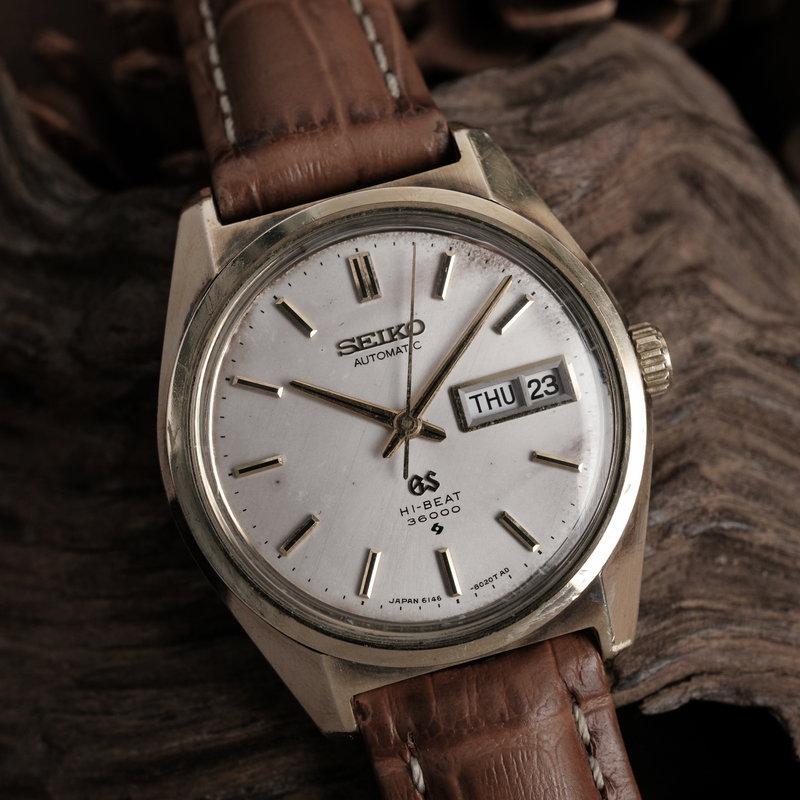
Seiko · Grand Seiko · 6146-8000 · 1969
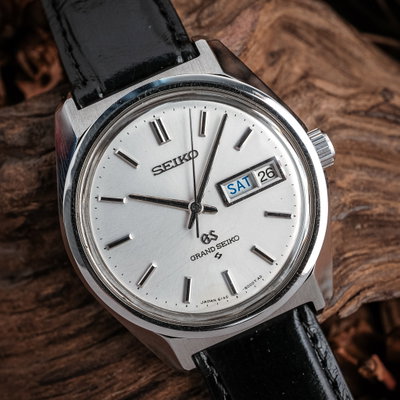
Seiko · Grand Seiko · 6146-8000 · 1968
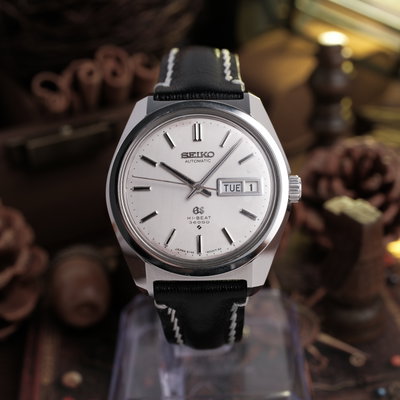
Seiko · Grand Seiko · 6146-8000 · 1968
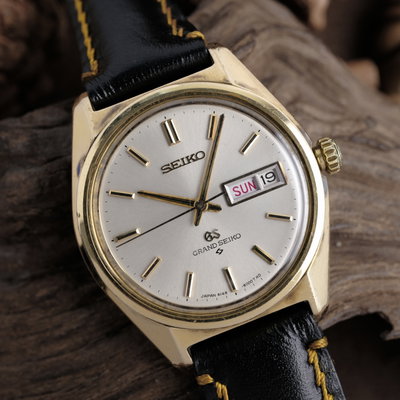
Seiko · Grand Seiko · 6146-8000 · 1968
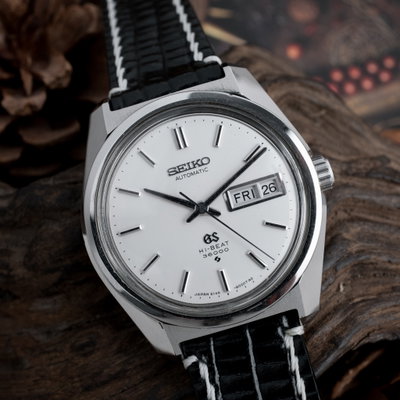
Seiko · Grand Seiko Hi-Beat · 6146-8000 · 1969
More Seiko references
Related pages
Frequently asked questions
Ready to hunt for your own?
More than 100 vintage watches go under the hammer every week.