Vintage Seiko Sportsmatic 5: calibers, cases and the version to buy
Buy the 36 mm steel Sportsmatic 5 with caliber 6619A for the easiest ownership, unless the early caliber 410 or 38 mm fluted-bezel case is the point.
Live now
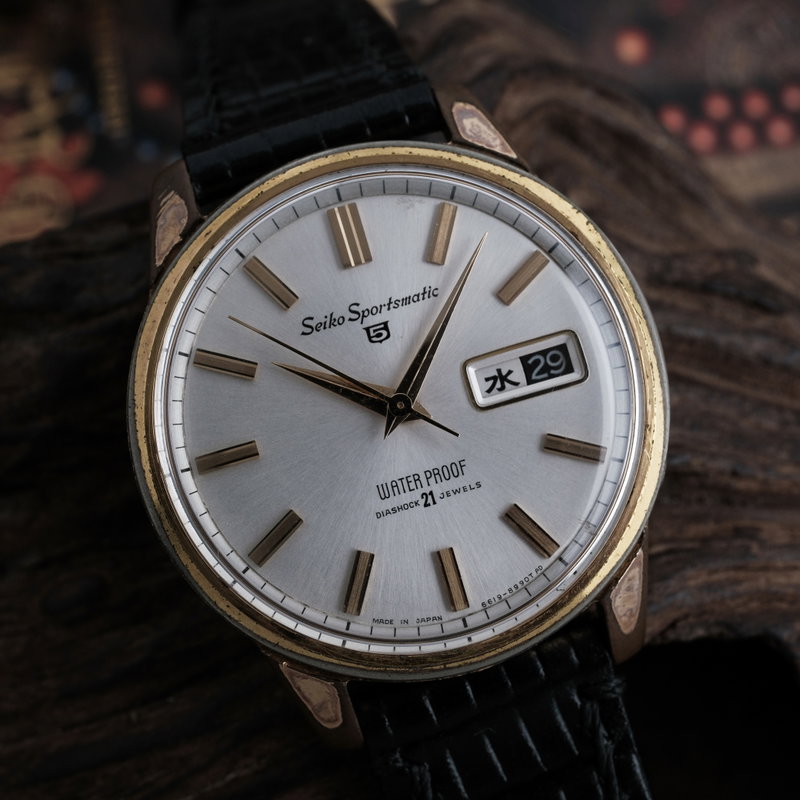
The Sportsmatic 5 put an automatic movement, a day-date display and a recessed crown into a clean mid-1960s Seiko. From 1964 to 1967, the model moved from the caliber 410 to the 21-jewel caliber 6619A while retaining the silver sunburst dial as its clearest visual signature.
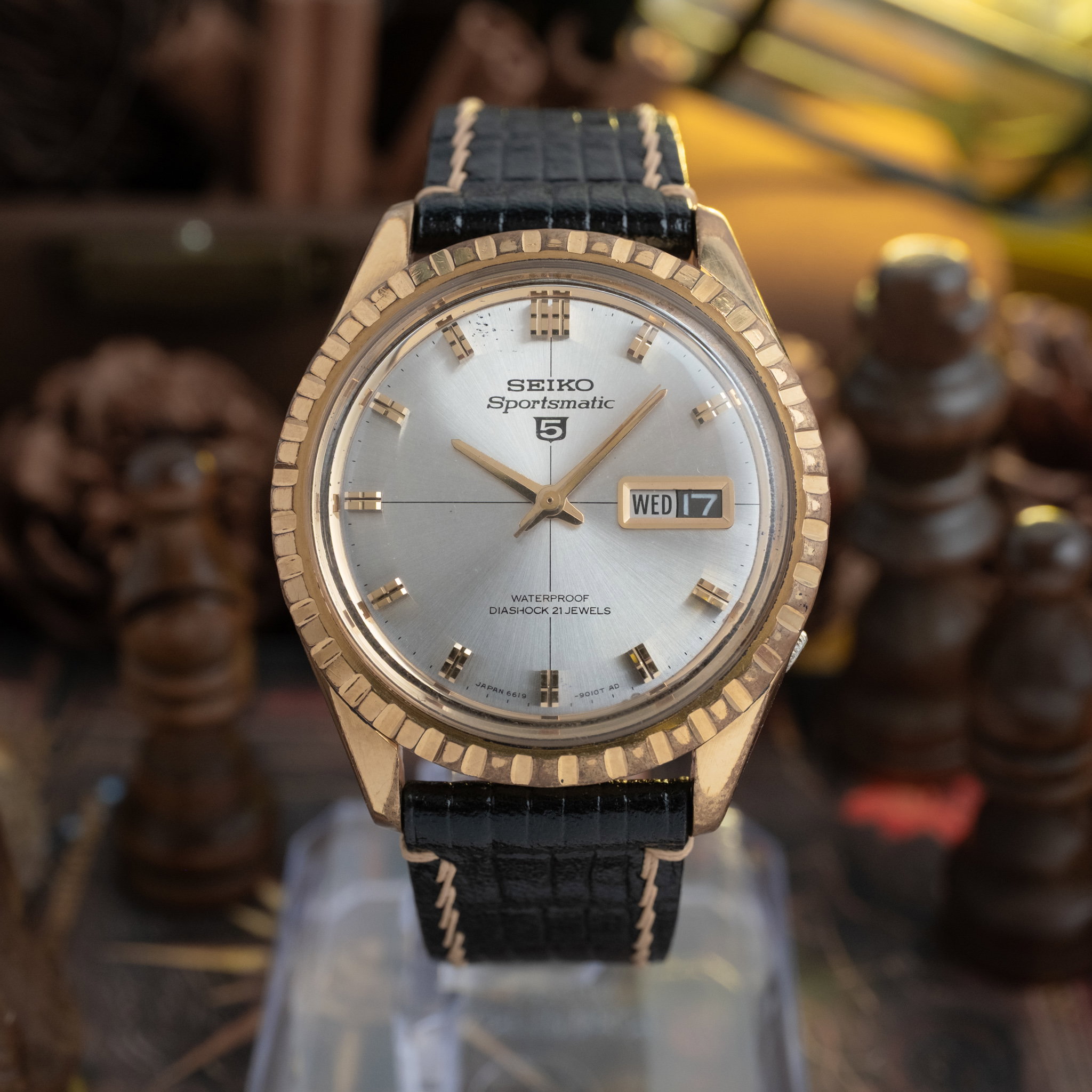
A used Seiko Sportsmatic 5 is not one uniform proposition. The 36 mm steel 6619-8110 and 6619-8250 are compact everyday choices, while the 38 mm gold-plated 6619-9000 adds a fluted bezel and more wrist presence. The early electro gold-plated 418970 is the specialist option because its caliber 410, gold-tone furniture and AD star separate it from the later 6619A watches.
Known production years
1964-1967
Case sizes
36 mm and 38 mm, excluding the crown
Movements
Automatic caliber 410 and automatic caliber 6619A
Jewel count
21 jewels
| Case materials | Stainless steel, gold-plated and electro gold-plated |
| Dial configuration | Silver sunburst with applied indices and day-date display |
| Crown position | Recessed at four o'clock on 6619-8110 and 6619-9000 |
| Crystal | Domed acrylic on 6619-8110 |
What it was built for
The Sportsmatic 5 brought automatic day-date timekeeping into a case shaped for daily wear rather than sporting bulk. The recessed crown at four o'clock on the 6619-8110 and 6619-9000 keeps the profile clean, while the framed day-date at three o'clock remains easy to read against the silver sunburst dial.
Case choice changes the watch more than the shared name suggests. The 36 mm steel cases of the 6619-8110 and 6619-8250 wear compactly, with angled lines and faceted markers carrying the design. At 38 mm, the gold-plated 6619-9000 spreads wider and its fluted bezel adds visual weight, making it the better option only when scale and ornament matter more than discreet wear.
Where the value sits
The dial carries the largest share of value. A clean silver sunburst surface with sharp black printing, bright applied indices and an undamaged day-date frame outranks a shinier case with a redial. A refinished dial costs more than every minor case flaw combined because the radial finish, applied furniture and printed signatures must still agree.
Plated cases deserve stricter buying discipline than steel. Wear through the gold layer at the lug edges cannot be reversed by routine service, while polishing softens the angled case lines and fluted bezel. Other faults include a replacement crown that no longer sits correctly in the four o'clock recess, a stretched bracelet, or a movement and caseback pairing that makes the watch married or franken rather than merely serviced.
Where to start
Start with a 36 mm steel 6619-8110 or 6619-8250 when the choice is against a similarly preserved plated example. Both use the 21-jewel caliber 6619A, and steel removes plating wear from the condition equation. Choose the 38 mm 6619-9000 instead when its fluted bezel, gold-tone indices and dolphin caseback are all present and coherent.
The caliber 6619 production window runs from 1963 to 1968, while the Sportsmatic 5 watches covered here date from 1964 to 1967. The early 418970 carries caliber 410 and an AD star on its silver sunburst dial, so it should not be judged as though it were a later 6619A variant. Service history is often unknown, and without dated paperwork the movement's present rate matters more than an unsupported service claim.
Dating this watch
| Serial range / caliber | Year | Note |
|---|---|---|
| 6619 | 1963-1968 | caliber production window |
Dating data comes from our decoder tables; treat years as approximate.
What to check before you buy
- Dial print and finish: Silver sunburst dials should retain a coherent radial finish, crisp black printing and cleanly seated applied indices. Uneven paint around the day-date frame or printing laid over the finish points to a redial.
- Hands and dial furniture: On the 6619-9000, gold-tone dauphine hands should agree with the applied gold-tone faceted indices. A mismatched finish or hand style is a franken warning, although period-correct parts alone do not prove originality.
- Case and crown geometry: The 6619-8110 and 6619-9000 use a recessed crown at four o'clock. A crown that projects awkwardly, together with soft angled case lines or a blurred fluted bezel, indicates replacement parts or heavy polishing.
- Caseback detail: The 6619-9000 is known with a dolphin motif engraved on its caseback. A generic or conflicting back requires caution because a correct movement inside the wrong case still produces a married watch.
- Movement pairing: The 6619-8110, 6619-8250 and 6619-9000 use the 21-jewel caliber 6619A, while the 1964 418970 uses the 21-jewel caliber 410. Any different pairing needs evidence before the watch can be treated as coherent.
- Plated-case wear: Gold-plated and electro gold-plated cases should be checked at lug edges and other contact points for exposed base metal. Polishing can brighten the case but cannot replace lost plating or restore crisp geometry.
Recent Seiko results
29 Seiko watches auctioned
Seiko · Sportsmatic 5 · 6619-9000 · 1966
Seiko · Sportsmatic 5 · 6619-8110 · 1966
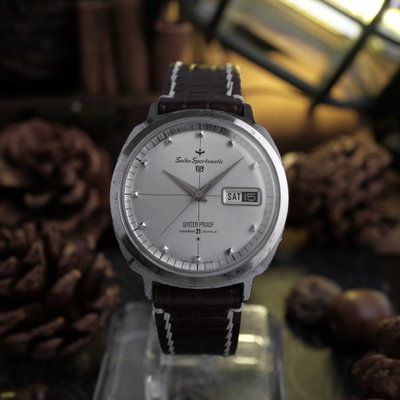
Seiko · Sportsmatic 5 · 6606-7990 · 1964
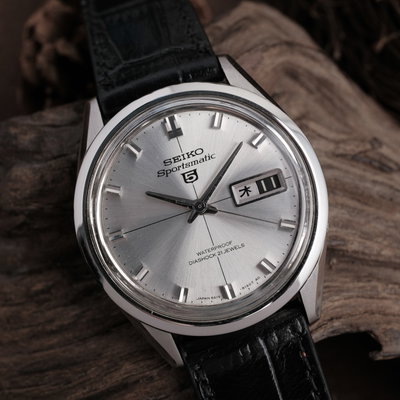
Seiko · Sportsmatic 5 · 6619-8250 · 1966
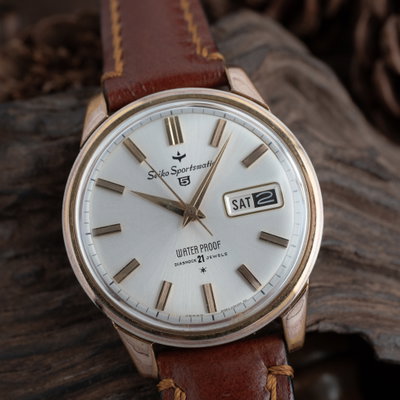
Seiko · Sportsmatic 5 · 418970 · 1964
We auction more than 100 vintage watches a week.
Get first access: new Seiko watch drops and alerts before auctions end.
More Seiko references
Related pages
Frequently asked questions
Ready to hunt for your own?
More than 100 vintage watches go under the hammer every week.