Vintage Seiko Skyliner: References, Calibers and Buying Priorities
The vintage Seiko Skyliner is a slim manual-wind dress watch whose strongest examples pair an honest silver dial with sharp case geometry.
Live now
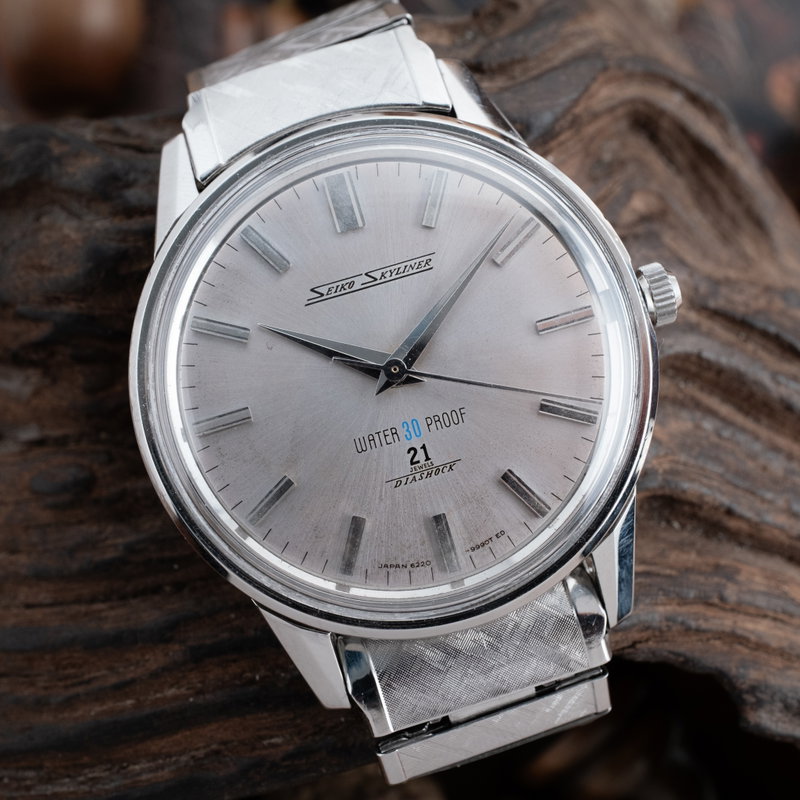
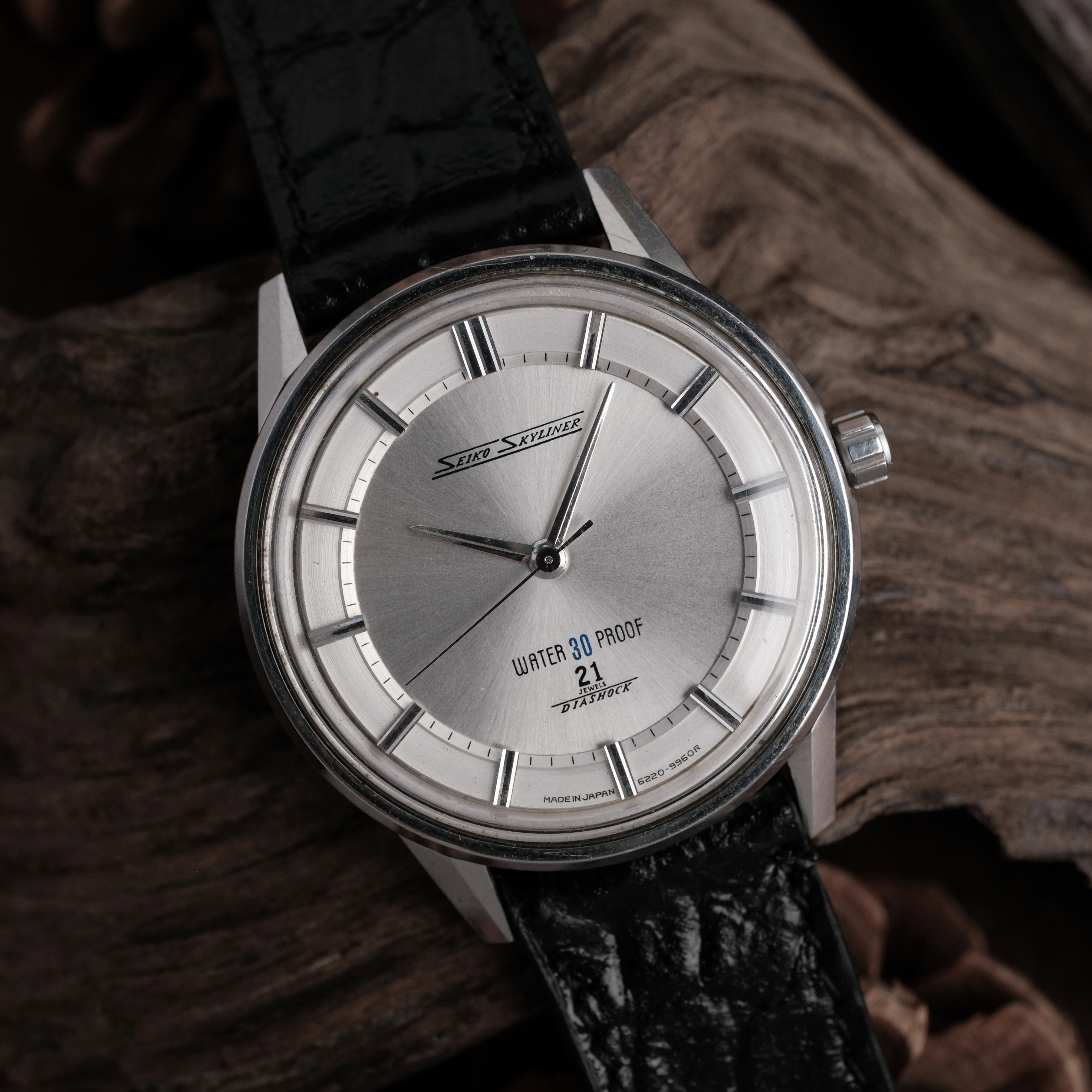
The vintage Seiko Skyliner is a manual-wind dress watch from the 1960s and early 1970s, with handled examples spanning 1961 to 1972. The Skyliner shown here explains the model quickly: a broad silver dial, applied markers and a slim steel case create more wrist presence than the modest mechanics suggest. This is a watch bought for proportion, not complication.
A used Seiko Skyliner becomes more interesting once the references are separated. The 6220-9970 appears at 36 mm and 37 mm in handled examples, while the later 6102-8000 is 37 mm and uses caliber 6102. Across the watches we have handled, dial preservation and sharp case lines matter more than choosing the largest version. A refinished dial costs more in lost appeal than ordinary case wear.
Known handled years
1961-1972
Known case diameters
36 mm and 37 mm, excluding the crown
Winding
Manual wind
Known calibers
Seikosha 402, 6220C and 6102
| Jewel count in described examples | 21 jewels |
| Case material in described examples | Stainless steel |
| Known dial finishes | Silver sunburst and silver radial-brushed |
| Known caseback detail | Seahorse emblem or medallion |
On the wrist
At 36 mm or 37 mm excluding the crown, the Skyliner occupies more space than its dress-watch brief suggests because the dial is broad and the applied baton markers sit close to the edge. The 37 mm 6102-8000 has the more contemporary stance, while a 36 mm 14092 keeps the tighter early-1960s proportion. Both remain easy under a cuff because their visual mass comes from dial width rather than a complicated case.
Silver sunburst and radial-brushed finishes change visibly as the wrist moves, giving the simple display enough depth without sacrificing legibility. Faceted baton markers suit the later 6102-8000, while the 14092 is known with Dauphine hands and a blue printed "30". The watch is manual-wind, so ownership includes winding it rather than relying on automatic motion. That daily interaction is part of the model, not a defect to be corrected.
Where the value sits
The widest value gap sits between an honest silver dial and a redial. Clean sunburst or radial brushing, intact applied markers and undisturbed printing command the premium because refinishing removes the surface that defines the Skyliner. A service dial would be a genuine factory replacement, not a redial, but the available evidence does not establish a service-dial pattern for this model. Without documentation, we prefer not to speculate beyond the dial itself.
Reference choice matters less than condition, but the references do offer distinct propositions. The 6220-9970 combines early styling with a 36 mm or 37 mm case, whereas the 6102-8000 gives the later look at 37 mm with caliber 6102. The 14092 adds Dauphine hands and the blue "30" detail. At equal money, take the cleaner dial and sharper case before paying a premium for a reference number alone.
Where to start
Start with a stainless-steel Skyliner whose silver dial has even tone, clear printing and no broad staining. Then assess the case: polishing first softens the sharp lines and makes the lugs look rounded rather than defined. The seahorse caseback emblem can lose relief through wear or refinishing, and that loss cannot be reversed by servicing. Redials, mushy case geometry and heavily flattened medallions are the three faults that most change the object.
Movement claims need particular care on the 6220-9970. Handled examples have been described with both Seikosha caliber 402 and caliber 6220C, so caliber wording alone does not settle authenticity and the present evidence does not explain the variation. A movement from another watch can create a franken or a married watch even when every individual part is genuine. The service history is unknown unless paperwork accompanies the specific watch. Between a polished 37 mm example and an honest 36 mm one, buy the 36 mm.
What to check before you buy
- Dial surface and printing: A 14092 is known with a silver sunburst dial, applied silver-tone markers, Dauphine hands, crisp black text and a blue printed "30". A flat repainted surface or crude replacement printing indicates a redial rather than honest ageing.
- 6220-9970 movement claim: Descriptions for the 6220-9970 name both Seikosha caliber 402 and caliber 6220C. That unresolved variation means the caliber must be judged with the complete watch, and no stronger pairing claim should be made without documentation.
- 6102-8000 configuration: The handled 6102-8000 examples are 37 mm stainless-steel manual-wind watches with caliber 6102, silver sunburst dials and applied faceted baton markers. A materially different configuration needs explanation rather than assumption.
- Case geometry and caseback: Known Skyliners have sharp case lines, and described early examples carry a seahorse caseback emblem. Rounded lugs, softened transitions or a flattened medallion disclose polishing or wear even when the dial remains convincing.
Recent Seiko results
22 Seiko watches auctioned
Seiko · Skyliner · 6220-9970 · 1965
Seiko · Skyliner · 6102-8000 · 1969
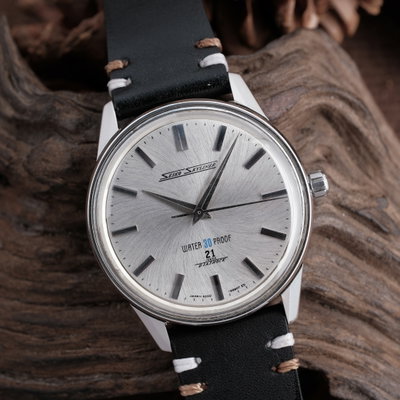
Seiko · Skyliner · 6220-9970 · 1963
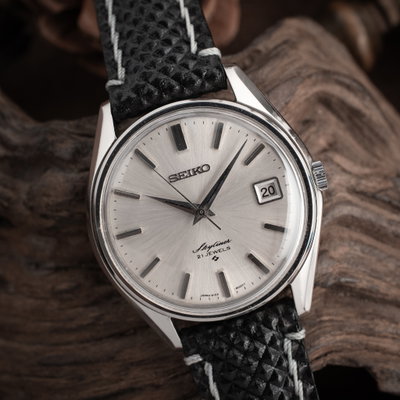
Seiko · Skyliner · 6102-8000 · 1971
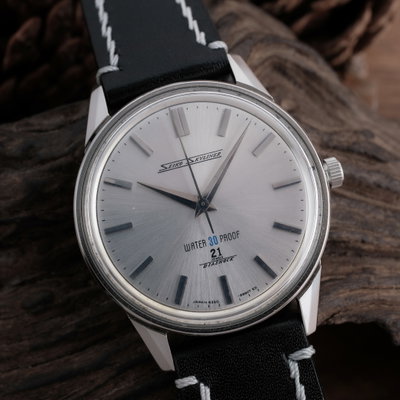
Seiko · Skyliner · 14092 · 1963
We auction more than 100 vintage watches a week.
Get first access: new Seiko watch drops and alerts before auctions end.
More Seiko references
Related pages
Frequently asked questions
Ready to hunt for your own?
More than 100 vintage watches go under the hammer every week.