Vintage Seiko Seikomatic Weekdater buyer's guide
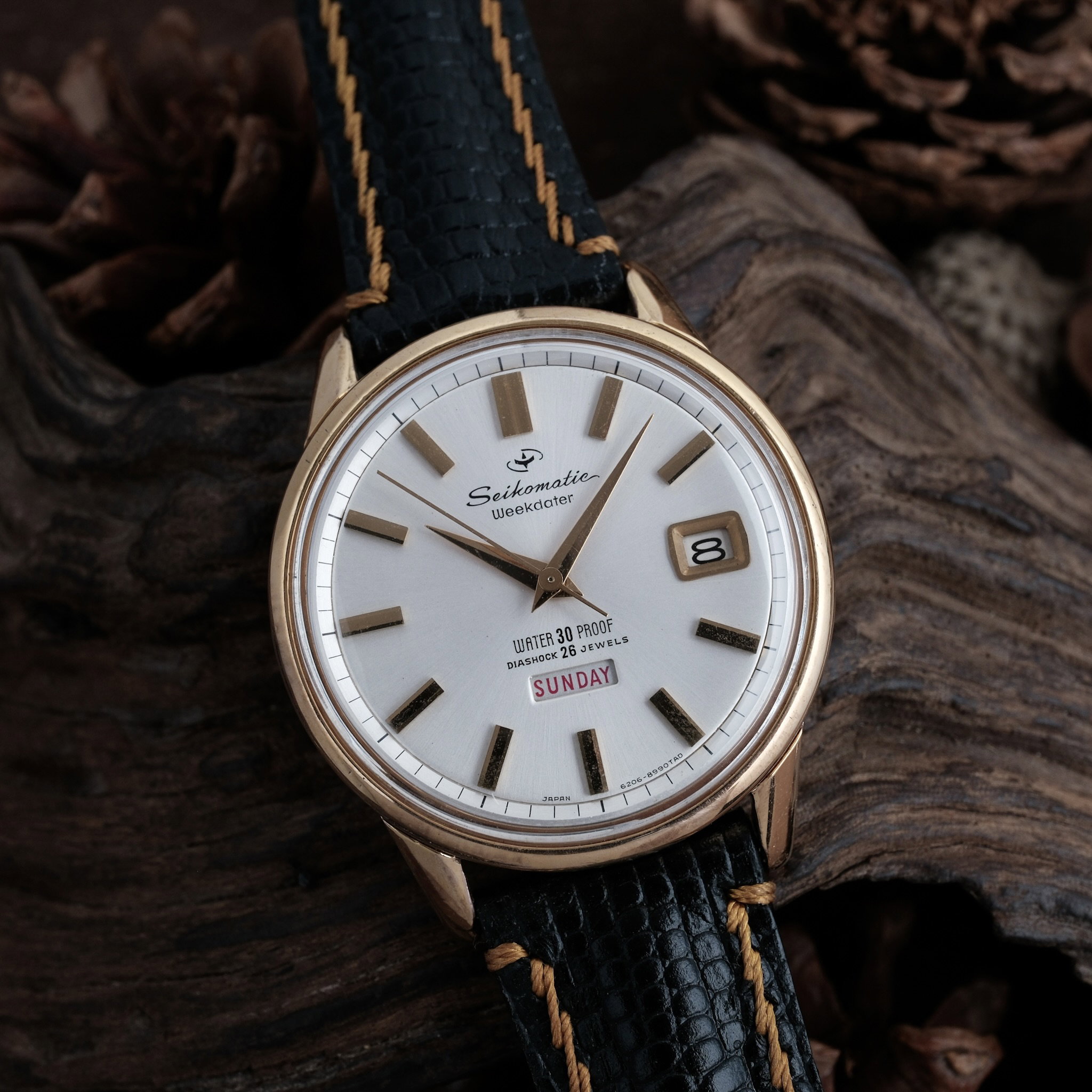
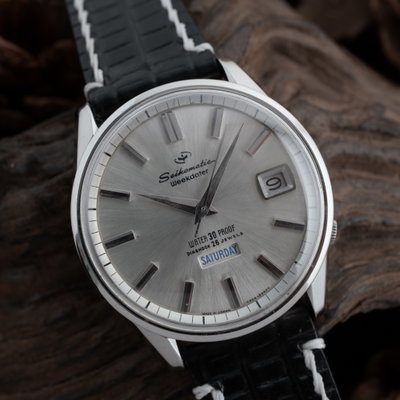
The vintage Seiko Seikomatic Weekdater to buy is a steel 6206-8990 with a clean silver sunburst dial and clearly defined case lines.
We auction more than 100 vintage watches a week.
Get first access: new Seiko watch drops and alerts before auctions end.
Browse 38 live Seiko auctionsThe Seikomatic Weekdater brought an automatic day-date display into a formal Seiko case between 1963 and 1965. The 6206-8990 gives the model its clearest identity: a silver sunburst dial, applied faceted indices and a separate day display at six. At 37 mm in steel, it has more wrist presence than its restrained dial suggests.
The steel 6206-8990 is the safest place to start. Gold-plated versions can look dressier, but worn plating cannot be returned by routine servicing, while dial spotting remains visible in either material. Examples with caliber 6218B offer a different 35-jewel route, although the cleanest dial and sharpest case should take priority over jewel count.
Known production years
1963-1965
Handled case sizes
36-37 mm, excluding crown
Movement options
Automatic calibers 6206A and 6218B
Jewel counts
26 jewels for 6206A; 35 jewels for 6218B
| Case materials | Stainless steel or gold plated over stainless steel |
| Dial finish | Silver sunburst with applied faceted indices |
| Calendar display | Day and date, with layout varying by version |
| Key reference choice | 6206-8990 in steel |
What it was built for
The Weekdater was built as a practical mid-century automatic rather than a plain dress watch. Its day and date indications put weekday information on the dial, while applied indices and a silver sunburst finish kept the presentation formal. On 6206-8990 examples, the day display at six preserves vertical balance and gives the model its most recognisable face.
Case size changes the character less than case material. The handled examples measure 36 or 37 mm excluding the crown, enough to make the separated calendar display readable without turning the watch into a modern-sized object. Steel suits regular wear better; gold-plated cases demand more caution around exposed edges and lugs.
The model landscape
The main choice is between caliber 6206A and caliber 6218B. The 6206-8990 pairs the 26-jewel 6206A with a day display at six, while the 6218-8950 uses the 35-jewel 6218B and places its full day display at three. These are distinct configurations, not interchangeable variations, so a dial and movement mismatch is a franken warning.
Value sits first in the dial, then in the case. A clean silver sunburst surface with crisp print carries a stronger premium than extra jewels beneath a spotted or refinished dial. Between a sharp steel 6206-8990 and a plated 6218-8950 with comparable mechanics, take the steel watch unless the latter has the materially better dial.
What goes wrong
Dial spotting is the first disclosed fault to price, and it ranges from light marks to visible patches across the sunburst surface. A redial is worse: the refinished surface removes the original finish and changes the watch more substantially than ordinary case wear. A genuine service dial is different from a redial, but no supplied example establishes a service-dial specification for this model.
Gold plating wears through at exposed case edges, polishing softens defined case lines, and replacement crowns can alter the recessed profile seen on the 6218-8950. Calendar parts also need to agree with the correct dial layout and caliber. Service history is unknown unless paperwork accompanies the individual watch, so movement condition should never be inferred from a clean exterior.
Dating this watch
| Serial range / caliber | Year | Note |
|---|---|---|
| 6206 | 1963-1968 | caliber production window |
Dating data comes from our decoder tables; treat years as approximate.
What to check before you buy
- Reference and movement pairing: A 6206-8990 should pair with automatic caliber 6206A and 26 jewels, while a 6218-8950 should pair with caliber 6218B and 35 jewels. A crossed pairing is a franken warning.
- Dial and calendar layout: The 6206-8990 uses a separated calendar arrangement with the day display at six. The 6218-8950 places the full day display at three, so the layout must agree with the reference and movement.
- Dial surface and print: The correct handled dials have a silver sunburst finish, applied faceted indices and crisp printed text. Flat refinishing, disturbed print or spotting concealed beneath a new surface points to a redial.
- Case and crown form: Defined case lines matter because polishing softens them permanently. On the 6218-8950, the recessed crown profile is part of the known configuration, so a projecting replacement changes the case silhouette.
- Caseback evidence: A dolphin emblem occurs on handled 6206-8990 examples, but the emblem alone does not authenticate the watch. It must agree with the case, caliber and calendar configuration rather than excuse mismatched parts.
Recent Seiko results
32 Seiko watches auctioned
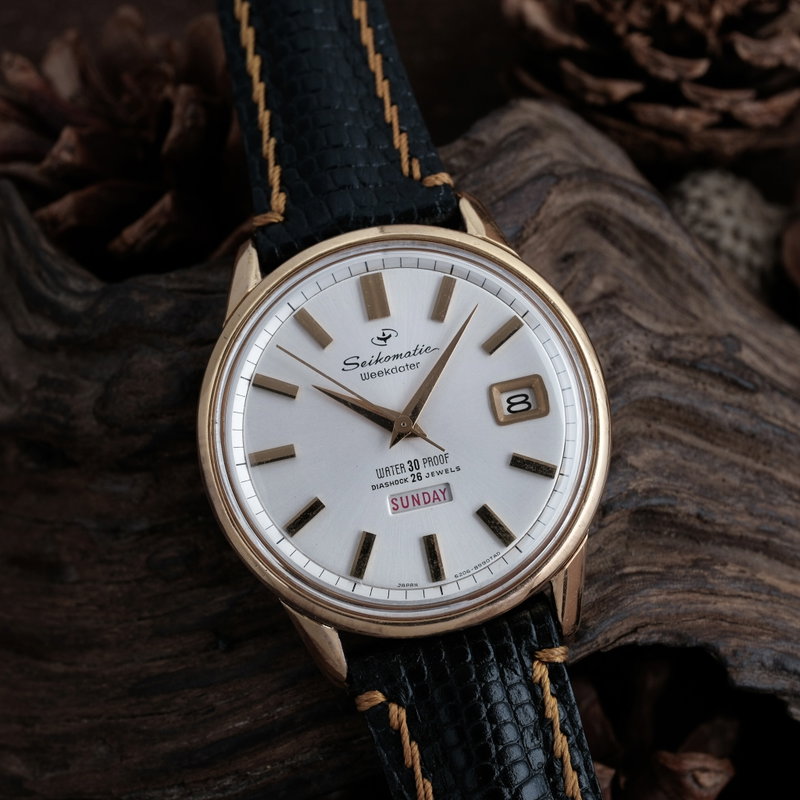
Seiko · Seikomatic Weekdater · 6206-8980 · 1965
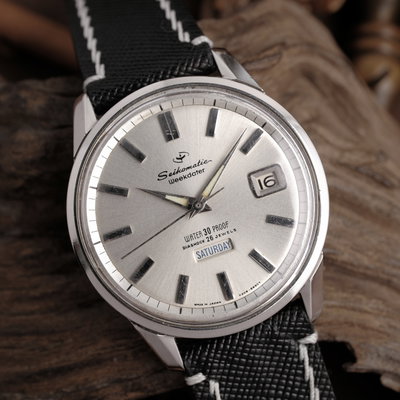
Seiko · Seikomatic Weekdater · 6206-8990 · 1964
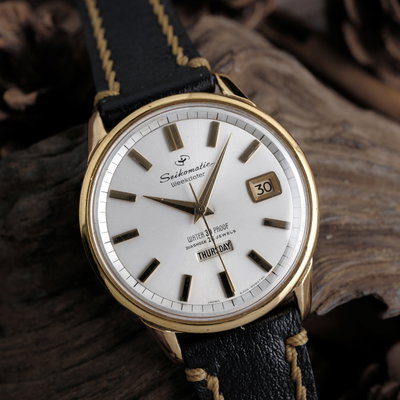
Seiko · Seikomatic Weekdater · 6206-8990 · 1965
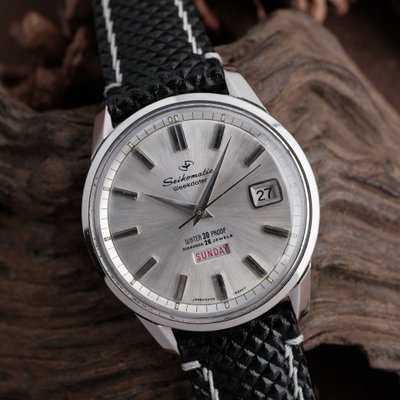
Seiko · Seikomatic Weekdater · 6206-8990 · 1964
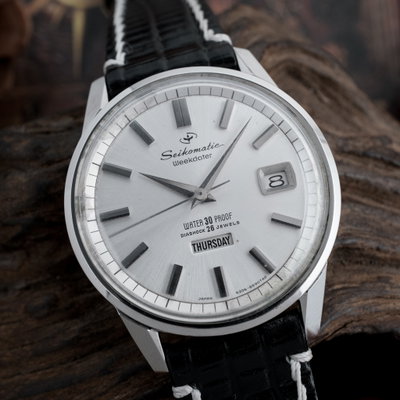
Seiko · Seikomatic Weekdater · 6206-8990 · 1965
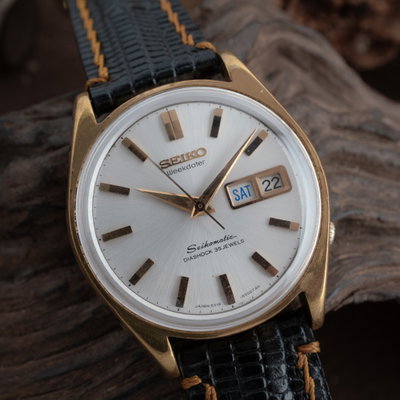
Seiko · Seikomatic Weekdater · 6218-8950 · 1965
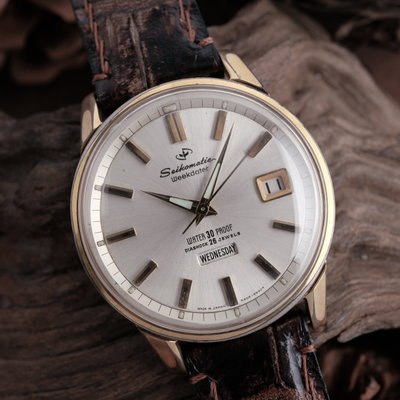
Seiko · Seikomatic Weekdater · 6206-8990 · 1964
Seiko · Seikomatic Weekdater · 6206-8040 · 1965
More Seiko references
Related pages
Frequently asked questions
Ready to hunt for your own?
More than 100 vintage watches go under the hammer every week.