Buying a Vintage Seiko Lord Matic Special
The vintage Seiko Lord Matic Special is best bought for an undamaged dial, a reference-correct 5206A or 5216A movement and sharp case geometry.
We auction more than 100 vintage watches a week.
Get first access: new Seiko watch drops and alerts before auctions end.
Browse 18 live Seiko auctionsThe Lord Matic Special belongs to Seiko's mechanically ambitious 1970-1976 period, positioned between the standard Lord Matic and King Seiko. Its identity rests on Daini Seikosha production and the automatic 52-series movement, while the references range from restrained silver dials to green gradients and deep blue two-tone executions. It is not one uniform design wearing different reference numbers.
The first decision is dial condition, not caliber number. A clean dial on a 5206A watch is preferable to a spotted 5216A example at comparable money because refinishing removes the surfaces that distinguish this model. Case geometry comes next: sharp planes suit the faceted indices and crystal, while rounded edges make the entire watch look tired even when the dial remains bright.
Production period
1970-1976
Movement families
Automatic calibers 5206A and 5216A
Handled case-size range
34-36 mm excluding the crown
5216-6050 configuration
35 mm stainless steel, silver sunburst dial, caliber 5216A, 23 jewels
| 5216-6010 configuration | 35 mm stainless steel with gold-toned bezel, green gradient dial, caliber 5216A, 25 jewels |
| 5206-6120 configuration | 35 mm stainless steel, deep blue two-tone dial, caliber 5206A, 23 jewels |
| 5206-6100 configuration | 34 mm stainless steel, emerald green fumé dial, caliber 5206A, 23 jewels |
| 5206-6060 configuration | 36 mm stainless steel, silver vertical brushed dial, caliber 5206A |
What it was built for
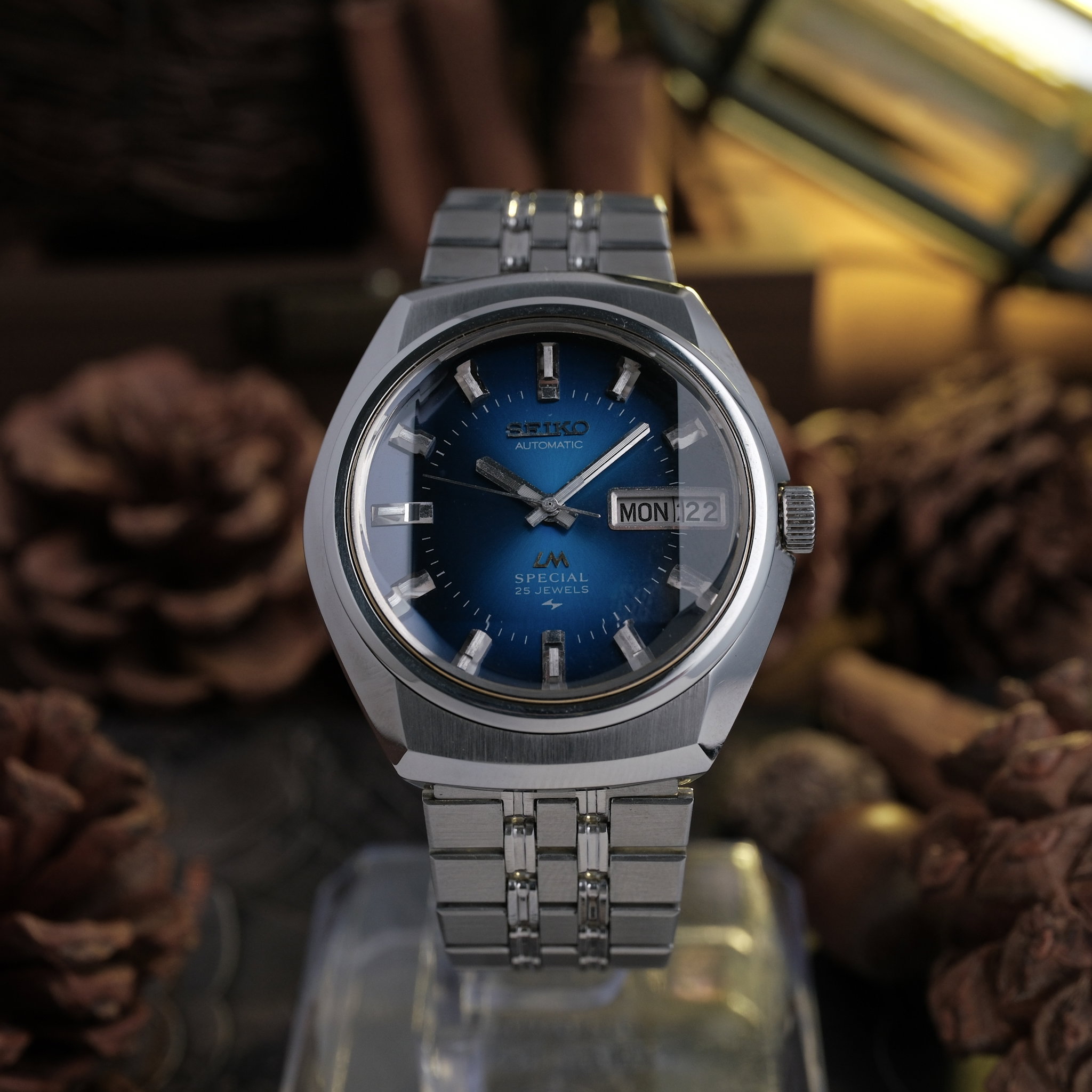
The Lord Matic Special was Seiko's premium automatic alternative below King Seiko, with Daini Seikosha's 5206A and 5216A calibers defining the model. The 5206-6120 pairs the 5206A with a deep blue dial divided by a darker horizontal band, while the 5216-6010 uses the 5216A beneath a green gradient dial. Those combinations explain the model better than the Special name alone.
Production ran from 1970 through 1976, a compact period that still produced a broad spread of references and case treatments. Silver vertical brushing appears on the 5206-6060, emerald fumé on the 5206-6100 and a gold-toned bezel on the 5216-6010. Buying by reference matters because dial layout, case shape and surface treatment change substantially within the same model name.
On the wrist
Handled examples measure from 34 mm to 36 mm excluding the crown, and the case design makes that narrow spread meaningful. The 34 mm 5206-6100 is compact and visually concentrated, while the 36 mm 5206-6060 gives its vertically brushed dial more room. The 35 mm references sit between them and are the least demanding choice if you want vintage proportions without the smallest presentation.
Faceted crystals and applied faceted indices make these watches react strongly to changing light. That effect is clearest on clean sunburst and gradient dials, but spotting becomes equally visible because the reflective surfaces do not disguise interruption. The watch works best when the case planes remain defined and the crystal facets are intact; softened metal or damaged edges flatten the architecture.
Where to start
Start with a stainless-steel 35 mm example carrying a clean dial and a movement consistent with its reference family. The silver 5216-6050 is easier to assess than a heavily degraded colour dial, while the blue 5206-6120 gives more period character without relying on a fragile gradient effect. Between a sharp silver example and a spotted green one at the same level, take the silver watch.
Lead every condition assessment with the worst fault. Localized dial spotting, oxidation on the hands and case edges softened by polishing each change the buying decision, while bracelet stretch matters most when an original signed bracelet is part of the appeal. A refinished dial costs more in lost character than ordinary case wear. Service history is often unknown, so without documentation the movement's maintenance cannot be inferred from external condition.
What to check before you buy
- Match caliber to the stated reference: A 5206-6120 or 5206-6100 should be presented with caliber 5206A, while the 5216-6010 and 5216-6050 are documented with 5216A. A crossed pairing needs a clear explanation because it can indicate a franken watch.
- Confirm the reference-specific dial treatment: The 5206-6120 uses deep blue with a darker horizontal band, the 5206-6100 has an emerald fumé finish and the 5206-6060 is silver with vertical brushing. A different treatment may be a service dial, redial or incorrect assembly.
- Treat printing as confirmation, not the first verdict: Once the overall dial surface looks coherent, compare the Seiko and Lord Matic Special printing with the applied faceted indices. Bleeding text, disturbed brushing around the letters or print sitting over damage supports a redial diagnosis.
- Read the case geometry before the shine: The angular casework should retain defined planes around the lugs and bezel. Soft transitions and rounded edges indicate polishing, while sharp lug bevels support better preservation without justifying an unpolished claim.
- Separate hand oxidation from dial patina: The 5216-6010 can show atmospheric dial spotting together with visible oxidation on the hands. These are two distinct faults and should not be bundled as patina; uneven spotting is damage, while patina requires even, attractive ageing.
- Do not authenticate from the crown alone: The available configurations do not establish one crown specification across every Lord Matic Special reference. Treat the crown as a consumable component and use the movement, dial execution, case geometry and reference together.
Recent Seiko results
117 Seiko watches auctioned
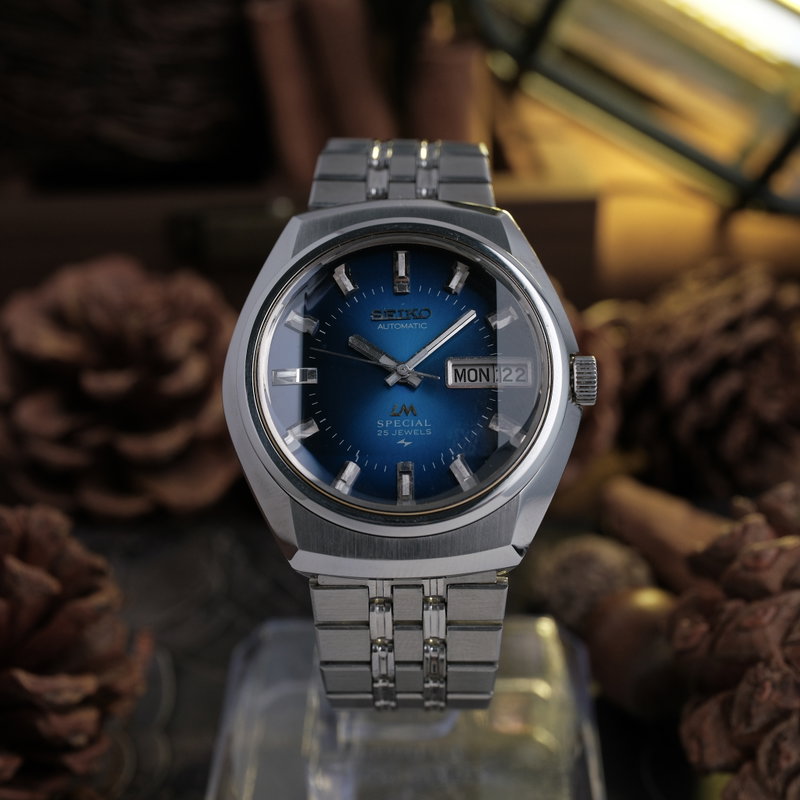
Seiko · Lord Matic Special · 5216-6020 · 1974
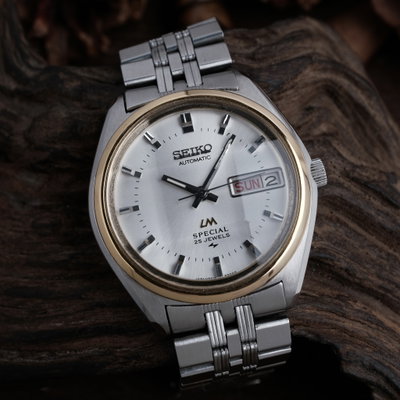
Seiko · Lord Matic Special · 5216-6010 · 1973
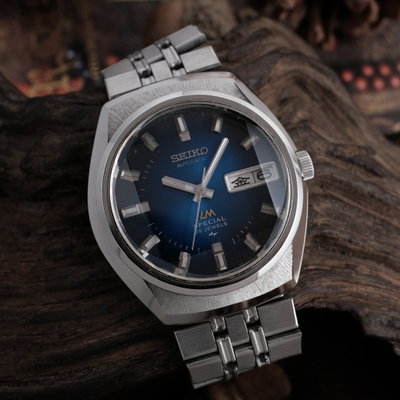
Seiko · Lord Matic Special · 5216-6020 · 1973
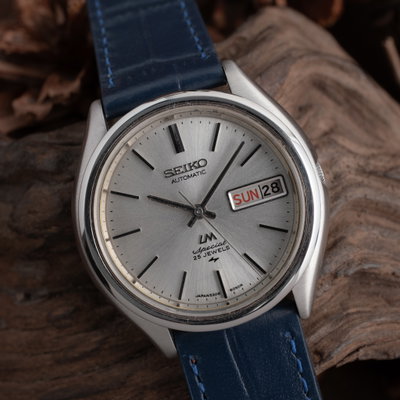
Seiko · Lord Matic Special · 5206-6060 · 1971
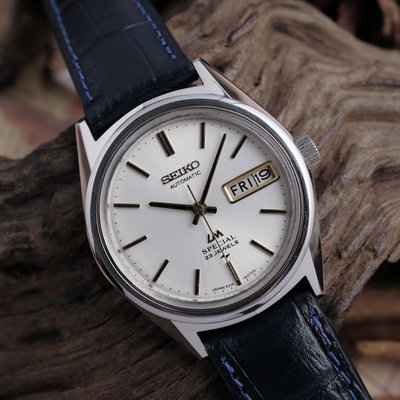
Seiko · Lord Matic Special · 5216-6050 · 1974
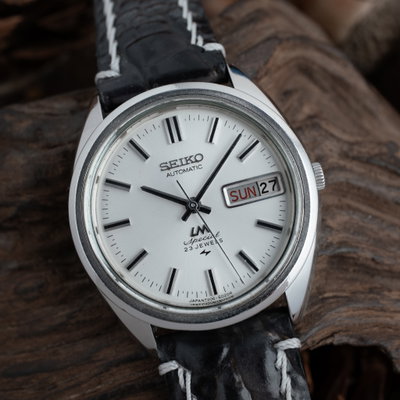
Seiko · Lord Matic Special · 5206-6020 · 1970
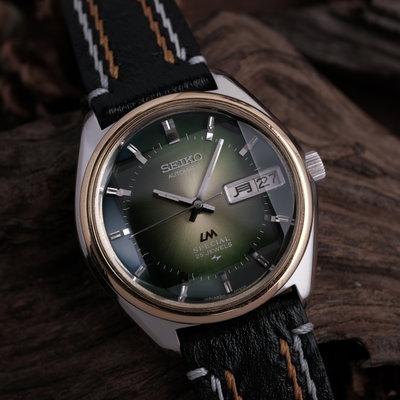
Seiko · Lord Matic Special · 5216-6010 · 1973
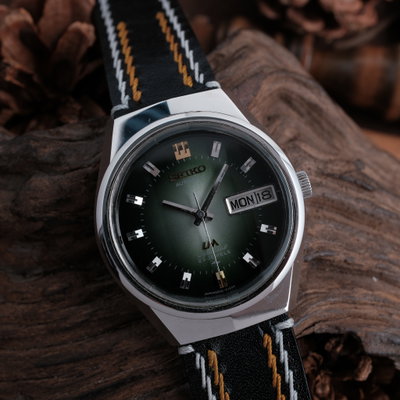
Seiko · Lord Matic Special · 5206-6100 · 1973
More Seiko references
Related pages
Frequently asked questions
Ready to hunt for your own?
More than 100 vintage watches go under the hammer every week.