Vintage Seiko Bell-Matic: Versions, Wear and Buying Priorities
The vintage Seiko Bell-Matic is a practical mechanical alarm watch, with steel 4006 versions offering the strongest balance of function and wear resistance.
We auction more than 100 vintage watches a week.
Get first access: new Seiko watch drops and alerts before auctions end.
Browse 25 live Seiko auctionsThe Seiko Bell-Matic puts a mechanical alarm inside an automatic watch without turning it into an oversized instrument. The examples handled span 1967 to 1977, placing the model firmly in Seiko's late-1960s and 1970s output. Its extra alarm hand and rotating indicator make the complication visible before the mechanism makes itself heard.
The central choice is between the date-only caliber 4005 and the day-date caliber 4006A. Both handled configurations use 27-jewel automatic alarm movements, but their cases and dials create distinct buying propositions. A used Seiko Bell-Matic should be judged first on dial integrity, alarm operation and case material, not on a bright polish or an unsupported service claim.
Known watch production years
1967-1977
Movement families
Automatic mechanical alarm calibers 4005 and 4006A
Calendar configurations
Date-only with caliber 4005; day-date with caliber 4006A
Handled case sizes
37 mm and 38 mm, excluding the crown
| Handled case materials | Gold-plated with stainless steel caseback, or stainless steel |
| Handled jewel count | 27 jewels |
| Known references | 4005-7000, 4006-7000, 4006-7012, 4006-7010 |
| Handled dial configurations | White with gold-tone furniture, or silver sunburst with applied indices |
The model landscape
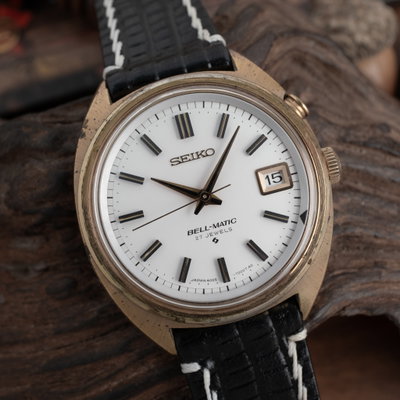
The 4005-7000 is the cleaner proposition: a date-only alarm watch with a white dial, applied gold-tone indices and black inserts. The handled example pairs caliber 4005 with a gold-plated case, so the simpler display comes with a condition risk that steel versions avoid. Once plating has worn through at the lugs, refinishing cannot return the factory surface.
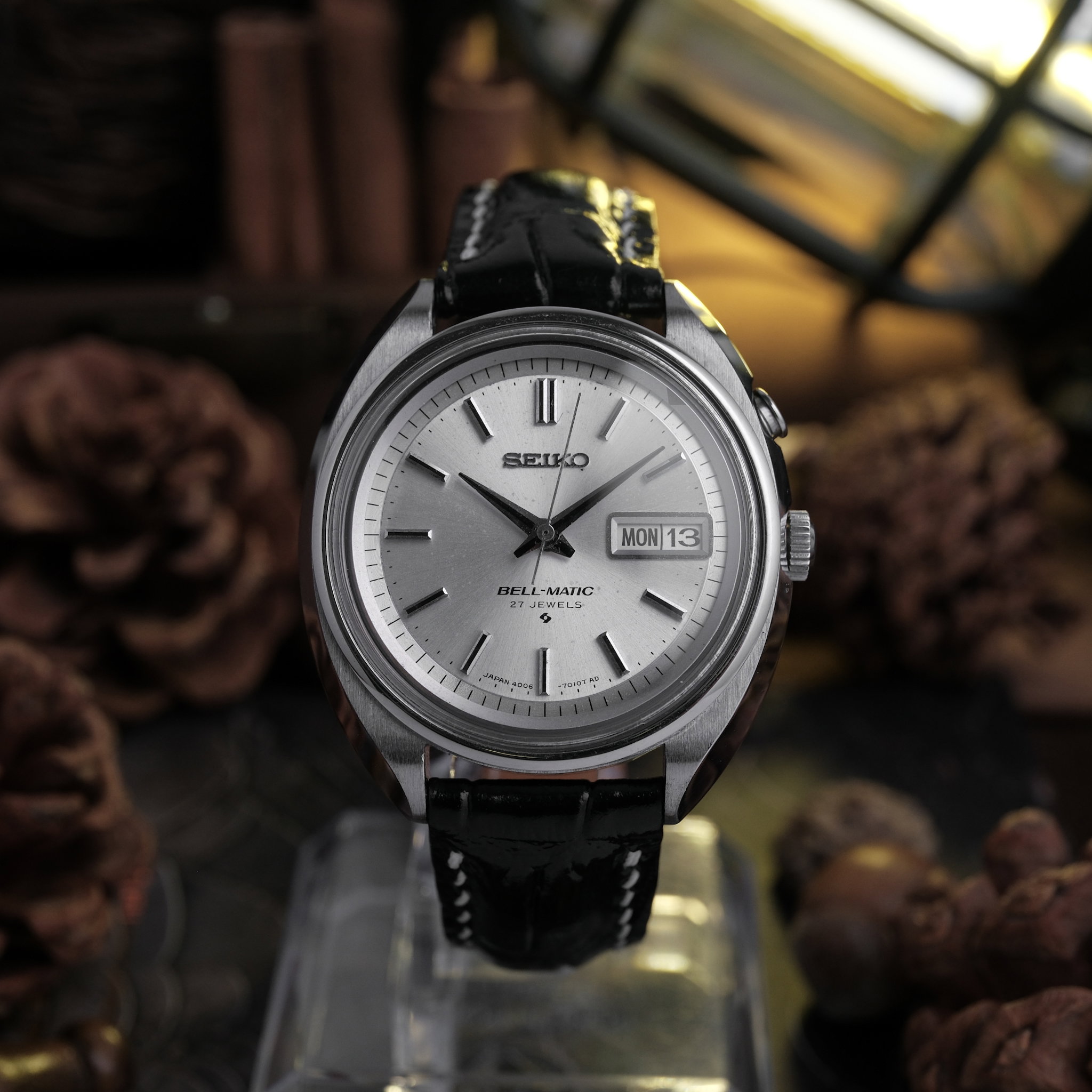
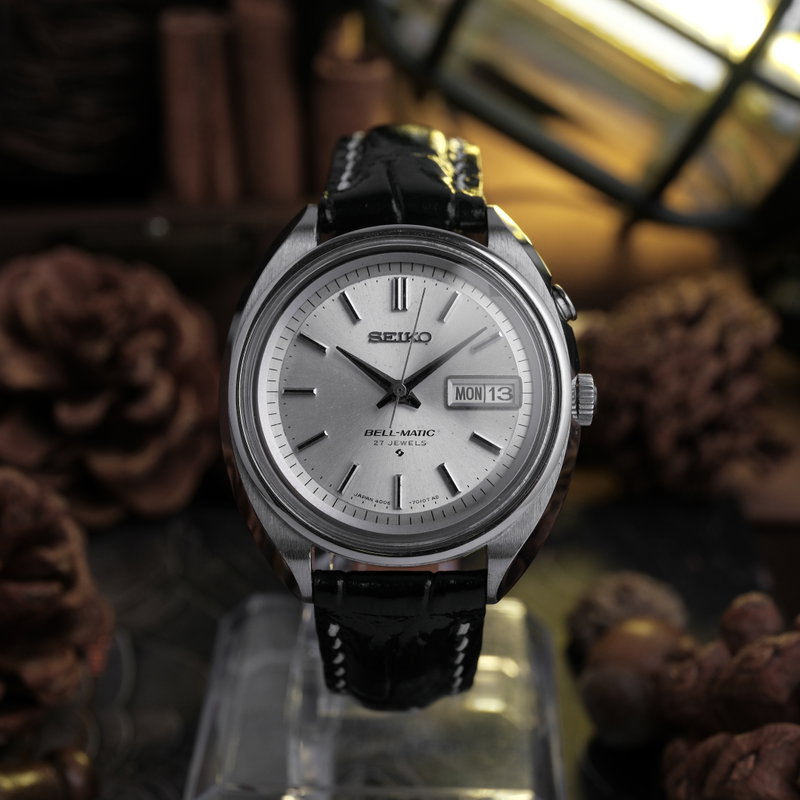
The 4006-7010 is the more convincing daily wearer. Its steel case measures 37 mm without the crown, while the silver sunburst dial carries applied indices and the separate alarm indication. Against a similarly preserved plated version, the steel watch deserves the premium because honest case wear is easier to live with than exposed base metal.
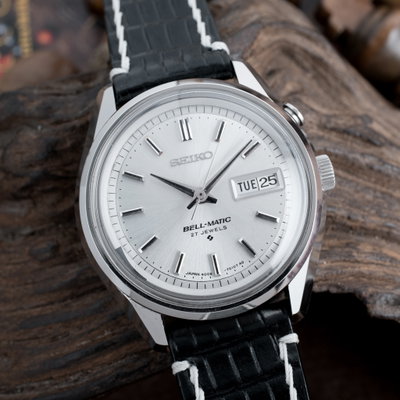
The 4006-7012 moves to 38 mm and adds a framed day-date display to the silver sunburst dial. That extra millimetre gives the dial furniture and rotating alarm ring more room, making this the version to choose when legibility matters more than the cleaner date-only layout. The 4006-7000 also belongs to the known Bell-Matic reference landscape, but the available evidence does not support a more specific configuration claim.
On the wrist
Handled Bell-Matic cases measure 37 mm or 38 mm without the crown, a range that keeps the alarm complication compact. The smaller steel case reads as a restrained vintage watch, while the larger version gives the sunburst dial and day-date window more visual space. Neither measurement supports calling the Bell-Matic oversized by mechanical-alarm standards.
The inner rotating alarm indicator adds depth and activity that a conventional three-hand Seiko lacks. Dauphine-style hands with black central stripes stand out against the white and silver dials seen, while applied faceted indices keep the display readable. The alarm setting furniture makes the watch busier under close inspection, but its case proportions remain suitable for everyday wear.
What goes wrong
Gold plating is the first condition risk. Wear concentrates at exposed edges and lugs, leaving base metal visible, and no routine service restores that factory layer. Steel cases avoid this failure mode, although polishing can still soften the lug geometry and blur caseback engravings that should remain sharply defined.
The dial carries more value than a bright case. Moisture staining, oxidation around applied furniture and a refinished surface all matter more than light external scratches; a redial also removes the evidence needed to judge the watch honestly. On a silver sunburst dial, a flat finish or muddy printing is a stronger warning than even ageing across the surface.
Alarm operation must be assessed separately from ordinary timekeeping because the Bell-Matic combines automatic winding, calendar work and a mechanical alarm. Without dated documentation, the service history is unknown, and a running watch does not establish that the alarm train has been serviced. Between a polished plated example and an honest steel watch with a clean dial and functioning alarm, take the steel watch.
Dating this watch
| Serial range / caliber | Year | Note |
|---|---|---|
| 4006 | 1966-1978 | caliber production window |
Dating data comes from our decoder tables; treat years as approximate.
What to check before you buy
- Movement and reference pairing: The handled 4005-7000 uses caliber 4005, while 4006-7010 and 4006-7012 use caliber 4006A. A conflicting movement requires explanation and may indicate a franken or married watch.
- Dial and alarm display: Known steel 4006 examples use a silver sunburst dial with applied indices and a separate alarm indication. Flat refinishing, muddy text or mismatched furniture can signal a redial or assembled parts.
- Hands and applied furniture: Handled white and silver dials use dauphine-style hands with black central stripes, paired with applied indices. Inconsistent hand shapes or finishes should be treated as period-correct only when evidence supports them.
- Case material and wear: The handled 4005-7000 combines a gold-plated case with a stainless steel back, while handled 4006 versions are steel. Exposed base metal at the lugs confirms plating loss rather than removable surface dirt.
- Caseback definition: Sharp caseback engravings support limited abrasive refinishing, while weak or blurred marks indicate metal removal. This does not authenticate the movement alone, but it helps expose an over-polished case.
Recent Seiko results
8 Seiko watches auctioned
More Seiko references
Related pages
Frequently asked questions
Ready to hunt for your own?
More than 100 vintage watches go under the hammer every week.