Vintage Rado Voyager - References, Wear and Buying Advice
The vintage Rado Voyager to buy has a clean silver dial, a sharp steel cushion case and a movement that matches its reference.
Live now
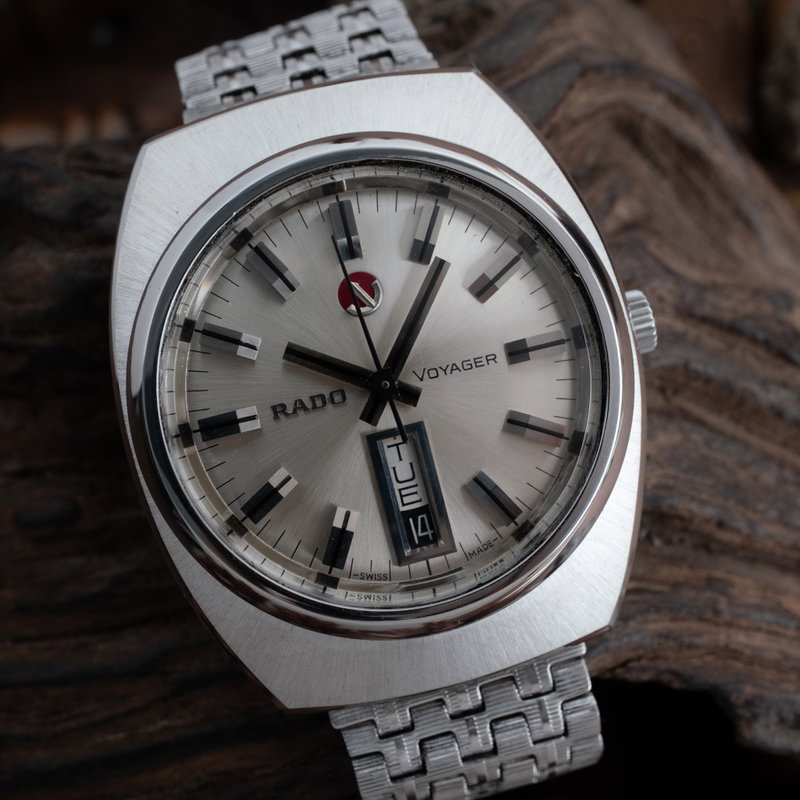
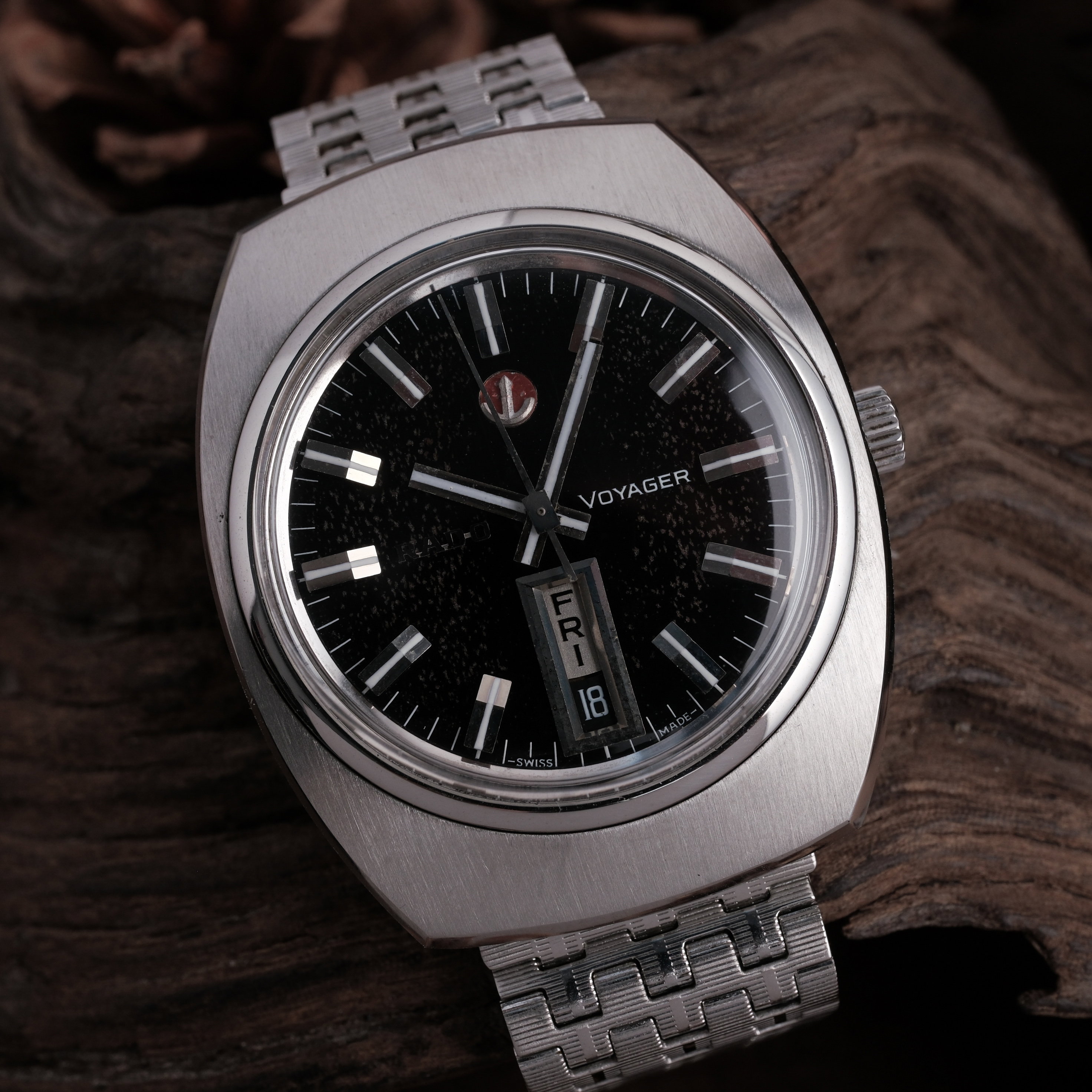
The Voyager makes most sense as a bold 1970s automatic built around a steel cushion or tonneau case, a rotating anchor and an unusual vertical day-date display. Early watches such as the 11814 combine that layout with a silver sunburst dial and applied faceted indices, giving the watch its clearest identity without relying on decoration alone.
The choice is not simply between clean and aged examples. Silver dials occur with sunburst or vertical brushing, while at least one black dial shows dense stardust spotting rather than even patina. Buy the clean dial and sharp case before chasing a particular reference, because dial damage and lost case geometry alter the Voyager more than a one-millimetre difference in size.
Known production span
1973-1984
Case material
Stainless steel
Handled case sizes
35 mm and 36 mm, excluding the crown
Case forms
Cushion and tonneau
| Display | Vertical day-date on documented 1970s examples |
| Dial configurations | Silver sunburst, silver vertically brushed and black with documented spotting |
| ETA 2789 configuration | 25 jewels in reference 1941298 |
| ETA 2836-2 configuration | 17 jewels in reference 636.3580.4 |
| Signature detail | Rotating anchor logo |
On the wrist
At 35 or 36 mm without the crown, the Voyager sounds restrained until the cushion case and broad dial are taken into account. The geometric case gives it more presence than a conventional round watch of similar width, while the vertical day-date at six keeps the dial recognisably Voyager. It suits a cuff, but its shape still reads as deliberately 1970s rather than neutral.
Legibility is strongest on the silver versions, where black inserts, faceted indices and the day-date aperture break up the brushed or sunburst surface. The black-dial version can look heavier, especially when dense spotting reduces contrast. Between a clean silver 36 mm watch and a damaged black 35 mm example at the same level, take the silver dial.
Where the value sits
The largest premium belongs to a clean dial with intact applied furniture and a functioning rotating anchor. A refinished dial costs more than every ordinary case mark combined, while heavy stardust spotting is damage rather than patina when it disrupts the original black surface. Sunburst and vertically brushed silver dials are both established Voyager configurations.
Reference matters because it anchors the movement and exterior configuration. The 11814 is the clearest starting point among the Voyagers handled, pairing the early vertical day-date design with a steel cushion case. Later watches such as the 636.3580.4 use a different automatic caliber, so a movement swap can turn an otherwise convincing watch into a franken.
A period-correct multi-link bracelet adds coherence, but it should not outrank the dial or case. Bracelets can be replaced, and period-correct does not prove that one shipped with that particular watch. Value falls faster when the lugs lose their facets or the dial is refinished than when a wearable Voyager sits on a later strap.
What goes wrong
The worst common fault is dial damage. Dense spotting across a black surface is not attractive patina, and a redial can erase the brushing, alter the day-date framing or leave the applied furniture sitting incorrectly. A genuine service dial would be a factory replacement, not a redial, but the available evidence does not establish a service-dial specification for the Voyager.
Over-polishing softens the cushion case first, rounding its facets and turning defined edges mushy. Multi-link bracelets can develop stretch, replacement crowns can break period coherence, and a transplanted automatic movement can create a franken even when every component is genuine Rado or ETA. None of these faults should be hidden behind a blanket claim of originality.
The movement should be judged by reference and configuration, not merely by whether it runs. The 1941298 has been handled with an ETA 2789, while the 636.3580.4 has been handled with an ETA 2836-2. The service history of any individual used Rado Voyager is unknown without documentation, and the watch itself cannot establish when its lubricants or gaskets were last changed.
What to check before you buy
- Dial layout and finish: Established Voyager dials include silver sunburst or vertically brushed finishes with applied faceted indices and a rotating anchor. A flat refinish or disturbed furniture is evidence of a redial, not harmless cleaning.
- Day-date configuration: The early Voyager identity includes a vertical day-date aperture at six. Its framing and alignment should belong naturally to the dial rather than cutting through printing or leaving signs that a different dial was adapted.
- Movement and reference pairing: Reference 1941298 has been handled with the 25-jewel ETA 2789, while 636.3580.4 has been handled with the 17-jewel ETA 2836-2. A different movement requires evidence before the watch can be treated as coherent.
- Case geometry: The steel cushion or tonneau case should retain readable facets and defined transitions. Soft edges and mushy lugs indicate polishing, while an incompatible case and dial combination can point to a married or franken watch.
- Crown and bracelet: A textured multi-link bracelet is period-correct on documented Voyager examples, but it does not prove original delivery. Crown specifications are not established by the available evidence, so an originality claim for the crown should not be accepted without support.
Recent Rado results
35 Rado watches auctioned
Rado · Voyager · 13114686
Rado · Voyager · 11814/1
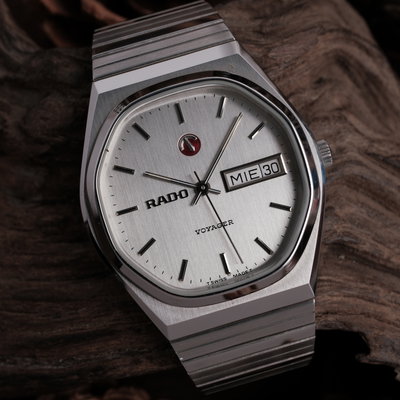
Rado · Voyager · 636.3426.4 · 1984

Rado · Voyager · 11814
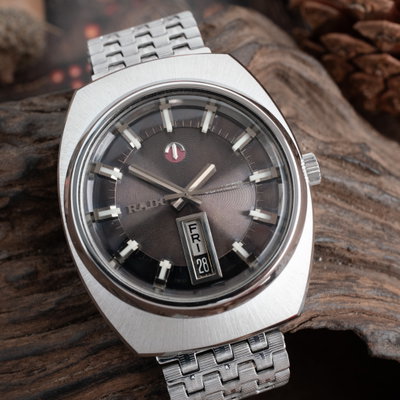
Rado · Voyager · 11814
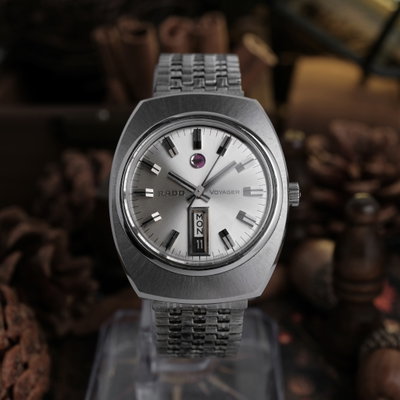
Rado · Voyager
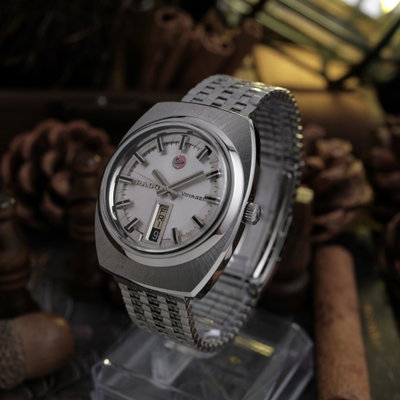
Rado · Voyager · 11814/1
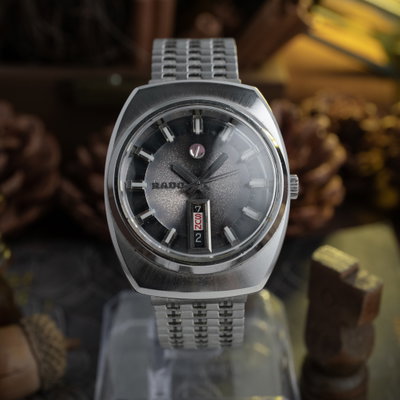
Rado · Voyager · 11814 / 43110218
We auction more than 100 vintage watches a week.
Get first access: new Rado watch drops and alerts before auctions end.
More Rado references
Related pages
Frequently asked questions
Ready to hunt for your own?
More than 100 vintage watches go under the hammer every week.