Vintage Rado Rising Star: References, Calibers and Buying Advice
The vintage Rado Rising Star to buy is a 36 mm steel example with an honest silver dial, sharp cushion-case lines and a movement correct for its reference.
Live now
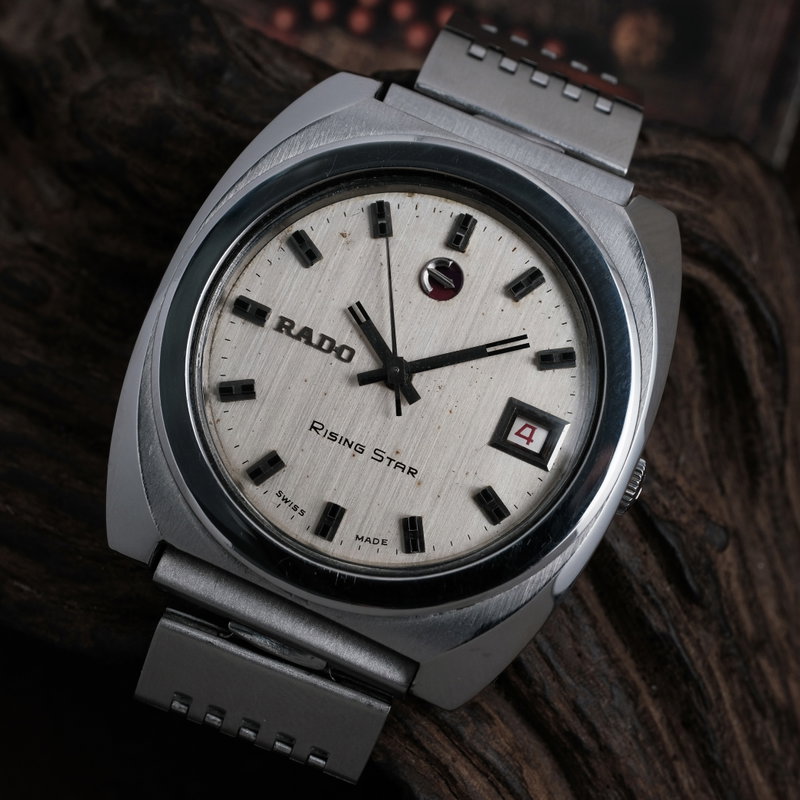
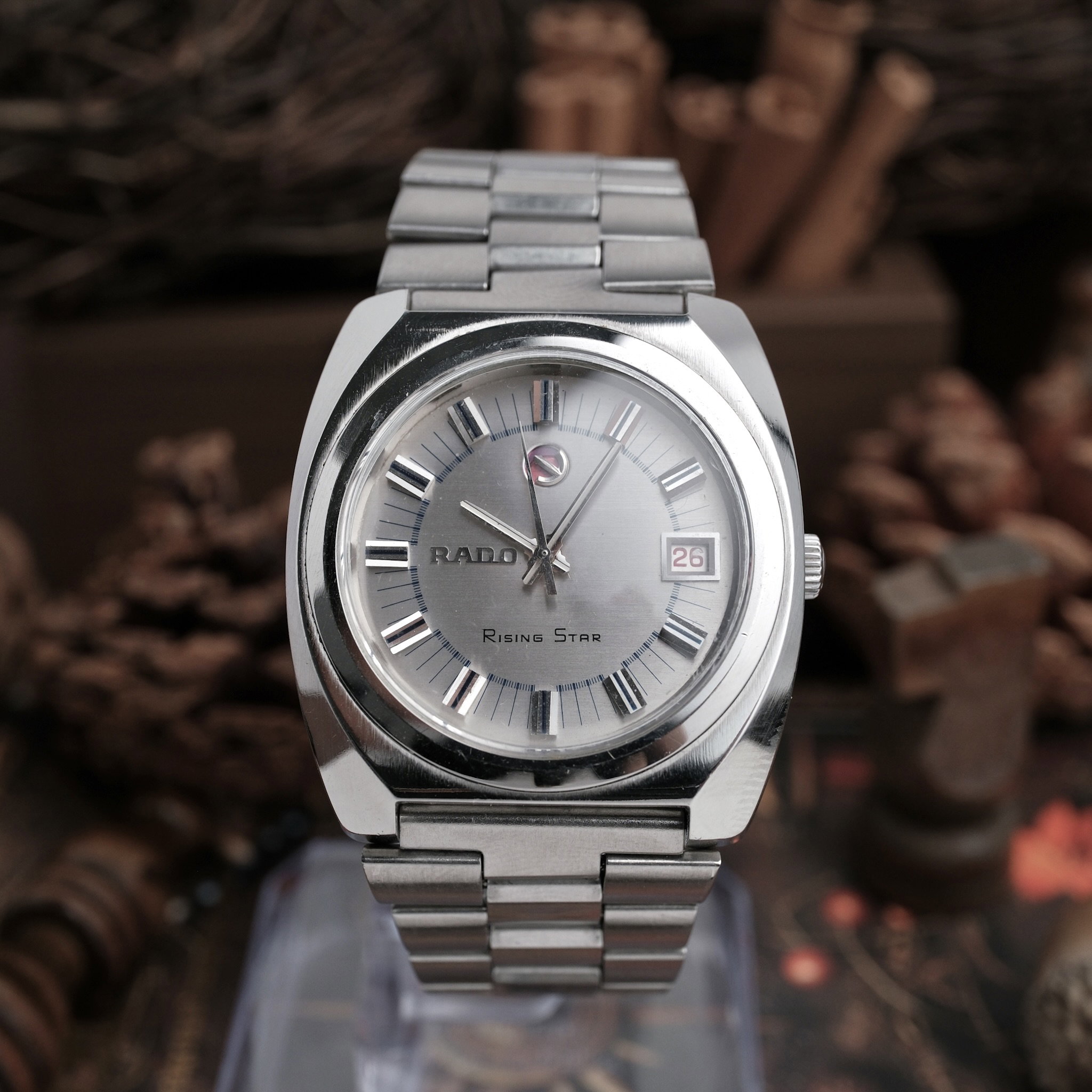
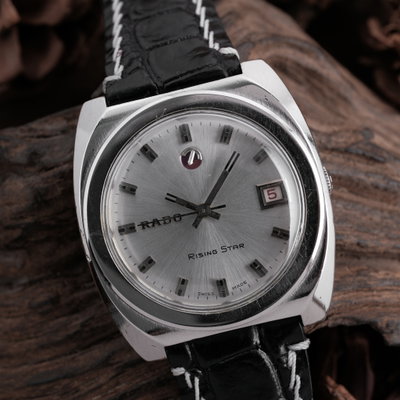
The Rising Star is a 1970s Rado built around a broad cushion case, a silver dial and the brand's rotating anchor at twelve. At 36 mm excluding the crown, it carries more visual width than a round watch of the same measurement. A vintage Rado Rising Star makes sense when you want period design without an oversized case.
The gallery shows the Rising Star in the form that matters most: stainless steel, automatic winding and a silver dial with applied indices. References differ in dial accents, date colour and caliber, so a used Rado Rising Star should be judged as a complete reference-specific watch rather than against one universal specification. The dial is the value centre, but softened case lines and mismatched parts can erase that advantage.
Model period
1970s
Case material
Stainless steel
Case size
36 mm excluding the crown
Case shape
Cushion case
| Winding | Automatic |
| Reference 11804 movement | Caliber AS 1858 |
| Reference 11894/1 movement | Caliber 2793, 25 jewels |
| Dial treatments | Silver sunburst or brushed silver-tone |
| Date display | Red numerals on references 11804 and 11894/1 |
What it was built for
The Rising Star belongs squarely to Rado's 1970s design language. Its cushion-shaped stainless-steel case spreads the 36 mm measurement across a broad outline, while the silver sunburst or brushed dial keeps the applied markers legible. The rotating anchor at twelve and red date numerals on documented variants bring colour to an otherwise restrained layout.
This is an automatic daily watch rather than a slim formal piece. Reference 11804 uses caliber AS 1858, while 11894/1 uses caliber 2793 with 25 jewels. That difference matters at purchase and service: the model name alone does not establish which movement belongs inside a particular case.
Where the value sits
The strongest Rising Star combines an honest silver dial with crisp cushion-case geometry. A refinish costs more in lost appeal than hand oxidation or ordinary case wear because the brushed or sunburst surface, applied furniture and printed details define the watch. On reference 11894/1, blue-accented indices and matching baton hands should read as one design rather than unrelated replacement parts.
Case condition creates the next spread. Sharp case lines preserve the deliberate 1970s shape, while repeated polishing turns the cushion outline soft and removes definition around the lugs. Dial spotting is visible on some 11894/1 examples and should be described as spotting, not patina; evenly aged surfaces and local moisture damage are not the same thing.
Where to start
Start with a stainless-steel 36 mm example whose dial, hands and movement agree with its reference. Reference 11804 is the more graphic choice, pairing caliber AS 1858 with applied block indices, a red date and the seahorse medallion caseback. Reference 11894/1 offers caliber 2793, a brushed silver-tone dial and blue accents.
Between a sharply defined case with light hand oxidation and a polished case with a cleaner-looking exterior, take the sharper case if the dial remains honest. Hand spotting can be accepted and disclosed; lost case geometry cannot be put back. Service history is often unknown, so running condition should not be confused with proof of maintenance.
What to check before you buy
- Dial and furniture: Reference 11894/1 should combine a brushed silver-tone dial with blue-accented applied indices and matching baton hands. On 11804, expect a silver sunburst surface, applied block indices and a red date at three.
- Hands and ageing: Handled 11804 examples show oxidation and spotting on the metal baton hands. That damage should be disclosed plainly, but it does not by itself prove replacement; agreement with the reference's dial furniture matters more.
- Caseback: Reference 11804 has a decorated caseback with the Rado seahorse medallion. That detail is established for this reference only, so it should not be projected across every Rising Star without supporting evidence.
- Movement pairing: Reference 11804 should contain automatic caliber AS 1858, while 11894/1 should contain caliber 2793 with 25 jewels. A different pairing needs explanation because it may indicate a married or franken watch.
- Case geometry: The 36 mm stainless-steel cushion case should retain defined lines around its broad outline. Soft transitions and mushy lugs indicate polishing, which permanently reduces the clarity of the Rising Star's 1970s shape.
- Crown and movement finish: The available examples do not establish one crown profile or a reference-wide movement-finishing standard. Without documentation, no stronger claim is justified; authentication should rest on the known dial, caseback and caliber pairings.
Recent Rado results
7 Rado watches auctioned
We auction more than 100 vintage watches a week.
Get first access: new Rado watch drops and alerts before auctions end.
More Rado references
Related pages
Frequently asked questions
Ready to hunt for your own?
More than 100 vintage watches go under the hammer every week.