Vintage Seiko 5: 5126 and 7S26 Buying Guide
A vintage Seiko 5 is best bought by matching the caliber, case, dial and caseback, then choosing honest steel over worn gold-tone finish.
We auction more than 100 vintage watches a week.
Get first access: new Seiko watch drops and alerts before auctions end.
Browse 24 live Seiko auctionsThe Seiko 5 spans two distinct mechanical eras here. Early watches use the 5126A automatic caliber, while later examples run 7S26A, 7S26B or 7S26C movements. Across 1968-2006, the model moves from a 40 mm cushion case with a silver sunburst dial to compact 35-37 mm cases, including steel and two-tone configurations.
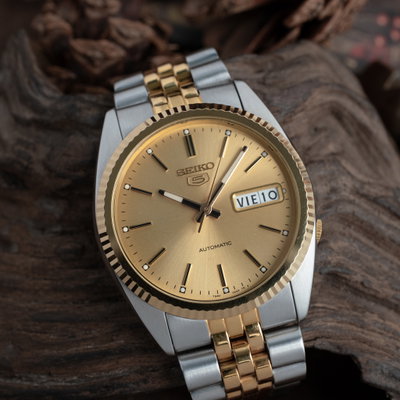
The clearest buying decision is not early against late, but coherent against assembled. A 5126A cushion-case watch and a 7S26-3110 with gold sunburst dial serve different tastes, yet each must keep the caliber, case, dial and caseback expected for its configuration. Between a clean steel 7S26-02S0 and a gold-tone example with wear-through at the lugs, take the steel watch. Lost plating does not return at service.
Known production-year range
1968-2006
Movement type
Automatic
Handled calibers
5126A, 7S26A, 7S26B, 7S26C
Jewel counts
23 jewels for 5126A; 21 jewels for 7S26A, 7S26B and 7S26C
| Handled case sizes | 35 mm, 36 mm, 37 mm and 40 mm, excluding the crown |
| Case materials | Stainless steel; stainless steel with gold-tone bezel; stainless steel with gold-tone base metal |
| Calendar | Day-date display |
| Known references | 7S26-02J0, 5126-7000, 5126-8110, 7S26-3110, 7S26-02S0, 7S26-01V0, 7S26-0500 |
| Recorded dial configurations | Silver, blue and gold-tone sunburst dials with applied indices |
What it was built for
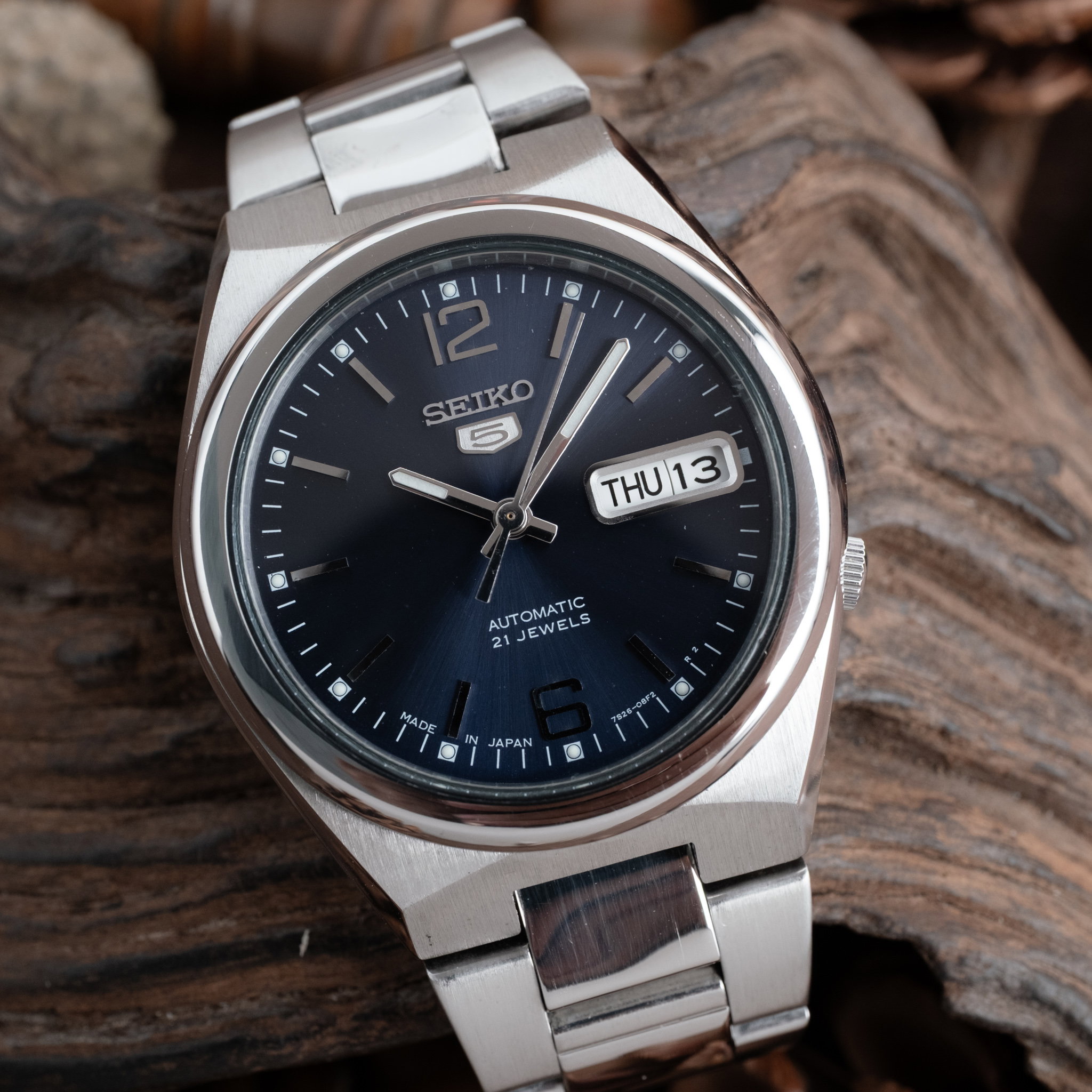
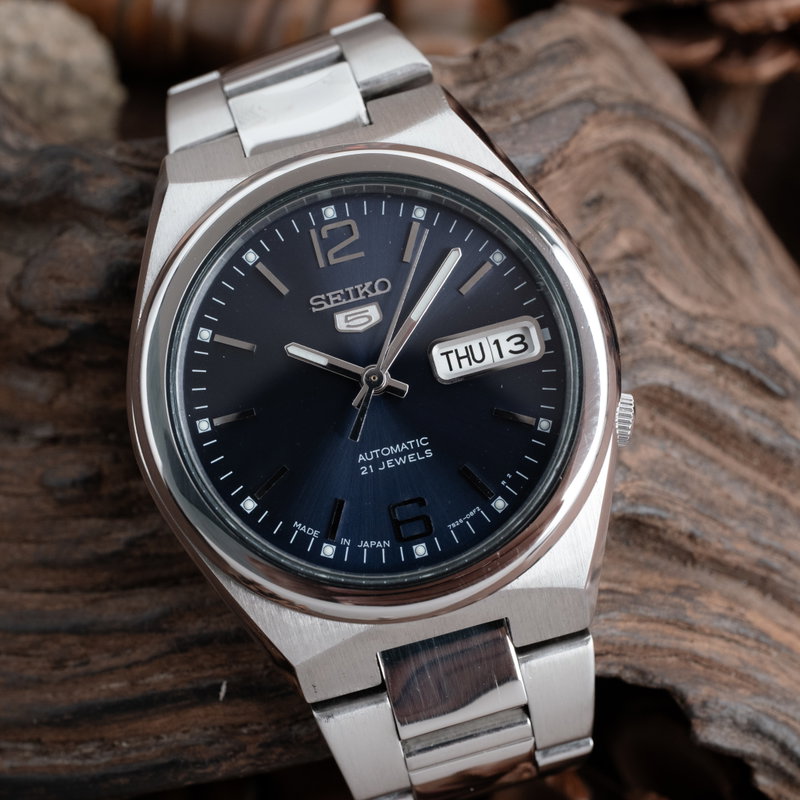
The Seiko 5 was built around automatic winding and a day-date display, making it a practical daily watch rather than a hand-wound dress piece. The recessed crown at 4 o'clock on the 7S26-02S0 keeps the case outline clean, while its deep-blue sunburst dial and applied indices remain legible without making the watch visually plain. Its 37 mm steel case sits between the smaller two-tone versions and the earlier cushion case.
That earlier format changes the character substantially. A 5126A example in a 40 mm stainless-steel cushion case has more surface area and stronger late-1960s presence than the 35-36 mm 7S26-3110. The smaller watch slips under a cuff more easily, while the cushion case occupies more wrist than the measurement alone suggests. Both retain the day-date layout, but they are not interchangeable wearing experiences.
Where the value sits
The dial carries the largest condition premium. A clean sunburst surface with crisp printing and intact applied indices matters more than a polished crystal or a replaceable bracelet, and a redial costs more than ordinary case wear. Gold sunburst dials on the 7S26-3110 and deep blue on the 7S26-02S0 also need to agree with the surrounding configuration. A genuine service dial is not a redial, but without supporting documentation its installation date remains unknown.
Case finish creates the next spread. Steel tolerates honest scratches, but gold-tone surfaces can wear through at the lug edges and bezel, leaving damage no routine service can reverse. Over-polishing softens the fluted bezel and rounds the lugs; bracelet stretch affects fit rather than authenticity. The 5126 family has appeared less often in our handling than the 7S26 family, though scarcity alone does not excuse a refinished dial or a married movement.
Dating and serials
Caliber 5126 has a production window of 1968-1971. That window dates the movement family, not an individual watch, and it does not establish that a particular case and movement left the factory together. A 5126A movement should therefore support the wider judgement formed from the cushion case, day-date dial and matching construction rather than override a contradiction elsewhere.
No equivalent 7S26 dating table is available in the evidence used for this page. The handled watches establish 7S26A, 7S26B and 7S26C variants within the broader model range, but they do not license an exact production year from a serial number. Without documentation, we prefer not to narrow a 7S26 watch beyond what its reference, caliber and physical configuration establish.
Dating this watch
| Serial range / caliber | Year | Note |
|---|---|---|
| 5126 | 1968-1971 | caliber production window |
Dating data comes from our decoder tables; treat years as approximate.
What to check before you buy
- Dial and calendar configuration: On the deep-blue 7S26-02S0 configuration, the sunburst dial, applied indices and day-date aperture should read as one coherent assembly. Uneven printing or furniture that conflicts with the dial finish supports a redial or franken concern.
- Crown and case shape: The 7S26-02S0 has a recessed crown at 4 o'clock in a 37 mm stainless-steel case. A different crown position or a case that cannot accommodate that recess contradicts the known configuration.
- Movement match: The handled 7S26-02S0 uses caliber 7S26B, the 7S26-0500 uses 7S26C and the 7S26-3110 uses 7S26A. A 5126A inside one of those cases would indicate a married or franken watch.
- Caseback construction: Exhibition casebacks are established for the 7S26-02S0 and 7S26-0500 configurations. A display back alone proves nothing, but it should not conflict with the reference, movement generation or case construction.
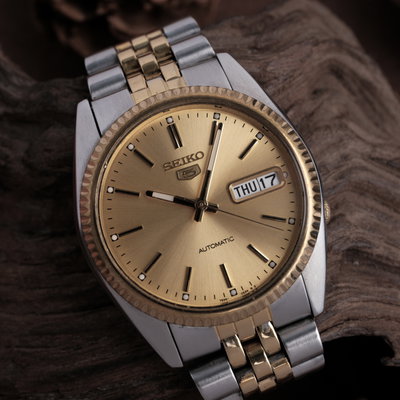
- Gold-tone case wear: On the 7S26-3110 and 7S26-0500, inspect the lug edges and fluted bezel for wear-through. Soft fluting, rounded lugs and exposed base material indicate polishing or finish loss rather than attractive patina.
Recent Seiko results
14 Seiko watches auctioned
Seiko · Seiko 5 · 7S26-02S0
Seiko · Seiko 5 · 7S26-01V0
Seiko · Seiko 5 · 7S26-3110 · 2001
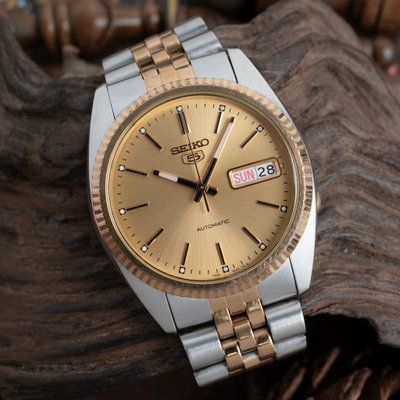
Seiko · Seiko 5 · 7S26-3110 · 1999
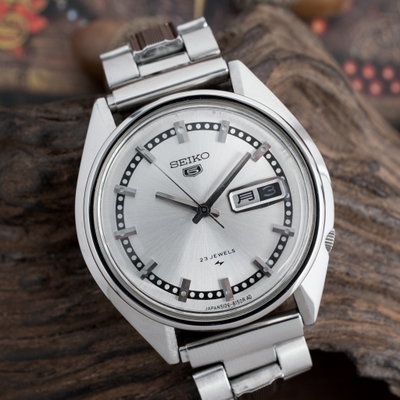
Seiko · Seiko 5 · 5126-8110 · 1968
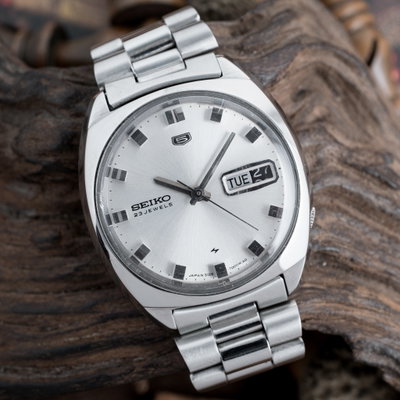
Seiko · Seiko 5 · 5126-7000 · 1968
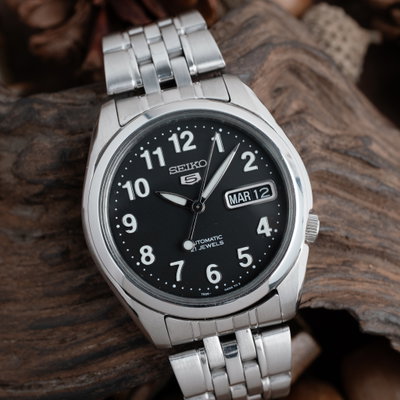
Seiko · Seiko 5 · 7S26-01V0
Seiko · Seiko 5 · 7S26-3110 · 1999
More Seiko references
Related pages
Frequently asked questions
Ready to hunt for your own?
More than 100 vintage watches go under the hammer every week.