King Seiko Vanac: the bold side of 1970s King Seiko
The King Seiko Vanac is a bold 1970s automatic whose value rests on a clean original dial, sharp geometric case and intact faceted crystal.
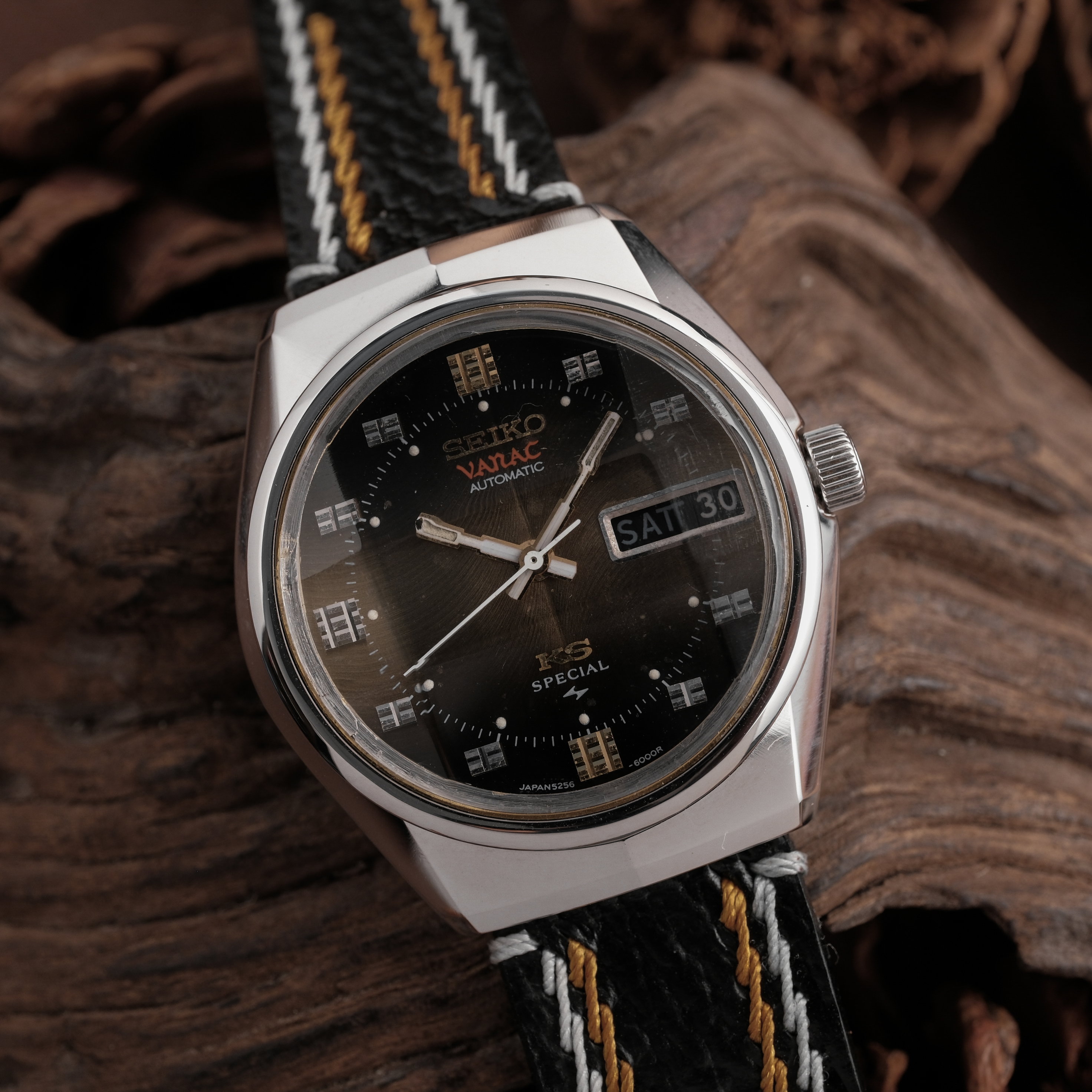
The King Seiko Vanac turned the restrained King Seiko formula into something unmistakably early 1970s: angular cases, strongly textured or graduated dials and faceted crystals. Watches handled from 1972 through 1974 show how deliberately the line used light and geometry rather than conventional dress-watch restraint.
The strongest buy is a steel example with a clean original dial, crisp case planes and an intact crystal. A used King Seiko Vanac with spotting, a scratched crystal or softened edges may cost less, but the dial carries the greater penalty and the model loses much of its character when its facets disappear.
Known production years
1972-1974
Handled case-size range
35-37 mm, excluding crown
5626-7180 movement
Automatic caliber 5626B
5256-6000 movement
Automatic caliber 5256A
| Jewel count | 25 jewels on 5626B and 5256A examples |
| Case materials | Stainless steel, or gold-plated with stainless steel caseback |
| Dial treatments | Gradient blue, textured green, brown sunburst and textured champagne |
| Defining external component | Faceted crystal |
The model landscape
Vanac is a design family rather than one uniform watch. The 5626-7180 pairs a 37 mm steel case with a gold-tone bezel and has appeared with gradient blue or textured green dials, while the 5256-6000 uses a 35 mm steel case and a brown sunburst dial. That two-millimetre difference changes the balance: the former reads broader and more architectural, while the latter keeps the dial and crystal visually concentrated.
Movement choice also separates the versions. The 5626-7180 uses the automatic 5626B with 25 jewels, while the 5256-6000 uses the automatic 5256A with the same jewel count. The gold-plated 5626-7250 is 36 mm and uses caliber 5626, but worn plating at exposed edges cannot be restored by routine servicing. Against a plated case with wear, take an honest steel case with sharper geometry.
On the wrist
A vintage King Seiko Vanac wears larger than its 35 to 37 mm cases suggest because the angular case, broad dial treatment and faceted crystal keep catching light. The 37 mm 5626-7180 has the strongest visual footprint; the 35 mm 5256-6000 is the quieter option without becoming conventional. Both suit a collector who wants visible 1970s design rather than an unobtrusive dress watch.
Legibility depends heavily on the dial. Applied ridged indices and faceted hands separate clearly on a clean gradient or textured surface, but spotting across the brown sunburst dial can interrupt that contrast. Crystal scratches matter more here than on a plain round crystal because they break up the facets that give the Vanac its architecture.
What goes wrong
Dial damage is the first and costliest fault. Brown sunburst examples can show dark spotting and freckling across the surface, while a redial removes the finishes and applied-detail relationships that define the model. A genuine service dial is different from a redial, but neither should be priced as an untouched original dial.
Faceted crystals collect visible scratches, plated cases wear through at the lugs and case edges, and polishing softens the sharp planes around the lugs. Those faults compound each other: a clean dial behind a badly scratched crystal still loses impact, while a sharp crystal cannot rescue mushy case geometry. Service history is often unknown, and without documentation the movement's condition should not be inferred from external cleanliness.
Dating this watch
| Serial range / caliber | Year | Note |
|---|---|---|
| 5625 | 1968-1975 | caliber production window |
| 5626 | 1968-1975 | caliber production window |
Dating data comes from our decoder tables; treat years as approximate.
What to check before you buy
- Dial configuration: For the 5626-7180, compare the gradient blue or textured green surface with its applied indices and faceted hands. Flat paint, lost texture or disturbed printing points toward a redial rather than ordinary ageing.
- Case and crystal geometry: The Vanac depends on angular case planes and a faceted crystal. Soft or mushy lug edges indicate polishing, while a rounded replacement crystal changes the model's light pattern even if it fits the case.
- Movement and reference pairing: A 5626-7180 should pair with automatic caliber 5626B, while a 5256-6000 should pair with automatic caliber 5256A. A mismatch is a concrete franken or married-watch warning, not normal service replacement.
- Plated-case wear: On the 5626-7250, inspect the 36 mm gold-plated case around the lugs and exposed edges, then confirm the stainless steel caseback. Local wear-through is permanent case damage rather than removable surface dirt.
Recent Seiko results
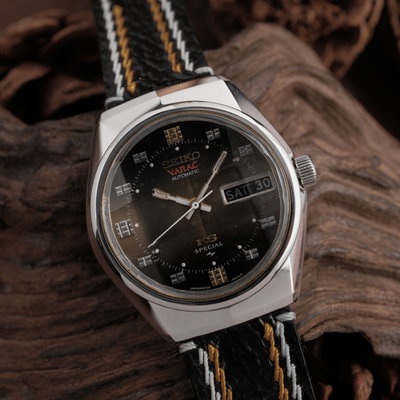
Seiko · King Seiko Vanac · 5256-6000 · 1973
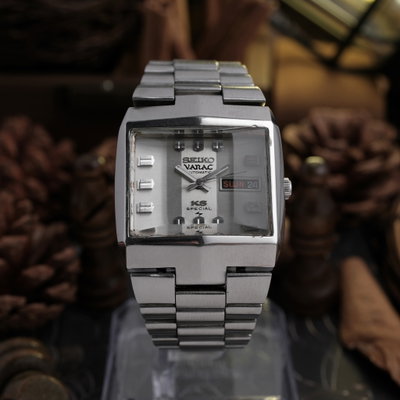
Seiko · King Seiko Vanac · 5626-5050 · 1973
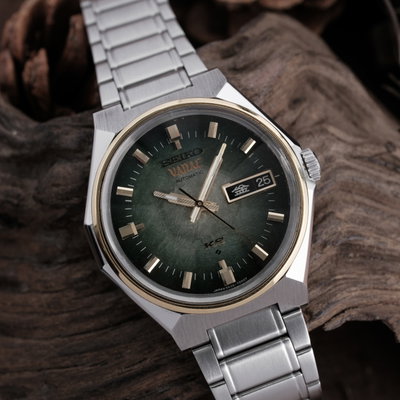
Seiko · King Seiko Vanac · 5626-7180 · 1973
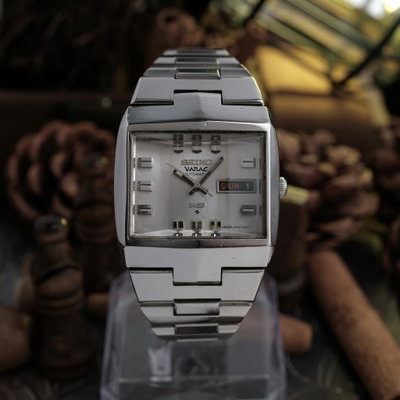
Seiko · King Seiko Vanac · 5626-5050 · 1973
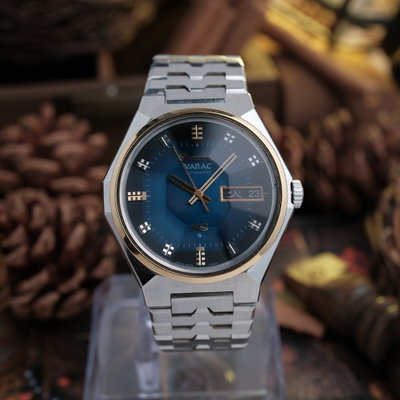
Seiko · King Seiko Vanac · 5626-7180 · 1973
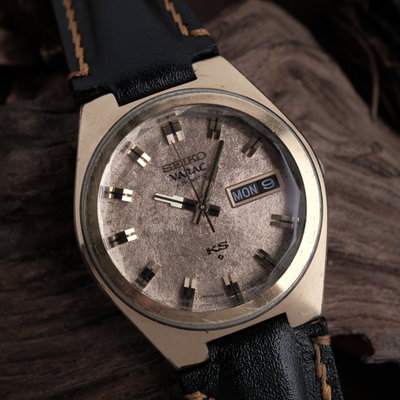
Seiko · King Seiko Vanac · 5626-7250 · 1974
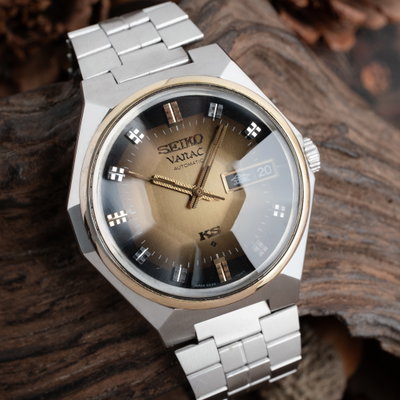
Seiko · King Seiko Vanac · 5626-7180 · 1973

Seiko · King Seiko Vanac · 5626-7140 · 1972
More Seiko references
Related pages
Frequently asked questions
Ready to hunt for your own?
More than 100 vintage watches go under the hammer every week.