Vintage King Seiko Hi-Beat: What to Buy and What to Avoid
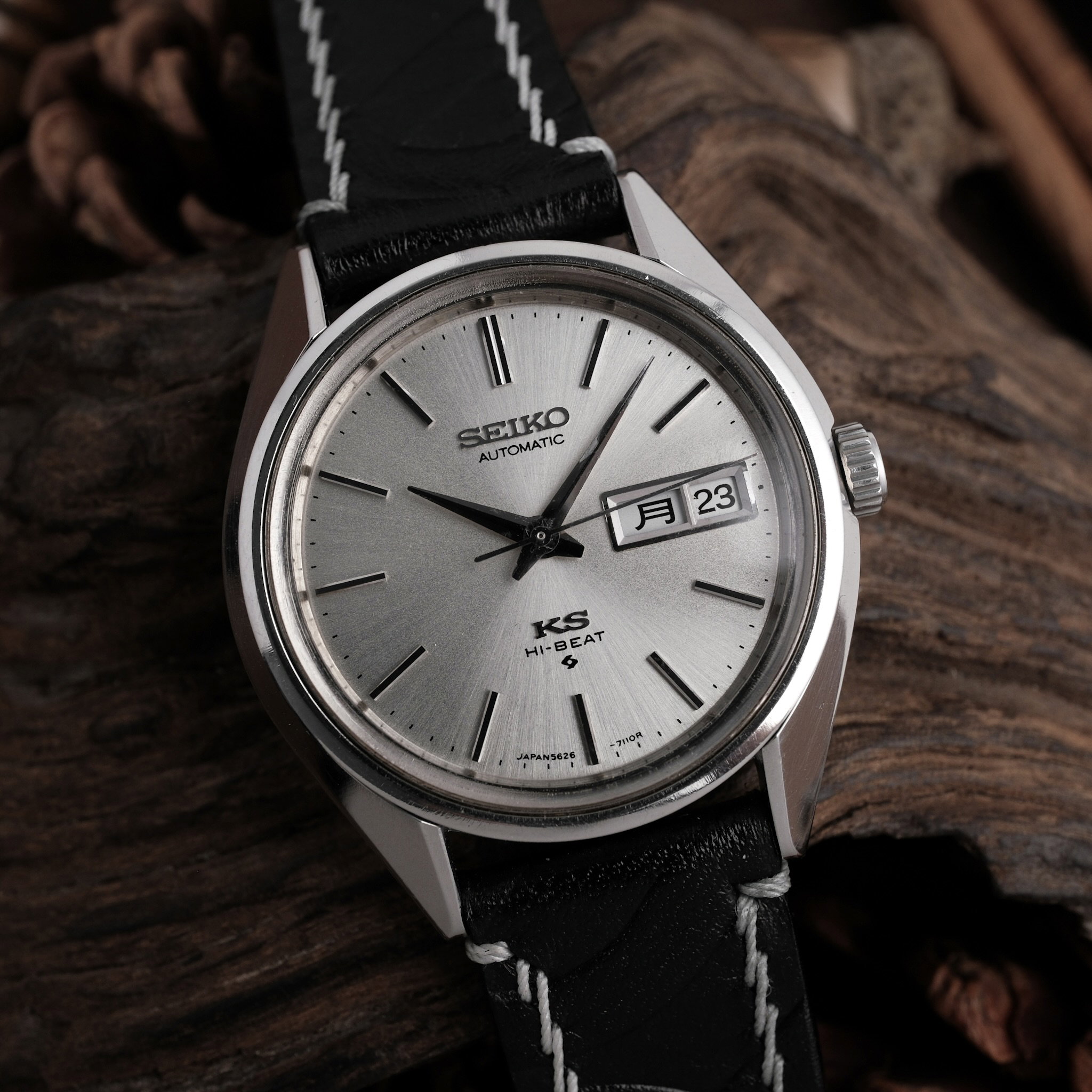
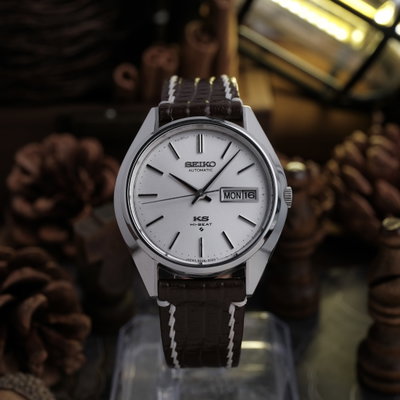
Buy the dial and case geometry first: a sharp 36 mm steel example is the safest choice, while the square 35 mm version offers more period character.
We auction more than 100 vintage watches a week.
Get first access: new Seiko watch drops and alerts before auctions end.
Browse 20 live Seiko auctionsThe King Seiko Hi-Beat is a compact steel dress watch whose value depends heavily on sharp case geometry and a clean, convincing dial. Examples handled from 1968 through 1975 range from restrained 36 mm round cases to the square 35 mm 5626-5010, giving the model more variety than its silver-dial reputation suggests.
The safest used King Seiko Hi-Beat is a 36 mm example with crisp facets, an untouched silver dial and the correct automatic caliber. Between a softened case with a flawless-looking redial and a lightly marked watch retaining its dial texture, take the latter. A refinished dial can cost more in market appeal than every honest case mark combined.
Known production span
1968-1975
Case material
Stainless steel
Round case size
36 mm excluding the crown
Square case size
35 mm excluding the crown
| 5625-7111 movement | Automatic caliber 5625B, 25 jewels |
| 5626-7111 movement | Automatic caliber 5626A, 25 jewels |
| 5625-7111 dial | Silver sunburst with applied faceted indices |
| 5626-5010 profile | Square steel case with vertically brushed silver dial |
The model landscape
The 5625-7111 pairs a 36 mm steel case with an automatic caliber 5625B, 25 jewels and a silver sunburst dial. The 5626-7111 keeps the same diameter but uses caliber 5626A and a vertically brushed silver dial. Those finishes are not interchangeable descriptions: the surface should agree with the reference and movement.
The 5626-5010 is the deliberate alternative. Its square 35 mm steel case and vertically brushed silver dial make it visibly more experimental than the round 36 mm watches. The round versions are easier to buy because their restrained shape exposes polishing clearly; the square case is the better choice only when its corners and planes remain defined.
Value sits in the dial, case geometry and coherent reference-to-movement pairing. Caliber choice matters, but it does not rescue a redial or heavily softened case. Of the examples we have handled, the strongest buying logic is simple: pay the premium for preserved surfaces rather than cosmetic shine.
On the wrist
At 36 mm excluding the crown, the round 5625-7111 and 5626-7111 wear as compact dress watches rather than undersized curiosities. Their applied faceted indices and silver finishes remain legible through contrast and reflected light. The cases work naturally with a shirt cuff, while the angular steel surfaces keep them from reading as plain.
The square 5626-5010 measures 35 mm excluding the crown, but its broad geometric outline gives it more visual presence than that figure implies. It is the more assertive early-1970s choice. If one watch must cover formal and ordinary weekday use, the round 36 mm case is easier to live with.
What goes wrong
Heavy polishing is the first problem to price in. It softens facets, rounds corners and blurs the transitions that give these cases their structure. Surface scratches are less serious than mushy geometry because marks can remain honest evidence of wear, while lost metal cannot be returned by servicing.
A redial is the larger financial fault. Silver sunburst and vertical brushing should remain distinct, applied indices should sit consistently, and the printed identity must belong with the reference and caliber. A genuine service dial is not a redial, but it is still a replacement and should be described as such. A watch combining parts that never shipped together is franken, even when every component is genuine Seiko.
Movement condition cannot be established from dial photographs. The service history is unknown unless documentation accompanies the watch, and automatic caliber 5625B or 5626A needs mechanical assessment rather than assumptions based on appearance. Replaced crowns or crystals may be period-correct consumables, but that is not proof they are original.
Dating this watch
| Serial range / caliber | Year | Note |
|---|---|---|
| 5621 | 1968-1975 | caliber production window |
| 5625 | 1968-1975 | caliber production window |
| 5626 | 1968-1975 | caliber production window |
Dating data comes from our decoder tables; treat years as approximate.
What to check before you buy
- 5625-7111 configuration: A 5625-7111 should combine a 36 mm stainless-steel case, automatic caliber 5625B with 25 jewels and a silver sunburst dial with applied faceted indices.
- 5626-7111 configuration: A 5626-7111 should combine a 36 mm stainless-steel case, automatic caliber 5626A with 25 jewels and a vertically brushed silver dial with applied faceted indices.
- 5626-5010 case and dial: A 5626-5010 should have a square 35 mm stainless-steel case and a vertically brushed silver dial. Rounded corners or blurred planes indicate metal lost through polishing.
- Redial and franken tells: Sunburst and vertical brushing must agree with the stated configuration. Incorrect surface treatment, inconsistent applied furniture or a reference-to-caliber mismatch points to a redial or franken assembly.
Recent Seiko results
53 Seiko watches auctioned
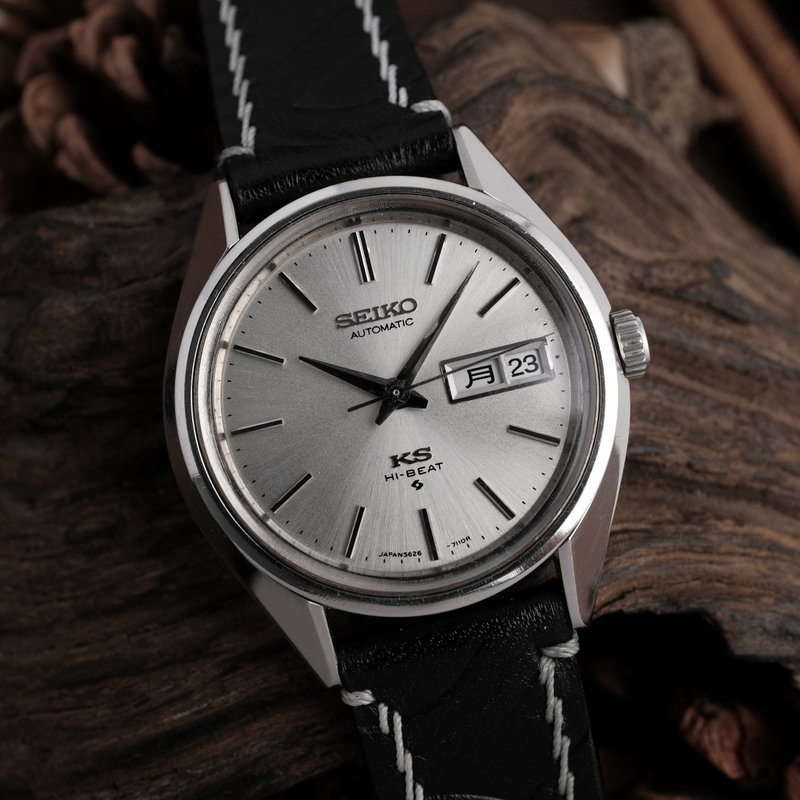
Seiko · King Seiko Hi-Beat · 5626-7110 · 1971
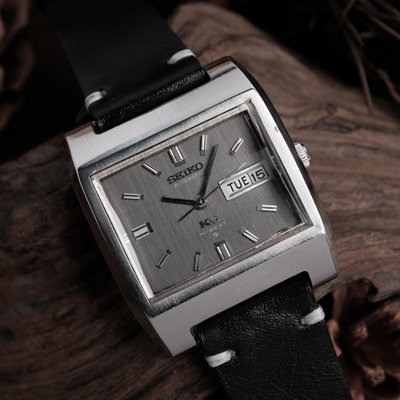
Seiko · King Seiko Hi-Beat · 5626-5010 · 1971
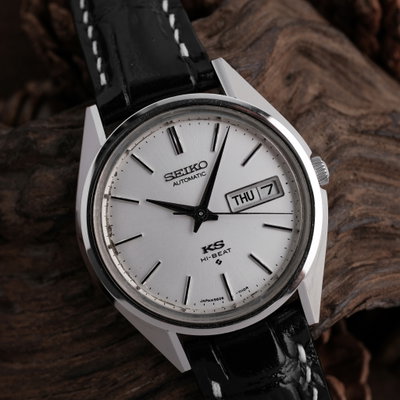
Seiko · King Seiko Hi-Beat · 5626-7113 · 1974
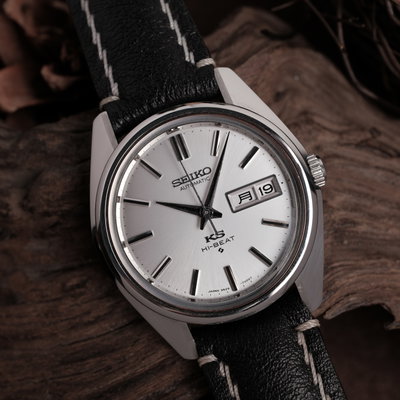
Seiko · King Seiko Hi-Beat · 5626-7000 · 1970
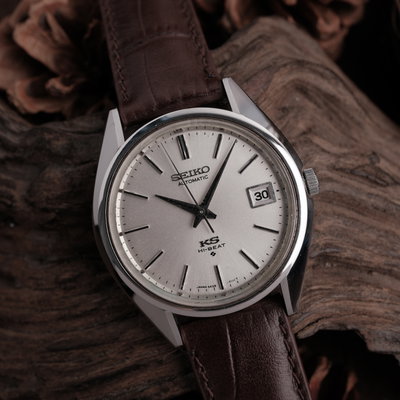
Seiko · King Seiko Hi-Beat · 5625-7111 · 1973
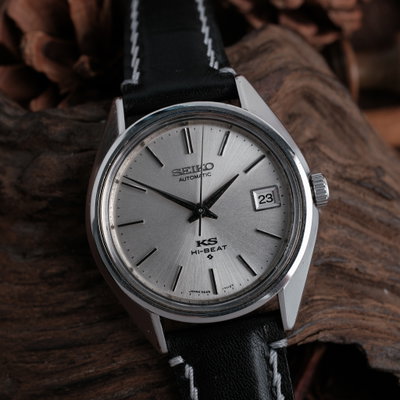
Seiko · King Seiko Hi-Beat · 5625-7111 · 1973
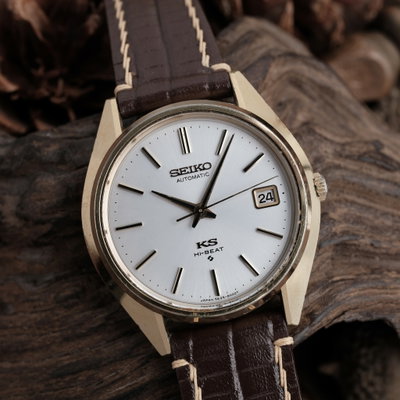
Seiko · King Seiko Hi-Beat · 5625-8001 · 1975
Seiko · King Seiko Hi-Beat · 5626-8000 · 1974
More Seiko references
Related pages
Frequently asked questions
Ready to hunt for your own?
More than 100 vintage watches go under the hammer every week.