Vintage Seiko Goldfeather: What to Buy and What to Avoid
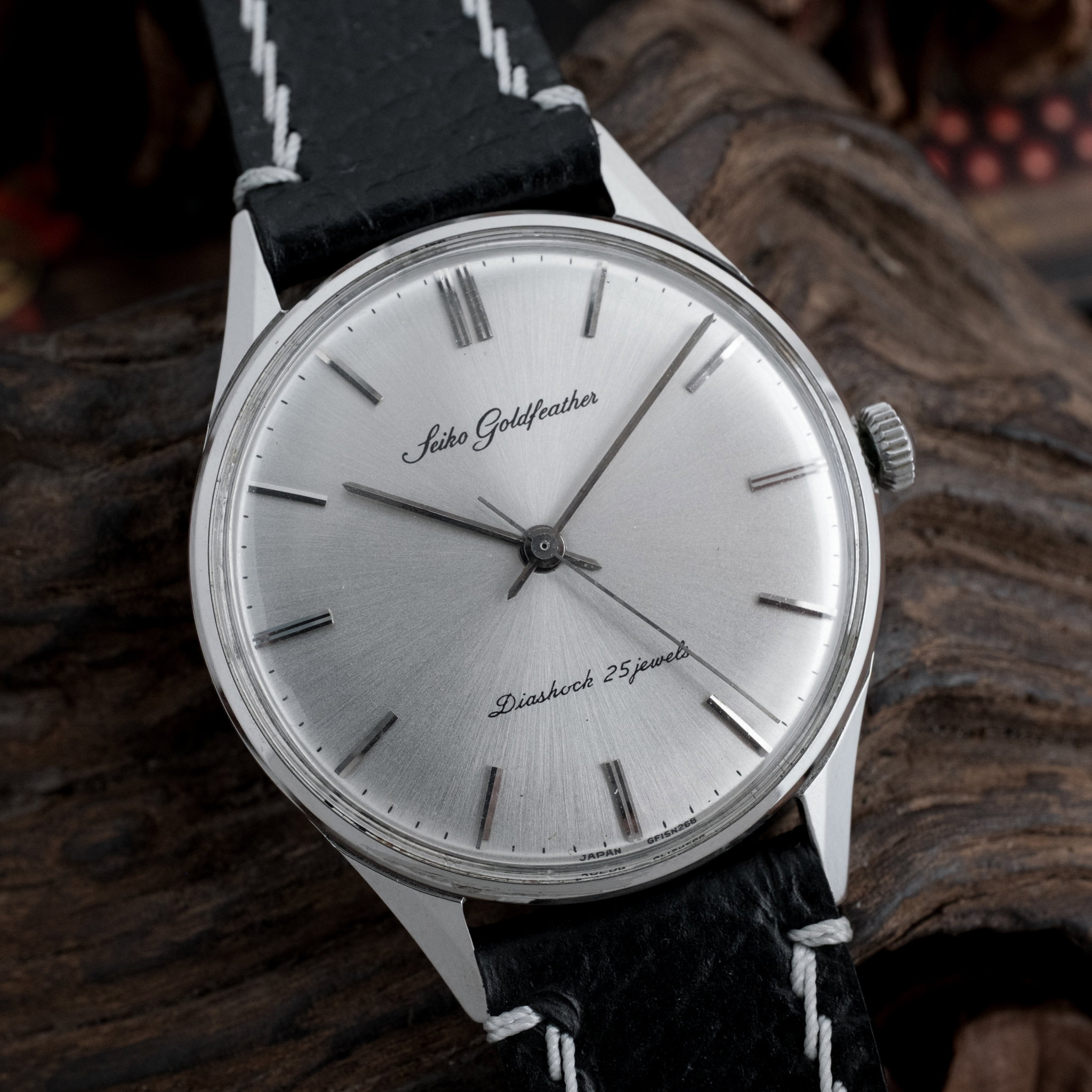
The vintage Seiko Goldfeather is an early-1960s manual-wind dress watch best bought with a clean silver sunburst dial and crisp case lines.
We auction more than 100 vintage watches a week.
Get first access: new Seiko watch drops and alerts before auctions end.
Browse 32 live Seiko auctionsThe Goldfeather belongs to Seiko's early-1960s pursuit of a thinner manual-wind dress watch. Examples handled from 1960 through 1963 combine a restrained silver sunburst dial, applied indices and a Seikosha movement marked 25 jewels. The result is formal and deliberately spare rather than sporty.
The meaningful choice is between stainless steel and 14K gold-filled cases, then between 35 mm and 36 mm examples. Goldfeather dials range from notably clean surfaces to visible spotting, while cases vary from well-defined lines to softened lugs. Dial damage and lost case geometry matter more than minor hand oxidation or a replaceable scratched crystal.
Known production years
1960-1963
Known case sizes
35 mm and 36 mm, excluding the crown
Case materials
Stainless steel and 14K gold filled
Movement
Seikosha manual wind
| Jewel count | 25 jewels |
| Dial configuration | Silver sunburst with applied indices |
| Known references | J14060, J14060E, 15005, 15005E, 15008E, J15008, J15002E |
What it was built for
The Goldfeather was introduced in 1960 during the competition to make thinner mechanical watches, and its purpose is clear on the wrist. A manual-wind Seikosha movement keeps the case free of an automatic winding system, while the silver sunburst dial and applied indices place it firmly in dress-watch territory. It suits a shirt cuff and formal clothing better than rough daily use.
The design depends on restraint rather than complication. Gold-tone dauphine hands appear with matching applied furniture on known examples, while the cursive Goldfeather script gives the otherwise sparse dial its identity. That simplicity makes damage conspicuous: moisture spotting, uneven refinishing or heavy hand oxidation has nowhere to hide.
Where the value sits
The dial carries the widest value spread. A clean silver sunburst surface with crisp printing earns the premium, while widespread spotting or a redial cuts deeper than a scratched crystal or light oxidation on the hands. A genuine service dial must be described as such, not passed off as the dial originally fitted to the watch.
Case material creates the second buying decision. Stainless steel tolerates wear without exposing another metal, whereas 14K gold fill can wear through at the lug edges and no service restores the lost layer honestly. Sharp case lines also matter because repeated polishing leaves soft or mushy lugs, permanently weakening the thin profile that defines the Goldfeather.
Where to start
For the least complicated used Seiko Goldfeather, start with a 35 mm stainless-steel 15005E and prioritise its dial over cosmetic shine. That reference is preferable to a gold-filled example when both have equally clean dials, because exposed base metal at the lugs cannot be reversed. A 36 mm J15002E is the stronger alternative when slightly greater wrist presence matters.
Buy the best coherent watch, not the brightest one. The case, dial furniture and hands should agree in colour and wear, and the Seikosha manual-wind movement should be marked 25 jewels. Service history is often unknown, so external condition cannot establish when the movement was last maintained; without documentation, the watch itself supports no stronger claim.
What to check before you buy
- Dial print and surface: Known examples use a silver sunburst surface with crisp Seiko and Goldfeather printing. Flat paint, uneven script or printing laid over spotting indicates a likely redial rather than honest ageing.
- Hands and applied furniture: Gold-tone dauphine hands and applied indices are documented together on several examples. Mismatched colours, incompatible wear or hands that reach the wrong parts of the dial can indicate a franken assembly.
- Case material and geometry: Goldfeather cases are documented in stainless steel and 14K gold fill at 35 mm or 36 mm excluding the crown. Soft lugs signal polishing, while exposed base metal at gold-filled lug edges is wear, not patina.
- Movement markings: The movement should be manual winding, marked Seikosha and 25 jewels. Correct markings alone do not exclude a married watch, so their wear and fit must remain coherent with the case and dial.
- Reference consistency: The case reference should match a known Goldfeather reference such as 15005E, J15002E, 15008E or J14060E. An unrelated case marking is a direct warning that parts from different watches have been combined.
Recent Seiko results
15 Seiko watches auctioned
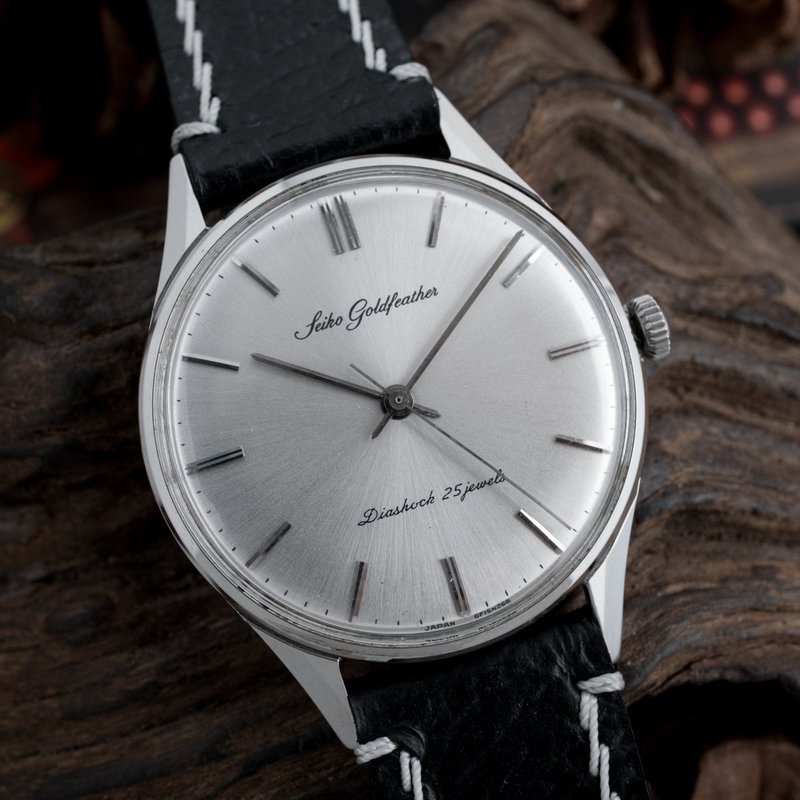
Seiko · Goldfeather · 15005E · 1962
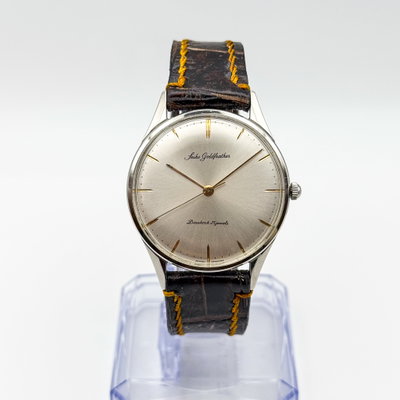
Seiko · Goldfeather · 15005E
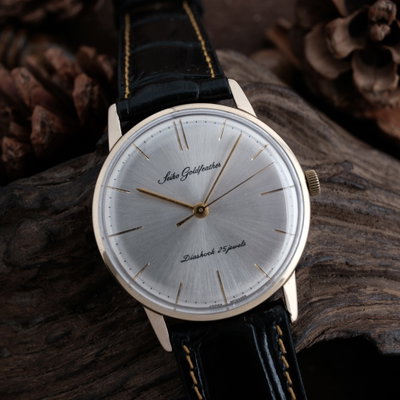
Seiko · Goldfeather · 15008E
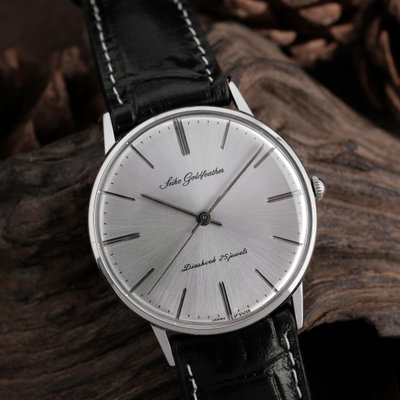
Seiko · Goldfeather · J15002E · 1961
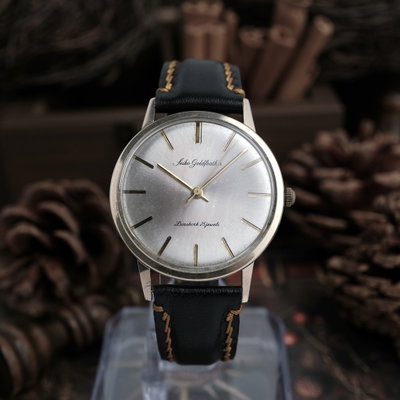
Seiko · Goldfeather · J14060E
More Seiko references
Related pages
Frequently asked questions
Ready to hunt for your own?
More than 100 vintage watches go under the hammer every week.