Vintage Rado Cornell: References, Dials and Buying Priorities
Buy the dial first: a coherent 1970s Cornell with the right cushion case, rotating anchor and date layout is preferable to a sharper-looking redial.
We auction more than 100 vintage watches a week.
Get first access: new Rado watch drops and alerts before auctions end.
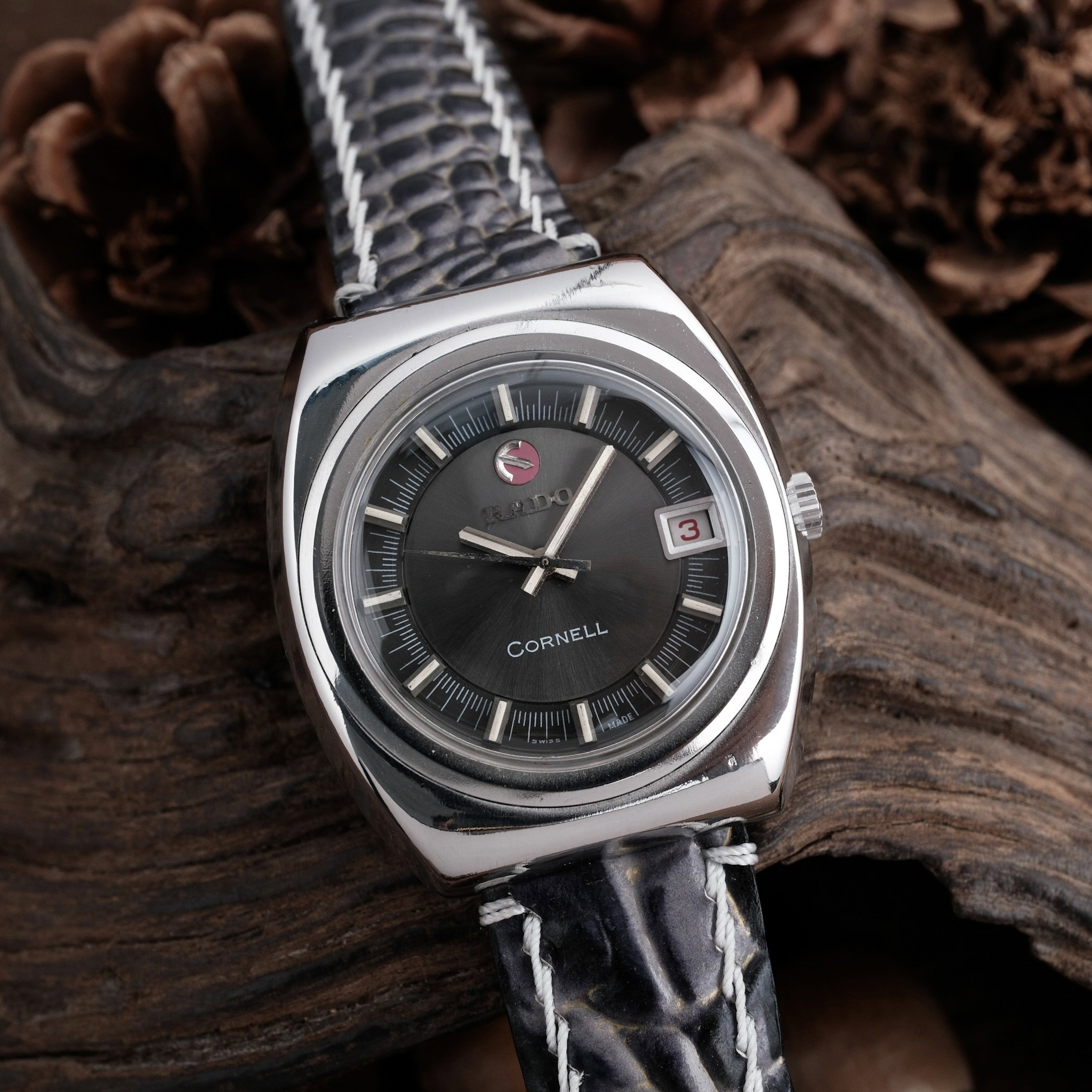
Browse 26 live Rado auctionsThe Cornell puts Rado's 1970s design into a steel cushion case, with an automatic movement, applied hour markers and the rotating anchor at 12. Grey radial-brushed, grey sunburst, silver sunburst and charcoal dials are documented, while red date numerals give some examples a sharper period accent.
The 35 mm and 36 mm cases wear differently, but dial integrity carries more weight than that one-millimetre spread. Reference, case size, dial furniture and movement must also agree before the watch makes sense as a purchase.
Production period documented
1970s
Known references
11916, 11916/1, 11928, 11918/1, 11816/1
Case sizes documented
35 mm for 11916; 36 mm for 11916/1 and 11816/1
Case material
Stainless steel
| Case form | Cushion case |
| Movement type | Automatic |
| Named caliber | ETA 2783 documented for 11916/1 and 11816/1 |
| Jewel count documented | 25 jewels |
| Dial finishes documented | Silver sunburst, grey sunburst, grey radial-brushed and charcoal grey |
| Display details | Applied indices, rotating anchor and date at 3 |
What it was built for
The Cornell belongs to Rado's 1970s automatic date-watch output, but its cushion case and block-like dial furniture make it more architectural than a conventional round dress watch. Stainless steel gives the case practical durability, while the date at 3 and high-contrast inserts in the markers keep the display direct.
On grey radial-brushed and sunburst versions, the finish changes with the light, while applied faceted indices give the compact case depth. The rotating anchor against its red background is not incidental decoration - it is part of the Cornell's recognisable face and should sit coherently with the surrounding print and furniture.
Where the value sits
The costliest fault is a redial. A refinished surface removes the radial or sunburst character, and weak printing cannot be offset by a cleaner case. Silver, grey and charcoal are all supported Cornell colours, so colour alone proves little; the finish, applied furniture, date presentation and anchor assembly must form a credible period combination.
Hand oxidation is the next visible weakness, particularly when the dial remains clean. Over-polishing matters differently: it softens the cushion profile and makes the case look rounded rather than architectural. Damaged marker inserts, an incorrect handset and a mismatched movement can turn an otherwise attractive Cornell into a franken, even when every component is genuine Rado.
Where to start
Reference 11916 is the clearest entry point because both silver sunburst and grey radial-brushed dials are established with its 35 mm steel cushion case. Between a clean 11916 dial and a larger 36 mm example with conspicuous handset oxidation, take the cleaner dial unless the smaller size is unwearable for you.
The 36 mm Cornell is the better route when wrist presence matters, with that size documented for 11916/1 and 11816/1. ETA caliber 2783 is established for both references, but that does not make every loose 2783 a correct replacement. The case, dial, hands and movement must belong to the same supported configuration, and the service history remains unknown without documentation.
What to check before you buy
- Match reference to documented dimensions: A 35 mm steel cushion case is documented for 11916, while 36 mm cases are documented for 11916/1 and 11816/1. A different measurement is not proof of a fake, but it falls outside the handled evidence.
- Assess the dial as a complete Cornell configuration: Supported dials include silver sunburst, grey sunburst, grey radial-brushed and charcoal finishes with applied indices. Flat paint, weak printing or furniture that does not sit cleanly can indicate a redial or assembled dial.
- Compare the hands with the dial furniture: Cornell examples use baton hands with contrasting inserts that correspond visually to the applied indices. Oxidation can be genuine ageing, but a different hand shape or incompatible insert treatment raises a franken concern.
- Confirm the anchor and date presentation: The rotating Rado anchor belongs at 12, and red date numerals are documented on grey examples of 11916 and 11816/1. Neither detail authenticates the watch alone, but both must agree with the rest of the dial.
- Keep caliber claims reference-specific: ETA 2783 with 25 jewels is documented for 11916/1 and 11816/1. Do not transfer that caliber assignment to another Cornell reference without evidence, and remember that a correct movement can still be married to another case.
- Read polishing in the cushion profile: The Cornell depends on a defined cushion outline rather than a conventional round case. Heavy polishing softens that outline and rounds the transitions; no later finishing can restore metal already removed.
Recent Rado results
18 Rado watches auctioned
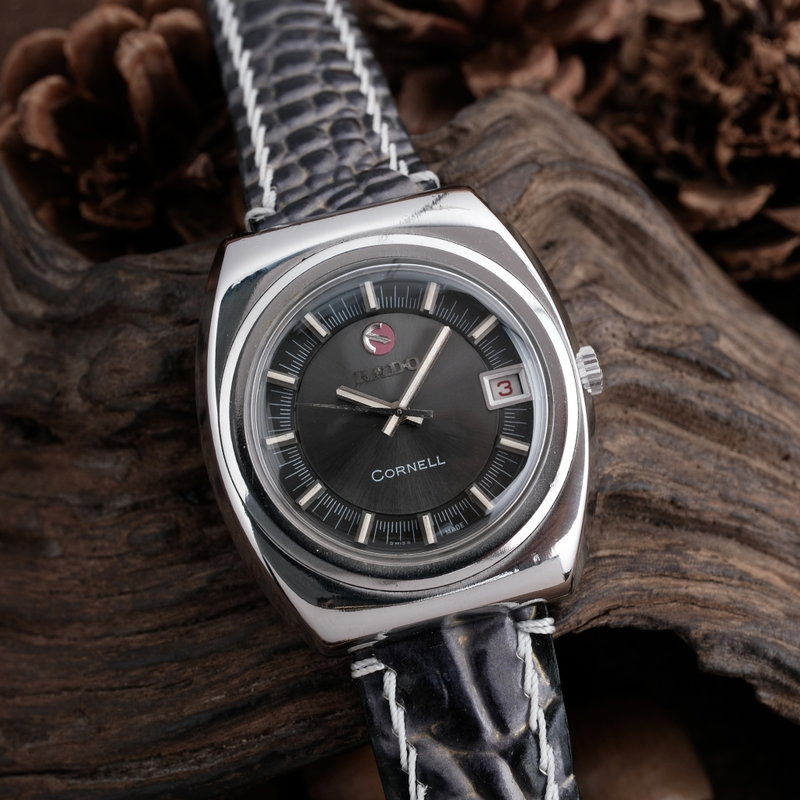
Rado · Cornell · 11916
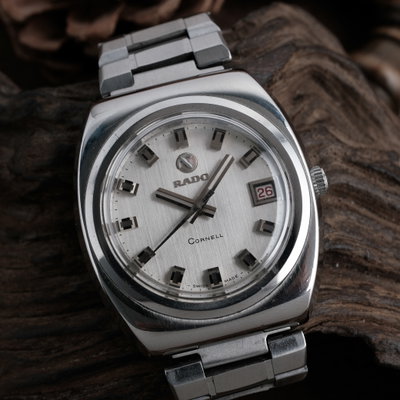
Rado · Cornell · 11916
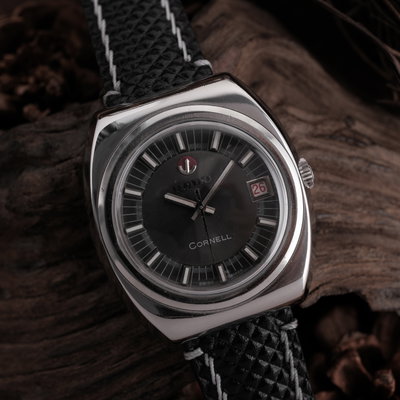
Rado · Cornell · 11916/1
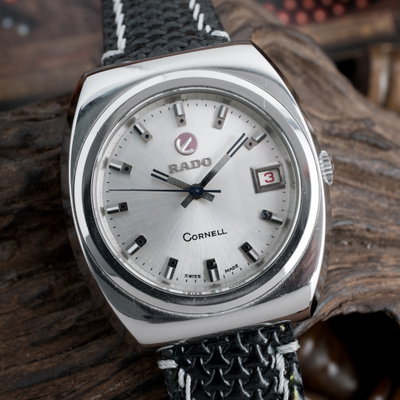
Rado · Cornell · 11916

Rado · Cornell · 11928
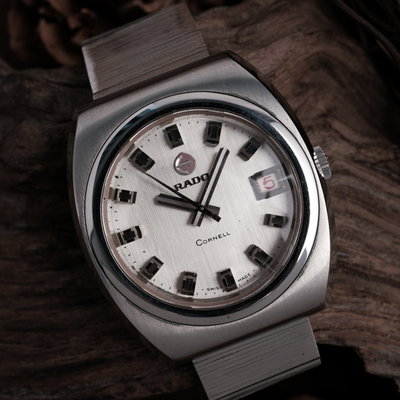
Rado · Cornell · 11916 · 1974
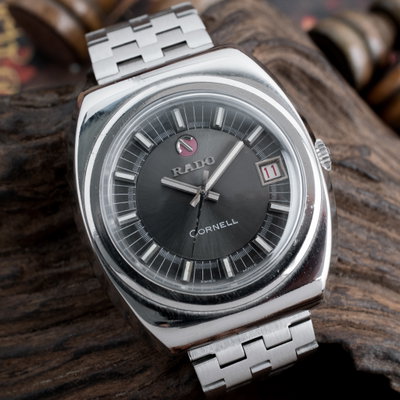
Rado · Cornell · 11816/1
More Rado references
Related pages
Frequently asked questions
Ready to hunt for your own?
More than 100 vintage watches go under the hammer every week.