Vintage Rado Scheidegg: What to Buy and What to Avoid
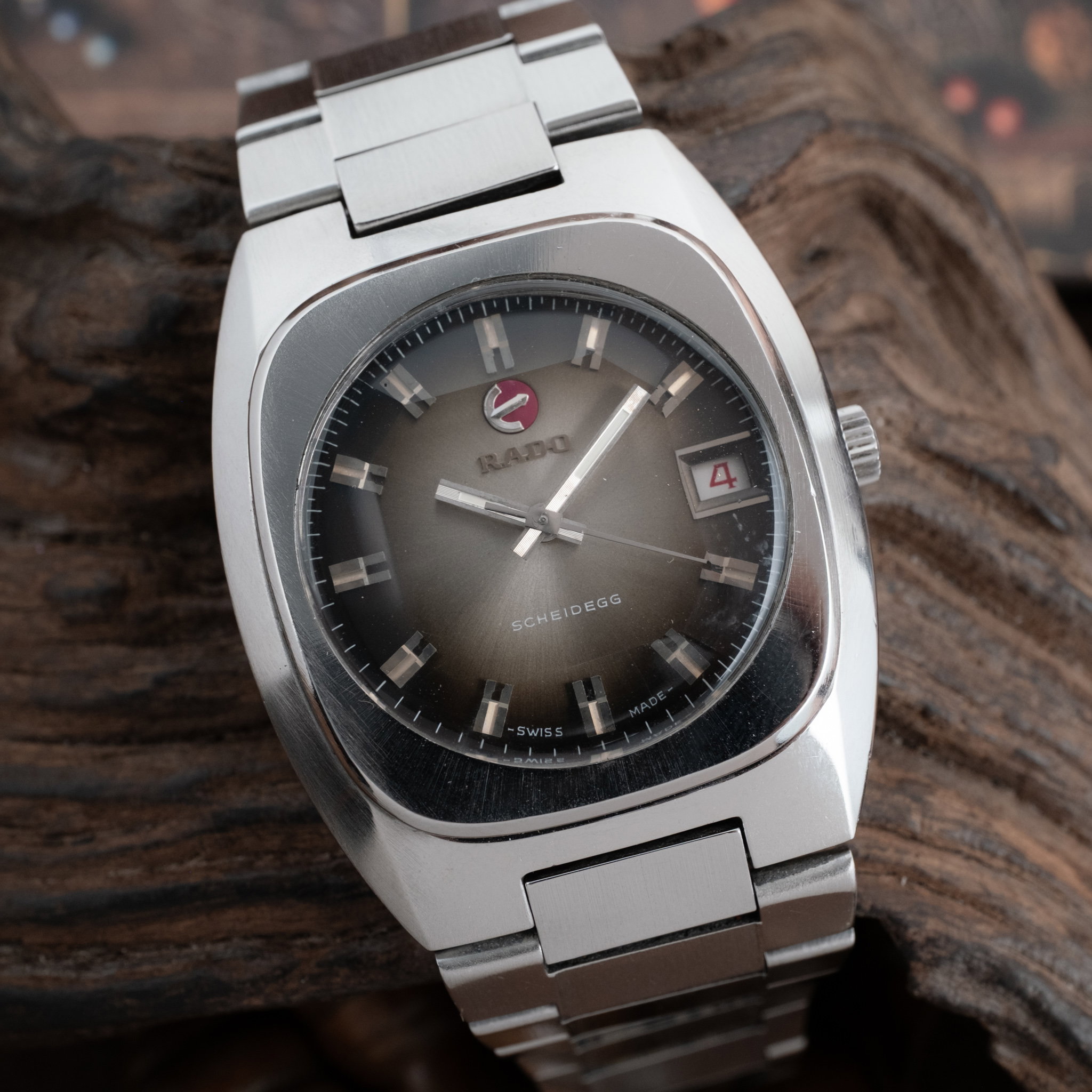
The vintage Rado Scheidegg to buy has a clean textured or fumé dial, a sharp steel case and the automatic ETA caliber 2824.
Live now
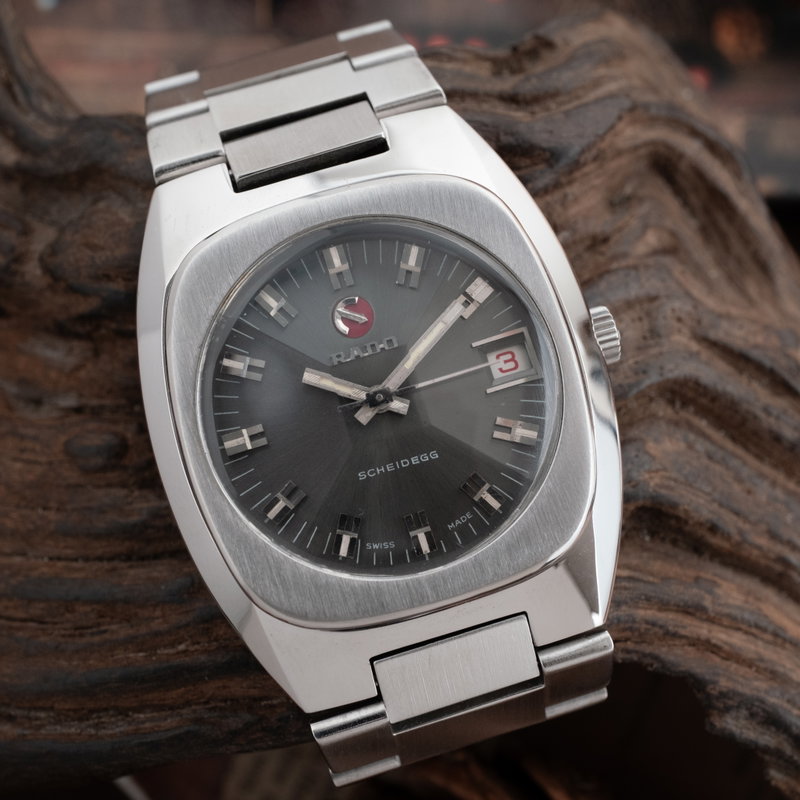
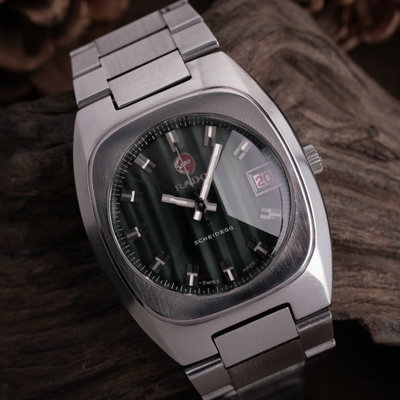
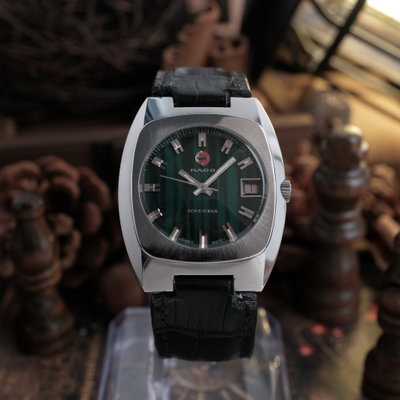
The Rado Scheidegg makes the most sense as a 1970s design watch rather than a conventional dress watch. Its cushion-shaped stainless-steel case, faceted crystal and strongly textured dial turn a compact automatic into something much more architectural.
The version to want is decided by the dial first. Brown woodgrain, two-tone green stripes and grey-to-brown fumé are materially different executions, but all rely on clean surfaces and intact applied furniture. A refinished dial costs more than every other flaw combined, while a sharp case and correct ETA caliber 2824 confirm the rest of the watch.
Period
1970s
Case material
Stainless steel
Case size
34 mm or 35 mm, excluding the crown
Case form
Cushion-shaped
| Movement | Automatic ETA caliber 2824 |
| Jewel count | 25 jewels |
| Dial executions | Brown woodgrain, two-tone green striped, deep green textured, or grey-to-brown fumé |
| Crystal | Faceted on documented executions |
| Bracelet | Signed flat-link bracelet on a documented execution |
The model landscape
Scheidegg dials range from brown woodgrain texture to two-tone green vertical stripes and grey-to-brown fumé. The green version gains extra movement from an architectural faceted crystal, while the fumé execution adds a red date and can retain luminous plots on its applied indices. None is automatically the better buy. The cleanest original dial wins because spotting interrupts the very texture that gives this model its identity.
The cases are stainless steel and cushion-shaped, with handled examples at 34 mm and 35 mm excluding the crown. That single millimetre matters less than the survival of the case geometry. Between a soft 35 mm case and a sharp 34 mm case at the same level, take the smaller watch. The rotating Rado anchor and applied faceted indices should remain visually coherent with the chosen dial execution.
On the wrist
At 34 mm or 35 mm, the Scheidegg is compact by current standards, but the cushion case occupies more visual space than a round case of the same width. The faceted crystal and vertical dial textures catch changing light, so the watch does not read as small in the way a plain dress watch can. It works best when you want 1970s colour and geometry without a large case.
Legibility depends on the execution. Tall applied indices give the green striped dial a firm structure, while polished stick hands and luminous inserts sharpen the fumé version. The flat-link signed bracelet belongs naturally with the broad case, although bracelet stretch and end-link fit deserve more attention than the logo on the clasp.
What goes wrong
Dial damage is the expensive fault. Green textured examples can develop surface spotting, and a red anchor field can show visible ageing even when the surrounding dial remains usable. A service dial is a genuine factory replacement and is not a redial, but neither should be priced as the dial that originally left the factory without supporting evidence.
Over-polishing softens the cushion case lines and removes the contrast between its upper surfaces and sides. Crystals can acquire chips along their facets, bracelets can stretch, and replacement crowns can disturb the original proportions. The ETA caliber 2824 should be identified directly rather than assumed from the model name. The service history is unknown unless documentation accompanies the watch, so current timing is evidence of present performance, not proof of past maintenance.
What to check before you buy
- Dial and anchor: The textured or fumé finish should remain coherent around the applied Rado text, indices and rotating anchor. Uneven repainting, buried furniture or crude printing indicates a redial rather than honest ageing.
- Hands and luminous material: On the grey-to-brown fumé execution, polished stick hands with luminous inserts should agree with luminous plots on the applied indices. A strong mismatch can indicate relume or parts combined from different watches.
- Case and crystal: The stainless-steel cushion case should retain distinct planes rather than soft, rounded transitions. The faceted crystal must align convincingly with that geometry, with chips or replacements disclosed rather than hidden.
- Crown and bracelet: A signed flat-link bracelet is known on the fumé execution, but its presence alone proves nothing. Check stretch, end-link fit and crown proportions because replacements can be period-correct without being original to the watch.
- Movement: The automatic movement should be identified as ETA caliber 2824 on the executions covered here. A different caliber, inconsistent casing or altered retaining hardware requires explanation and may indicate a franken or married watch.
Recent Rado results
9 Rado watches auctioned
We auction more than 100 vintage watches a week.
Get first access: new Rado watch drops and alerts before auctions end.
More Rado references
Related pages
Frequently asked questions
Ready to hunt for your own?
More than 100 vintage watches go under the hammer every week.