Vintage Rado Purple Horse: What to Know Before You Buy
Buy the sharpest steel Purple Horse with an honest silver dial; choose 37 mm for presence, while 34 mm wears more like a compact dress watch.
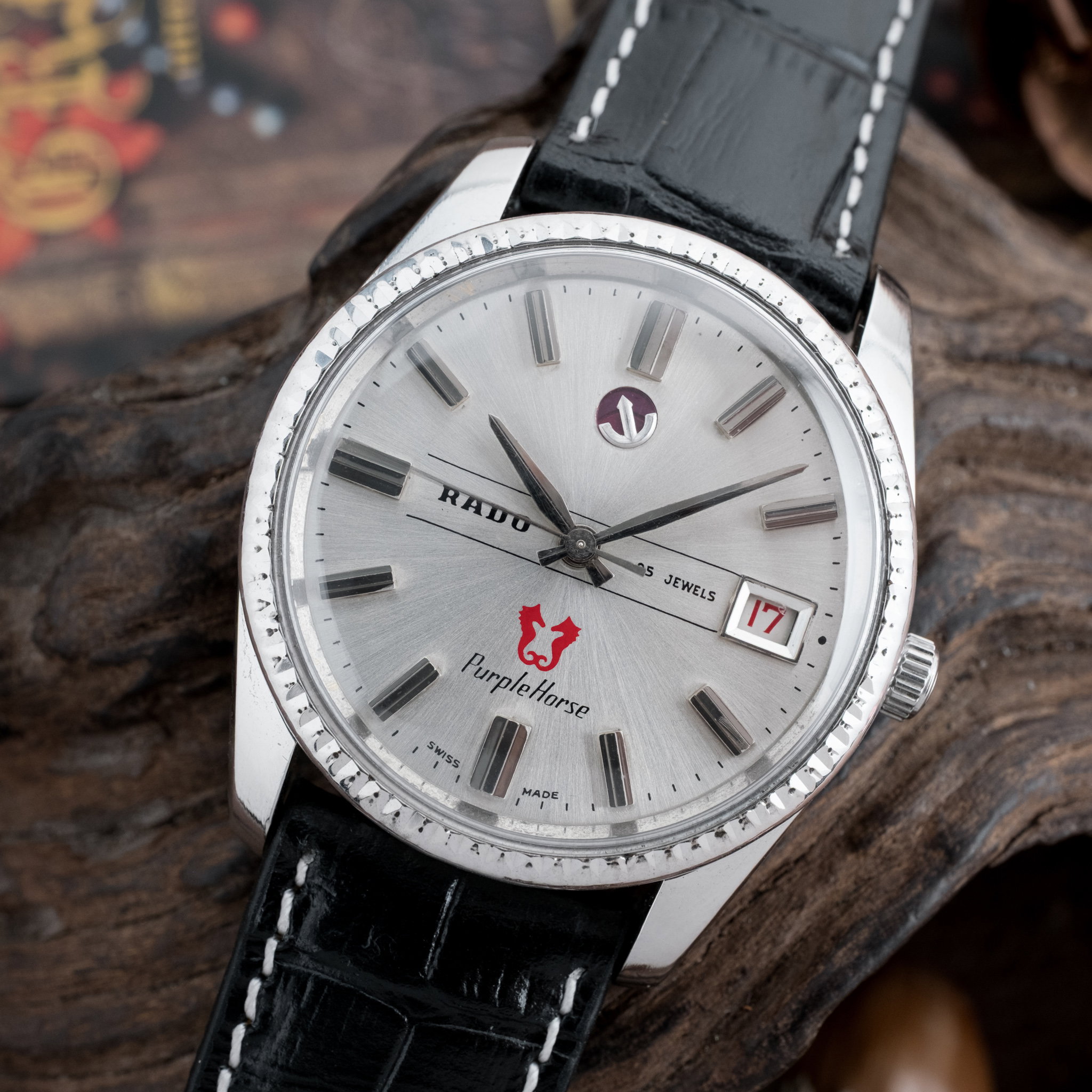
The Purple Horse is a late-1960s to early-1970s Rado with more variety than its name suggests. Steel and gold-plated cases, 34 mm to 37 mm diameters, automatic and manual-wind movements, and several silver dial treatments all sit within the model.
The safest target is a steel example with a clean silver sunburst dial, sharp case lines and coherent movement specification. The dial carries the decision: widespread spotting, a redial or missing Purple Horse identity matters more than ordinary case wear.
Known production span
1968-1972
Known case sizes
34 mm, 36 mm and 37 mm
Case materials seen
Stainless steel; gold-plated with stainless steel caseback
Movement formats seen
Automatic and manual-wind
| Named automatic caliber | ETA 2783 in reference 11794 |
| Dial treatments seen | Silver sunburst and finely textured silvered |
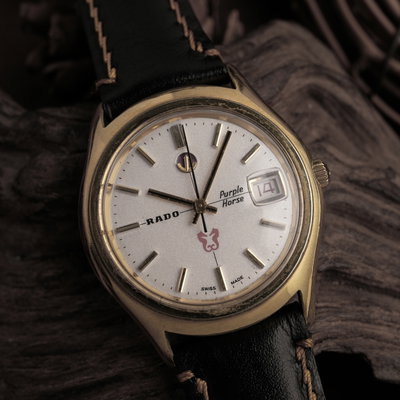
| Distinctive dial details | Free-spinning anchor, red seahorse emblem and red date display on specific versions |
The model landscape
The references separate into meaningfully different watches. The 37 mm 11794 and 11794-1 use steel cases, silver sunburst dials and red accents, with an automatic movement in the examples handled. The 36 mm 11795-1 combines a gold-plated case, steel back and textured silvered dial. It gives more warmth, but worn plating cannot be recovered by routine servicing.
At 34 mm, the steel 11744/1 is the compact option, with a fluted bezel, applied faceted markers and red seahorse emblem. Its recorded movement descriptions conflict between manual-wind and automatic, both stated as 21 jewels. That conflict must be resolved watch by watch rather than hidden behind a broad model claim.
On the wrist
A 37 mm Purple Horse has the strongest dial presence, especially with the red date and seahorse against a silver sunburst surface. The 36 mm gold-plated version reads dressier because its case and applied furniture share a warmer tone. The 34 mm steel watch is more restrained and better suited to a compact vintage fit.
The faceted indices and radial or finely textured dials give these watches their visual depth. For everyday ownership, steel is the less complicated case material. Gold plating adds contrast, but exposed base metal around the lugs or case edge remains visible after servicing.
What goes wrong
Dial damage is the costliest fault. Fine, even spotting can read as coherent ageing, but heavy moisture marks, disturbed printing or a redial erase the character that separates a Purple Horse from an ordinary period Rado. A genuine service dial is different from a redial, though neither should be described as the untouched dial supplied with the watch.
Gold plating wears through at contact points, polishing softens case lines, and replaced parts can create a franken watch whose components never shipped together. The free-spinning anchor, red seahorse and date treatment must agree with the reference configuration. Service history is often unknown, so movement condition requires a current mechanical assessment rather than assumptions based on jewel count.
What to check before you buy
- Dial identity: On the 11794 family, confirm the silver sunburst surface, applied indices and red seahorse treatment. Red date numerals are recorded on these examples, but clean printing alone does not exclude a redial.
- Case and reference coherence: A 11795-1 is recorded with a 36 mm gold-plated case and stainless steel back, while 11794 examples are 37 mm steel. A different combination needs evidence before it can be accepted as coherent.
- Movement specification: The 11794 is recorded with an automatic ETA 2783 and 25 jewels. The 11744/1 descriptions conflict between 21-jewel manual-wind and automatic movements, so its mechanism must be identified directly.
- Replacement and franken signs: Compare the anchor, seahorse, dial finish and case material with the stated reference. Period-correct parts can still be replacements, and components from different watches create a franken or married watch.
Recent Rado results
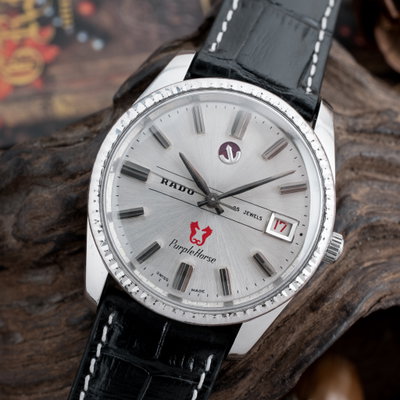
Rado · Purple Horse · 11761/1
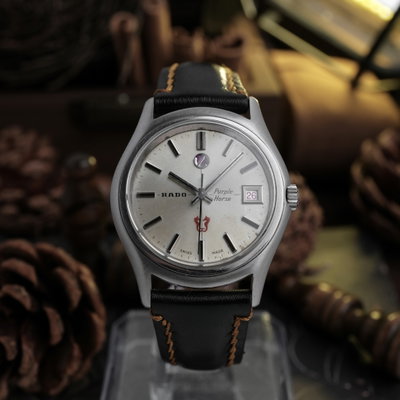
Rado · Purple Horse · 11794
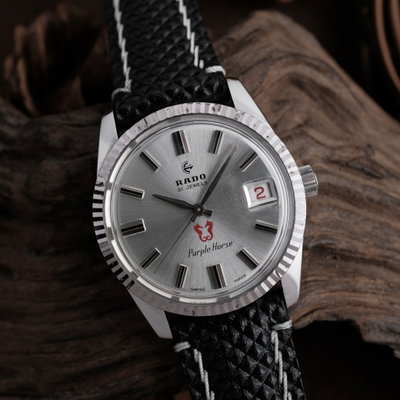
Rado · Purple Horse · 11744/1
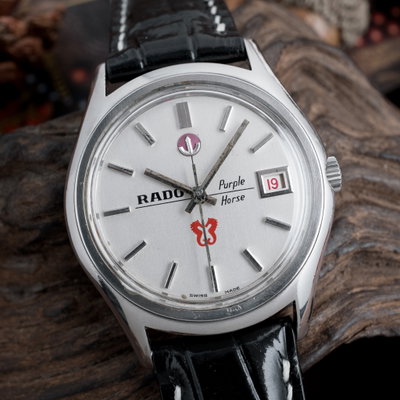
Rado · Purple Horse · 11794
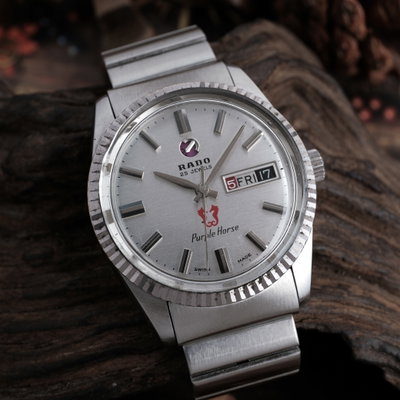
Rado · Purple Horse · 11782/1
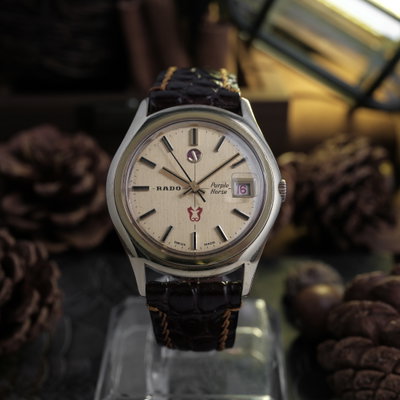
Rado · Purple Horse · 11795
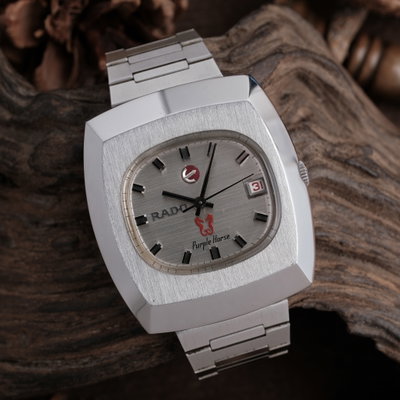
Rado · Purple Horse · 11761/72
Rado · Purple Horse · 11795-1
More Rado references
Related pages
Frequently asked questions
Ready to hunt for your own?
More than 100 vintage watches go under the hammer every week.