Seiko Lord Matic 5606-7310: Dials, Dating and Buying Advice
Buy the Seiko Lord Matic 5606-7310 for its best-preserved dial, crisp case geometry and sound 5606A movement, not for a polished case or vague service claims.
Live now
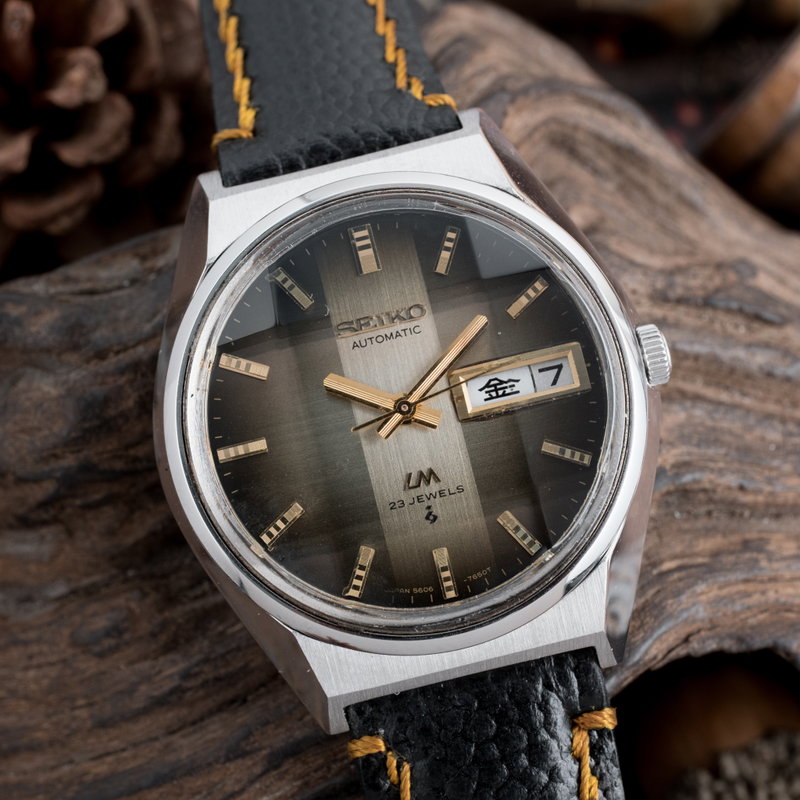
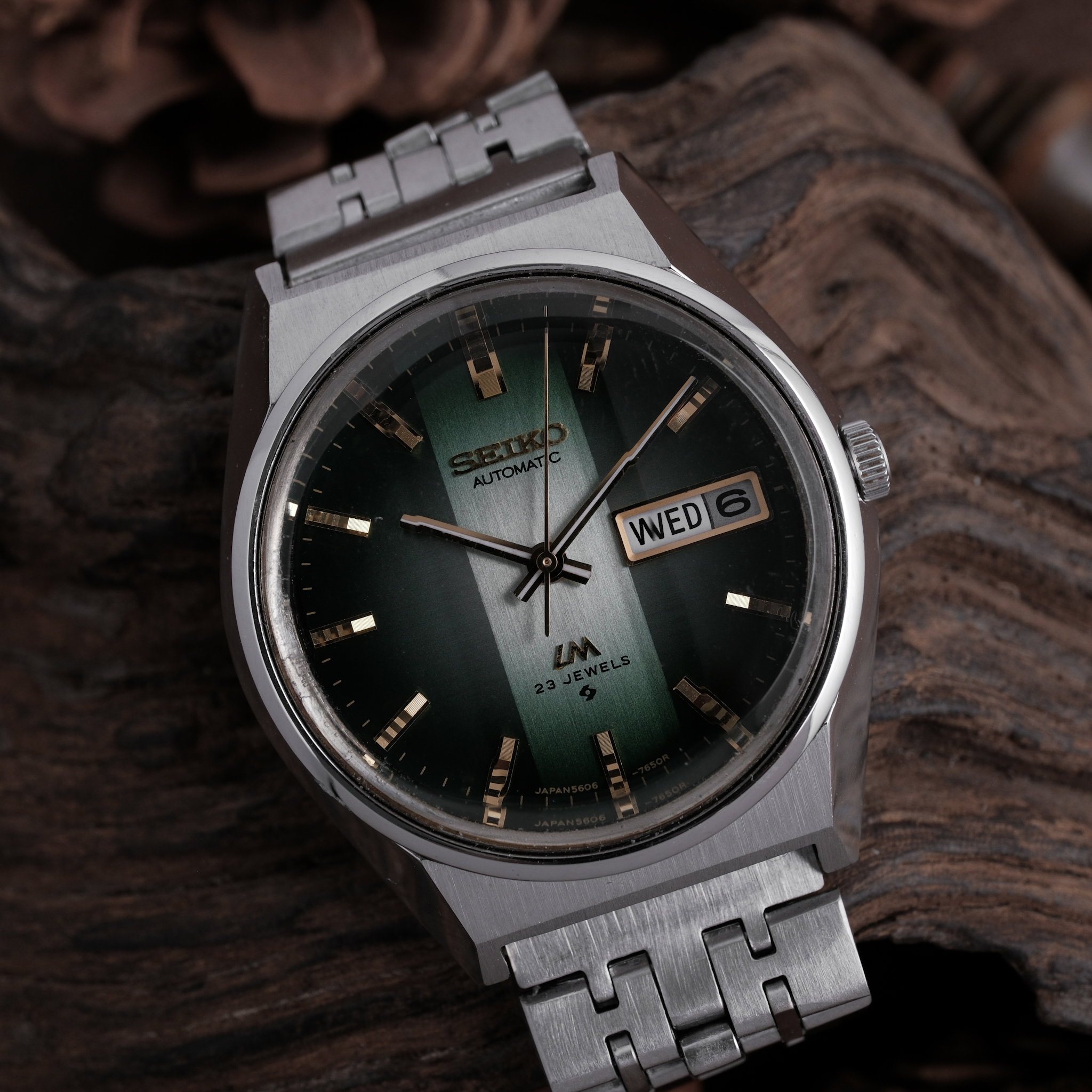
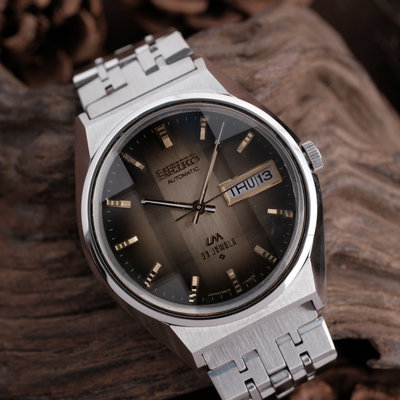
The Seiko Lord Matic 5606-7310 is a compact automatic day-date watch whose character changes sharply with its dial. Examples from 1973 to 1975 pair a stainless-steel case with the 5606A movement, while handled case measurements run from 35 to 36 mm excluding the crown. Green gradient, blue sunburst, vertically textured blue and two-tone blue executions give the reference much of its range.
The dial should decide the purchase. A clean vertical texture or intact colour transition contributes more than bright casework, while softened case lines cannot be rebuilt by routine servicing. The framed day-date at three o'clock adds everyday utility, and one 1975 two-tone example combines English and Japanese Kanji on its day wheel. The service history of an undocumented used Seiko Lord Matic remains unknown.
Brand
Seiko
Model
Lord Matic
Reference
5606-7310
Known production years
1973-1975
| Case diameter | 35-36 mm excluding the crown |
| Case material | Stainless steel |
| Movement | Seiko caliber 5606A, automatic |
| Jewel count | 23 jewels |
| Display | Time with framed day-date at three o'clock |
| Known dial executions | Green vertical gradient, blue sunburst, deep blue vertical texture, and two-tone blue with central stripe |
| Crystal | Faceted crystal on handled blue examples |
The model landscape
The green execution uses a vertical gradient with applied gold-tone indices and matching baton hands. Blue versions are not one uniform type: the handled watches include a sunburst surface with faceted indices, a deep blue dial with vertical linear texture, and a two-tone blue layout divided by a central stripe. Faceted crystals on blue examples add further shifts in colour as the wrist moves.
Choose between those executions by preservation rather than presumed hierarchy. A clean green gradient is preferable to a damaged two-tone dial, while a crisp vertically brushed blue dial is preferable to a refinished sunburst one. Period-correct parts only establish that Seiko used that style around the date in question - they do not establish that every component left the factory together. A service dial is genuine factory replacement equipment, whereas a redial is refinished.
On the wrist
At 35 to 36 mm excluding the crown, the 5606-7310 wears compactly, but its dial treatment keeps it visually active. Applied faceted indices and gold-tone baton hands stand above the coloured surface, while the framed day-date at three o'clock occupies more space than a time-only layout. The result suits a smaller or medium wrist and gives the date display enough room to read without enlarging the case.
The faceted crystal changes the blue and vertically textured dials as viewing angles shift. That effect matters in use because scratches or chips across a facet interrupt both legibility and the intended pattern of reflected light. The stainless-steel case is the practical choice against plated alternatives, but crisp case lines still deserve priority over a newly bright polish.
Where the value sits
Value concentrates in the dial first, then in the case geometry and movement condition. Colour alone does not create a premium: the green gradient needs an uninterrupted transition, the linear blue needs a coherent vertical texture, and the two-tone blue needs a clean central stripe. A refinished dial costs more in lost appeal than ordinary case wear, particularly when the original execution is the reason to choose this reference.
The worst common buying error is accepting damage because the watch has been polished brightly. Soft case edges, rounded transitions and uneven surfaces show removed metal; no service can restore the original geometry. Crystal scratches are less serious unless they cross the facets heavily, while dial spotting, missing applied furniture or mismatched hands directly weaken the reference's visual identity.
Movement condition cannot be inferred from an automatic watch merely running. One 1975 example recorded a rate of roughly 65 to 70 seconds fast per day, which is operational but not evidence of healthy regulation or prior service. Without receipts, the service history is unknown. Between a sharper case with a clean dial and a polished watch carrying an unsupported service claim, take the sharper watch and budget separately for mechanical work.
Dating this watch
| Serial range / caliber | Year | Note |
|---|---|---|
| 5606 | 1968-1976 | caliber production window |
Dating data comes from our decoder tables; treat years as approximate.
What to check before you buy
- Dial execution: Known 5606-7310 dials include green vertical gradient, blue sunburst, deep blue vertical texture and two-tone blue with a central stripe. Printing and applied furniture must suit the chosen execution without signs of refinishing.
- Hands and applied furniture: Handled green examples pair applied gold-tone indices with gold-tone baton hands, while the 1975 two-tone blue example uses gold-tone hands with black central stripes. Mixed styles can indicate replacement parts or a franken watch.
- Movement: The 5606-7310 examples use the automatic Seiko 5606A with 23 jewels. A different caliber conflicts with the handled configuration, while the correct caliber alone does not prove that the case and movement were born together.
- Case geometry: Known stainless-steel cases measure 35 or 36 mm excluding the crown and retain defined angular lines when not heavily polished. Soft transitions or rounded edges identify removed metal, not proof of a false case.
- Day-date display: The framed day-date sits at three o'clock, and a 1975 two-tone blue example carries English and Japanese Kanji. A bilingual wheel can be period-correct without proving originality to the individual watch.
Other 5606-7310 examples we auctioned
44 Seiko 5606-7310 auctioned
Seiko · Lord Matic · 5606-7310 · 1974
Seiko · Lord Matic · 5606-7310 · 1975
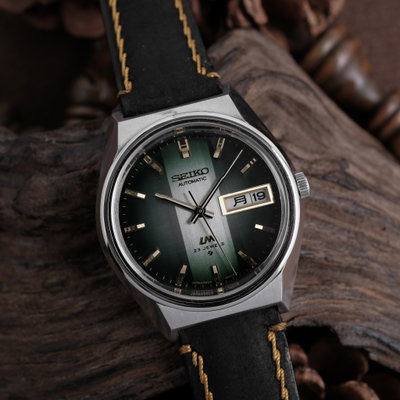
Seiko · Lord Matic · 5606-7310 · 1973
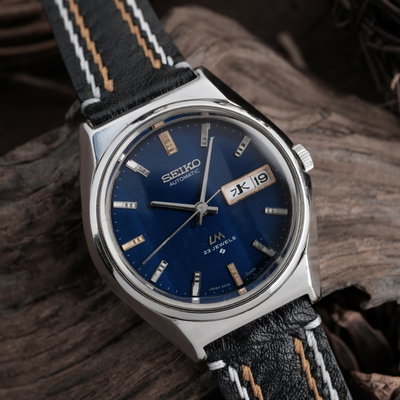
Seiko · Lord Matic · 5606-7310 · 1974
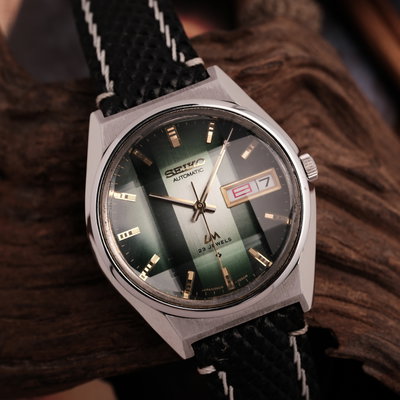
Seiko · Lord Matic · 5606-7310 · 1973
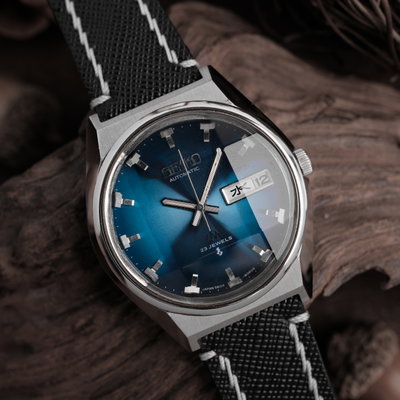
Seiko · Lord Matic · 5606-7310 · 1974
Seiko · Lord Matic · 5606-7310 · 1973
We auction more than 100 vintage watches a week.
Get first access: new Seiko 5606-7310 drops and alerts before auctions end.
More Seiko references
Related pages
Frequently asked questions
Ready to hunt for your own?
More than 100 vintage watches go under the hammer every week.