Seiko Lord Matic 5606-7190: What to Know Before Buying
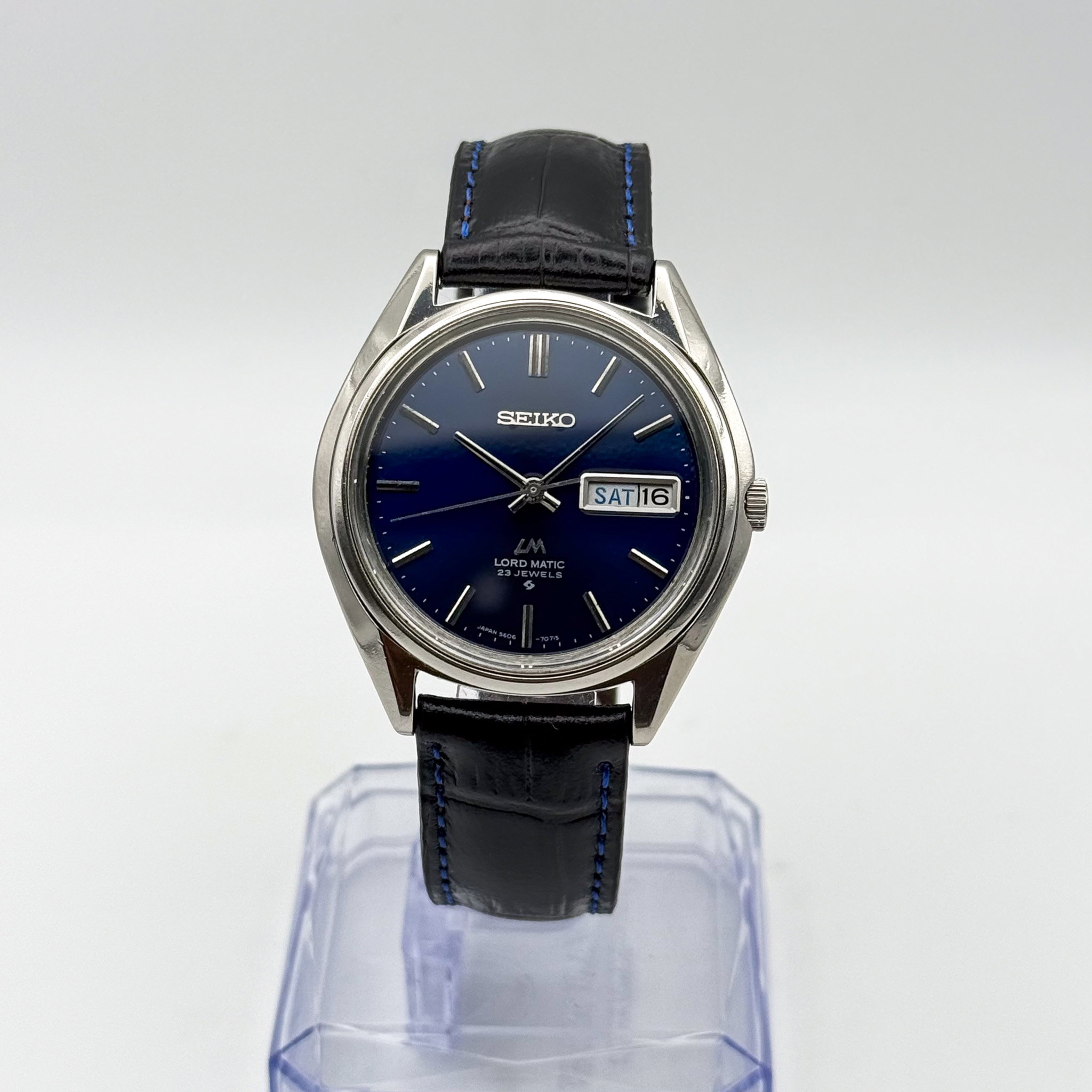
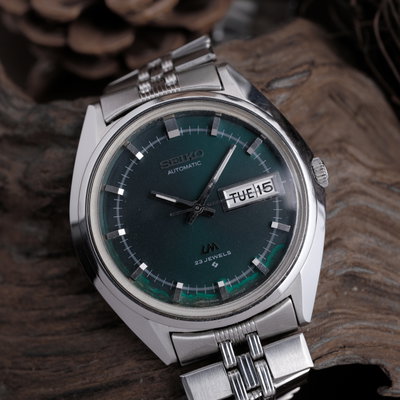
The Seiko Lord Matic 5606-7190 is a 37 mm steel automatic best bought with a clean blue or vertically brushed silver dial and a well-defined angular case.
We auction more than 100 vintage watches a week.
Get first access: new Seiko 5606-7190 drops and alerts before auctions end.
Browse 27 live Seiko auctionsThe Lord Matic 5606-7190 puts early 1970s Seiko design into a 37 mm stainless-steel monocoque case. Its angular profile, automatic caliber 5606 and applied dial furniture place it below the contemporary King Seiko and Grand Seiko lines, but well above an anonymous period dress watch.
The strongest decision is between dial and case, not between adjacent production years. Deep blue sunburst dials deliver more visual contrast, while vertically brushed silver dials make the angular steel case feel more restrained. Between a sharp-cased example with a damaged dial and a softer case with a clean dial, take the clean dial unless the polishing has erased the case geometry.
Brand
Seiko
Model
Lord Matic
Reference
5606-7190
Known production years
1971-1973
| Case diameter | 37 mm excluding the crown |
| Case material | Stainless steel |
| Case construction | Front-loading monocoque |
| Movement | Automatic caliber 5606 |
| Known dial treatments | Deep blue sunburst or vertically brushed silver |
| Hour markers | Applied silver-tone indices |
What it was built for
The 5606-7190 was built as a smart automatic for daily use, with applied silver-tone indices and a front-loading monocoque construction. The caliber 5606 belongs to a production window from 1968 to 1976, while watches handled under this reference date from 1971 through 1973. That places the reference squarely in Seiko's angular early 1970s design period.
The model landscape is narrow but visually distinct. Blue sunburst dials shift strongly with light, whereas silver dials use vertical brushing and can expose edge staining more readily. Both belong in the conversation, but an evenly preserved blue dial carries the stronger identity. A signed bracelet adds period character only when its fit at the case is convincing and its wear does not compromise use.
On the wrist
At 37 mm excluding the crown, the 5606-7190 wears larger than many earlier dress watches without becoming broad by modern standards. The angular stainless-steel case gives it more presence than the diameter alone suggests, and the applied indices remain legible against either the deep blue or silver dial. The monocoque architecture also keeps the case visually continuous from the side.
Value sits first in the dial, then in the surviving case definition. Clean blue surfaces command the clearest premium over silver dials with outer-edge staining or oxidised hands, while crisp case edges separate careful examples from heavily polished ones. A correctly fitting signed bracelet can widen that spread, but dial damage costs more than bracelet absence because it cannot be reversed without creating a redial.
What goes wrong
Dial damage is the expensive fault: silver examples can develop pronounced staining around the outer edge, and hands can oxidise even when the centre remains presentable. Blue sunburst surfaces also lose their effect if refinished, so a uniform but flat repaint is not an improvement. A service dial may be genuine, but it is still a replacement and should be described as such.
Polishing softens the angular case before it removes ordinary scratches, leaving rounded transitions where defined edges should remain. Bracelets can develop stretch, and replacement crowns or mismatched movements can turn a watch into a franken or married example. The handled descriptions list caliber 5606 movements with both 23 and 25 jewels, so jewel count alone does not settle authenticity. Without movement-specific documentation, we prefer not to speculate beyond the markings and construction the watch itself establishes.
Start with a clean dial, a caliber 5606 movement and a case whose angular outline remains readable. Choose the blue sunburst version over an equally honest silver example for stronger visual identity, but reject blue paint that has lost its sunburst character. The service history is unknown unless paperwork accompanies the individual watch, and a running automatic is not evidence of a completed service.
Dating this watch
| Serial range / caliber | Year | Note |
|---|---|---|
| 5606 | 1968-1976 | caliber production window |
Dating data comes from our decoder tables; treat years as approximate.
What to check before you buy
- Dial finish and furniture: Known dials are deep blue sunburst or vertically brushed silver, both with applied silver-tone indices. Flat repainting, lost brushing or printed substitutes for applied furniture point toward a redial.
- Hands and dial ageing: Oxidised hands can occur alongside outer-edge staining on silver dials, but matching damage is not proof that parts began together. Uneven finishes or conspicuously renewed hands require a closer compatibility check.
- Monocoque case construction: Reference 5606-7190 uses a front-loading monocoque stainless-steel case. A conventional removable caseback conflicts with that construction and indicates a substituted case or an incorrectly identified watch.
- Case geometry: The case should retain an angular early 1970s outline with readable transitions between surfaces. Rounded edges and a uniformly soft profile diagnose polishing, even when the remaining steel is free from deep scratches.
- Movement identity: The movement must be marked caliber 5606. Handled examples are described with both 23 and 25 jewels, so jewel count alone cannot authenticate or reject the watch, and unsupported certainty should be avoided.
- Crown, bracelet and franken risk: A crown or bracelet signature does not establish originality by itself. The crown must fit the monocoque case correctly, while a signed bracelet should meet the case cleanly without improvised end-link fitment or excessive stretch.
Other 5606-7190 examples we auctioned
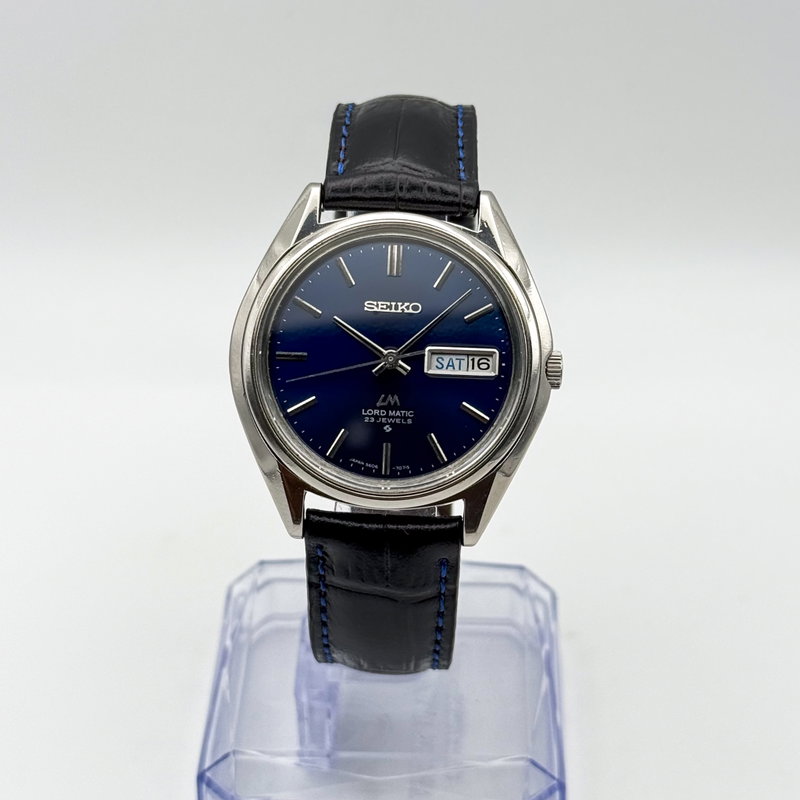
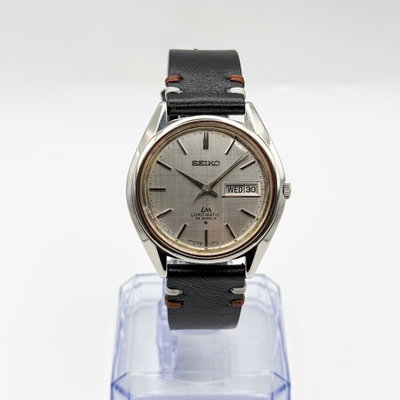
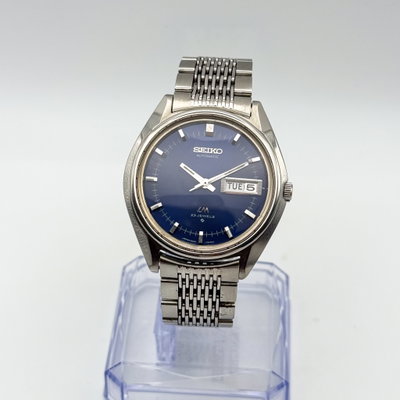
21 Seiko 5606-7190 auctioned
More Seiko references
Related pages
Frequently asked questions
Ready to hunt for your own?
More than 100 vintage watches go under the hammer every week.