Seiko Lord Matic 5606-7230 Collector's Guide
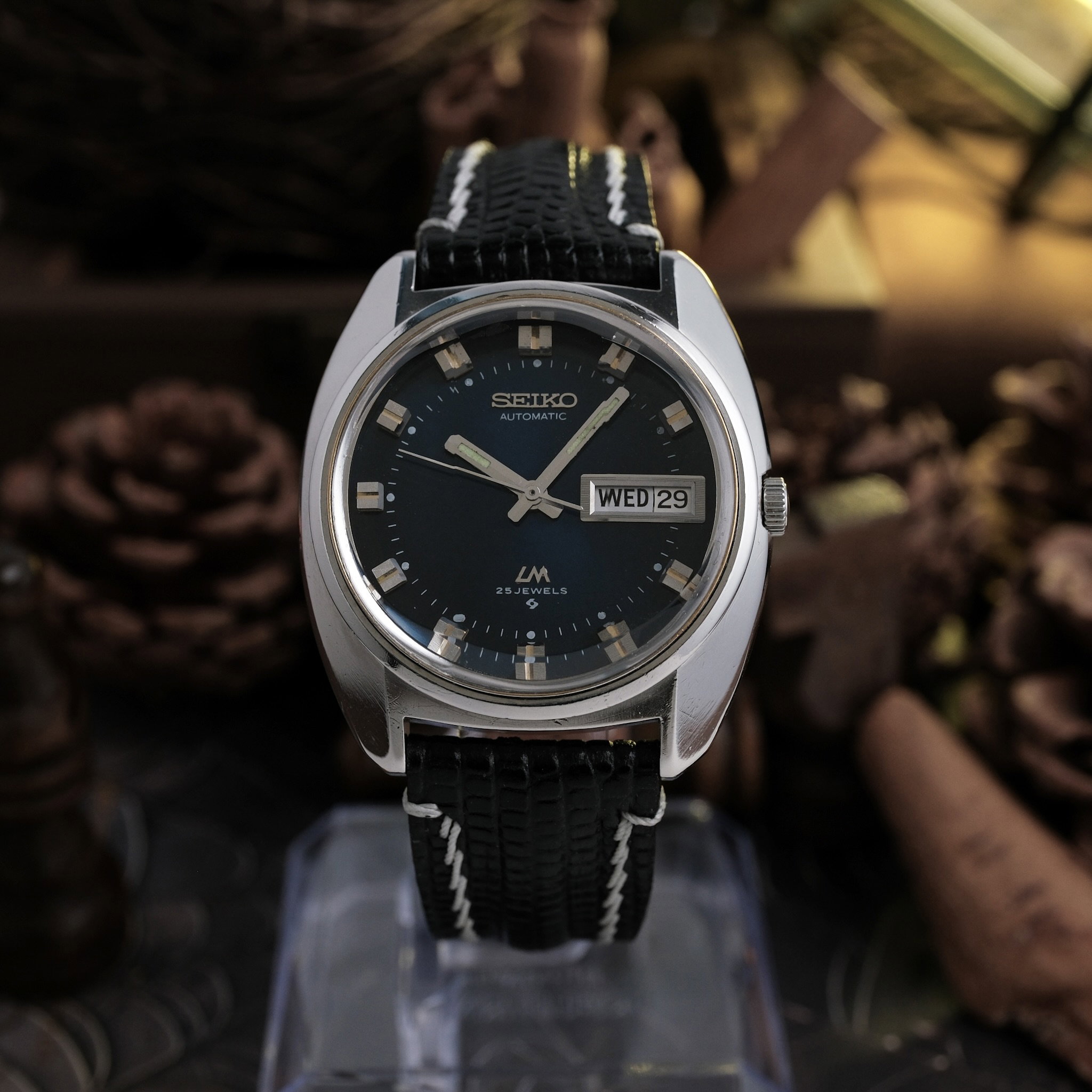
Choose the Seiko Lord Matic 5606-7230 for its intact faceted crystal, strong coloured dial and caliber 5606A, not for cosmetic case shine.
Live now
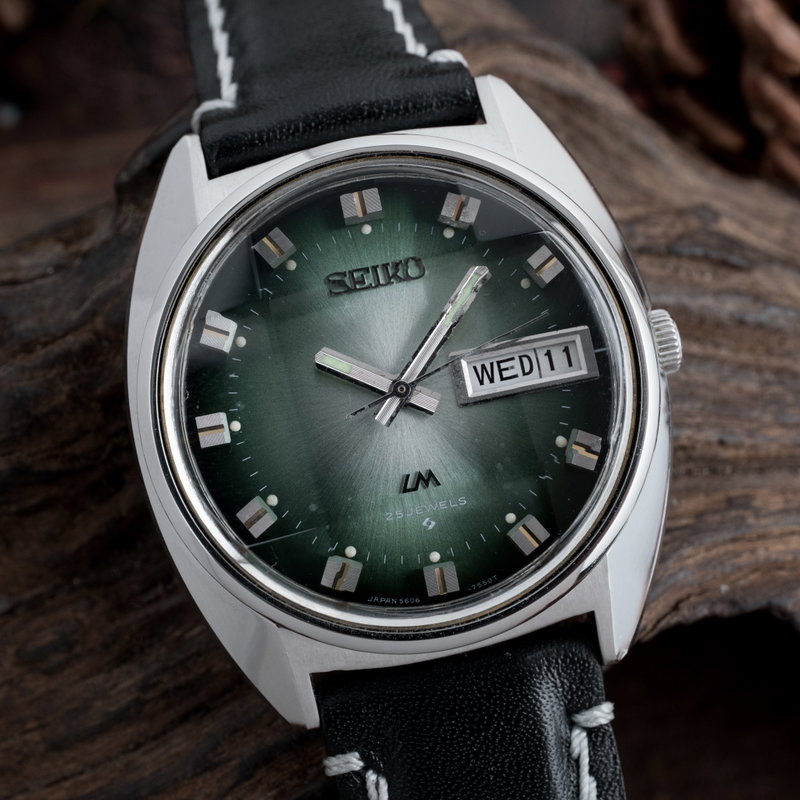
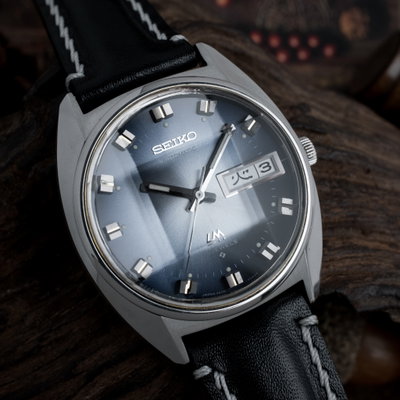
The Seiko Lord Matic 5606-7230 is built around a visual effect few conventional dress watches can match: a heavily faceted crystal breaks up the coloured dial as the wrist moves. Examples from 1972-1973 pair that crystal with a stainless steel case, automatic caliber 5606A and applied faceted indices. This is the Lord Matic for a collector who wants the crystal and dial to work as one distinctly 1970s design.
Dial choice separates the versions. Emerald green gradient, deep blue sunburst, blue gradient and textured blue finishes are known on the 5606-7230, all with applied furniture. Cases we have measured fall between 36 mm and 37 mm excluding the crown, so the watch remains compact while the crystal supplies most of its visual presence. Buy the clearest dial and best-defined crystal before prioritising superficial case shine.
Brand
Seiko
Model
Lord Matic
Reference
5606-7230
Known production years
1972-1973
| Case material | Stainless steel |
| Measured case size | 36-37 mm excluding the crown |
| Movement | Automatic caliber 5606A |
| Jewel count | 23 jewels |
| Known dial finishes | Emerald green gradient, deep blue sunburst, blue gradient and textured blue |
| Crystal | Heavily faceted |
The model landscape
The green and blue dials do not produce the same watch on the wrist. Emerald green gradient moves from a bright centre to darker edges, while the blue versions range from sunburst and gradient finishes to a visibly textured surface. The coloured finish is the point of this reference, so the better choice is the dial with even colour and intact applied indices rather than the rarer-looking shade with damage.
Every example discussed here dates to 1972 or 1973 and uses the automatic caliber 5606A with 23 jewels. The broader caliber 5606 production window runs from 1968 to 1976, but that window does not date an individual watch. A correct movement supports the reference, while its condition and service history remain separate questions that the caliber designation cannot answer.
Where the value sits
The largest premium belongs to an even factory-finished dial beneath a sharply faceted crystal. A refinished dial replaces the colour transition, surface texture and printing that distinguish this reference, while a generic replacement crystal removes the prismatic effect even if it keeps the watch usable. Between two otherwise comparable watches, take the stronger dial and crystal over the brighter case.
Case definition forms the next spread in value. The 5606-7230 uses angular steel geometry, and repeated polishing softens the lines that should frame its faceted crystal. Applied indices and logos must also remain securely seated and visually coherent with the dial. Hand ageing matters less than dial damage, provided corrosion has not spread and the handset still reads as a consistent set.
What goes wrong
A redial is the costliest condition problem on the 5606-7230 because it replaces the reference's gradient, sunburst or textured surface rather than merely correcting wear. Crystal damage comes next: abrasion rounds the facet edges and weakens the shifting reflections across the dial. Replacement with a plain crystal changes the character more substantially, even when the new part is clean.
Over-polishing softens the angular case lines, and lost steel cannot be returned during service. Handsets can develop visible ageing even where the dial remains clean, so concentrated corrosion deserves more concern than even colour change. The automatic caliber 5606A must be assessed on its own mechanical state. Where receipts are absent, the service history is unknown, and the 1968-1976 caliber window says nothing about maintenance.
Dating this watch
| Serial range / caliber | Year | Note |
|---|---|---|
| 5606 | 1968-1976 | caliber production window |
Dating data comes from our decoder tables; treat years as approximate.
What to check before you buy
- Dial furniture and finish: A 5606-7230 dial should combine a known green or blue finish with applied faceted indices and applied Seiko and LM logos. Uneven new print over an aged surface, displaced furniture or lost texture points toward a redial or parts assembly.
- Crystal profile: The reference is defined by a heavily faceted crystal that splits reflections across the coloured dial. A plain replacement, softened facet edges or heavy abrasion may not make the watch false, but each materially changes the correct visual profile.
- Case geometry: The stainless steel case should retain angular lines around the faceted crystal. Rounded transitions and soft edges diagnose repeated polishing, while a case shape that does not accommodate the characteristic crystal raises a franken concern.
- Movement identity: The movement should be the automatic caliber 5606A with 23 jewels. Another caliber is inconsistent with the handled reference, but the correct movement does not by itself establish that the watch is not married.
- Hands and ageing: The handset must make visual sense beside the applied indices and the condition of the dial. Concentrated corrosion on otherwise fresh components, or markedly different ageing between the hands, can indicate replacement parts rather than coherent wear.
Other 5606-7230 examples we auctioned
49 Seiko 5606-7230 auctioned
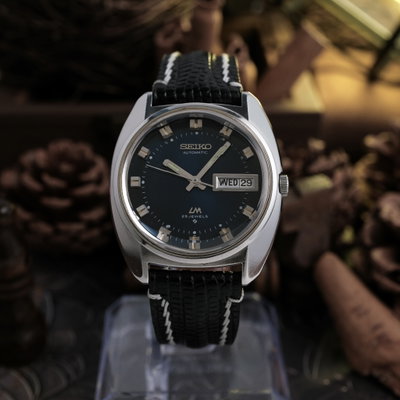
Seiko · Lord Matic · 5606-7230 · 1972
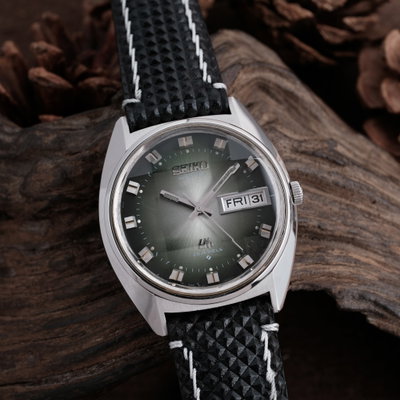
Seiko · Lord Matic · 5606-7230 · 1973
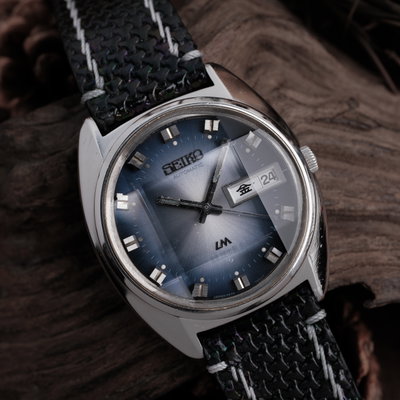
Seiko · Lord Matic · 5606-7230 · 1973
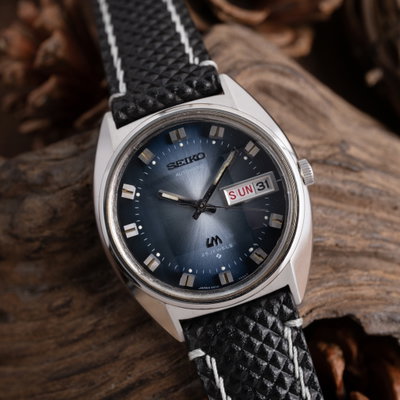
Seiko · Lord Matic · 5606-7230 · 1973
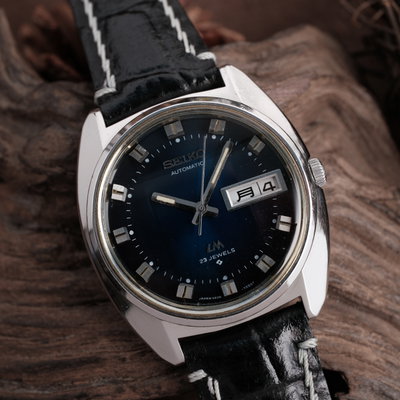
Seiko · Lord Matic · 5606-7230 · 1973
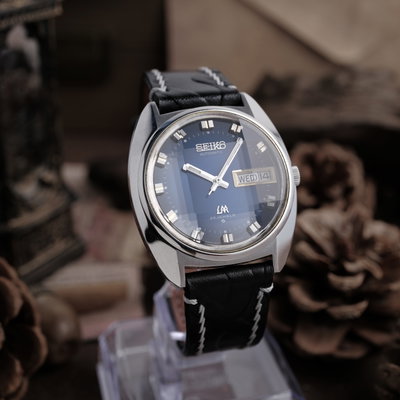
Seiko · Lord Matic · 5606-7230 · 1972
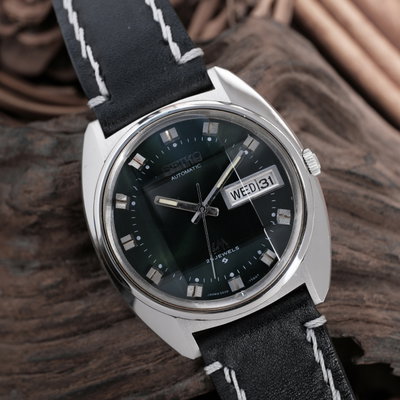
Seiko · Lord Matic · 5606-7230 · 1973
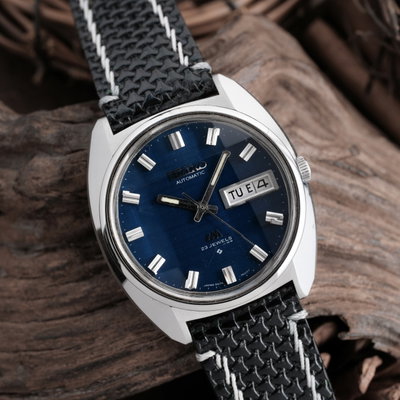
Seiko · Lord Matic · 5606-7230 · 1973
We auction more than 100 vintage watches a week.
Get first access: new Seiko 5606-7230 drops and alerts before auctions end.
More Seiko references
Related pages
Frequently asked questions
Ready to hunt for your own?
More than 100 vintage watches go under the hammer every week.