Vintage Seiko Cronos - Versions, Wear and Buying Advice
Buy the dial first: a sharp steel Cronos with correct printing is preferable to a larger gold-filled example with wear or refinishing.
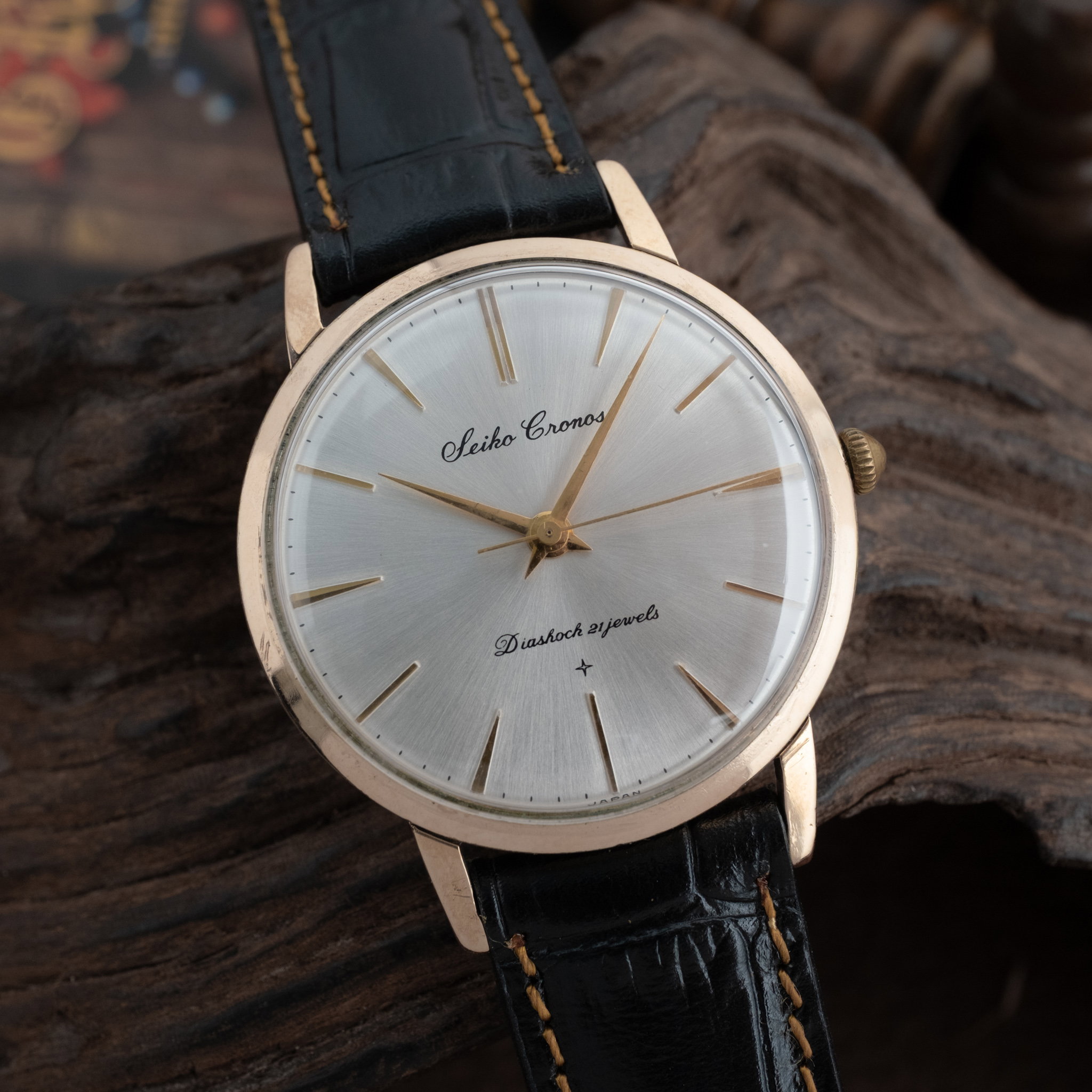
The Cronos is the late-1950s Seiko dress watch built around a thin, precise manual-wind format, not a sports watch reduced for formal wear. The examples we have handled run from 1959 to 1968 and carry Seikosha movements. A vintage Seiko Cronos works best when its restrained silver dial, slim case and hand-wound movement still read as one coherent object.
The buying decision is less about finding the largest example than choosing the least compromised one. Known cases range from compact steel watches to a larger gold-filled format. A clean 34 mm steel Cronos is the safest starting point because plating wear is removed from the equation. The larger gold-filled version has more wrist presence, but exposed base metal at the lugs cannot be reversed by servicing.
Known production period
1959-1968
Winding
Manual winding
Movement marking
Seikosha
Known case sizes
33 mm, 34 mm and 36 mm, excluding crown
| Known case materials | Stainless steel; 14K gold filled with stainless steel caseback |
| Known jewel counts | 17, 21 and 23 jewels |
| Known dial finishes | Silver sunburst and silvered satin |
| Factory context | Daini Seikosha |
What it was built for
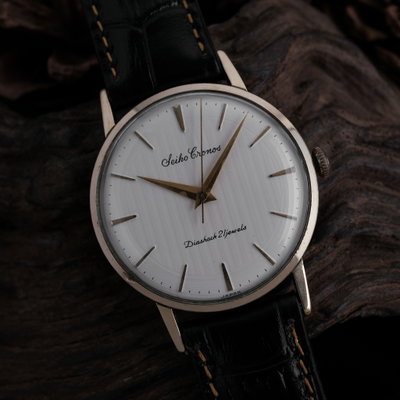
The Cronos emerged from Daini Seikosha as a slim manual-wind dress watch with an emphasis on precision. Its silver sunburst or silvered satin dial uses applied faceted indices rather than the heavier furniture associated with a sports watch. The case slips under a cuff, while the hand-wound movement keeps the ownership experience direct. The design belongs to formal mid-century use, yet the plain dial makes it easy to wear outside that setting.
The model landscape
The smallest known steel format is represented by J14006, paired with a 17-jewel Seikosha movement and cursive dial typography. That combination is the more delicate expression of the Cronos and wears visibly smaller than the larger cases. Its value depends heavily on the script remaining correctly formed, because a redial removes the character that separates this version from a generic silver dress watch.
J14037 is the stronger all-round purchase. The 34 mm steel case has enough presence for modern wear, and handled examples establish both 21-jewel and 23-jewel manual-wind configurations. Jewel count alone is therefore not proof that two watches have been assembled incorrectly. Between a sharp J14037 with an honest dial and a larger but worn gold-filled watch, the steel example deserves the premium.
J14021 takes the Cronos in another direction with a 36 mm, 14K gold-filled case over a stainless steel back. The extra diameter is noticeable on the wrist, but the material introduces a permanent condition risk at the lugs and case edges. Value sits in clean dial printing and intact gold fill rather than size alone. A used Seiko Cronos with plating loss should trade below a comparable steel watch, even when the dial remains attractive.
What goes wrong
A refinished dial is the costliest fault because the dial carries most of the watch's identity and market spread. Silver finishes can hide intervention in bright photographs, while incorrect script or heavy printing changes the entire face. Light spotting is different from refinishing: one J14021 showed faint spotting near the centre pinion, a bounded flaw that leaves the factory surface readable. Even ageing is patina; disturbed printing is not.
Gold-filled cases can wear through at the lugs, and no movement service repairs that loss. Steel cases avoid plating failure, but polishing can soften the lug lines that give a small Cronos its definition. Manual-wind movements also require assessment by condition rather than jewel count, especially because J14037 is known in more than one configuration. The service history of any individual watch is unknown without documentation, so winding feel and timekeeping claims should not substitute for a dated receipt.
What to check before you buy
- Dial print and surface: Known Cronos dials use silver sunburst or silvered satin finishes with applied faceted indices. Unevenly heavy logos, disturbed script or printing that sits above a freshly coated surface are redial warnings.
- J14006 configuration: J14006 is evidenced as a 33 mm steel Cronos with a 17-jewel Seikosha manual-wind movement and cursive dial typography. A materially different combination needs stronger support before it can be treated as correct.
- J14037 movement variation: J14037 is evidenced with both 21-jewel and 23-jewel Seikosha manual-wind movements in a 34 mm steel case. That variation should not be mislabelled as franken without another conflicting component.
- J14021 case construction: J14021 is evidenced in a 36 mm, 14K gold-filled case with a stainless steel caseback. Wear-through at the lugs or edges is condition damage, while a steel case would conflict with this known configuration.
- Case geometry: A steel Cronos should retain defined lug lines rather than rounded, mushy transitions. Polishing removes those edges first, while a gold-filled case can show exposed base metal where the outer layer has worn through.
- Movement and case coherence: The known range uses Seikosha manual-wind movements with 17, 21 or 23 jewels. Jewel count is not an authentication shortcut, so the movement must be assessed against the exact reference and case rather than in isolation.
Recent Seiko results
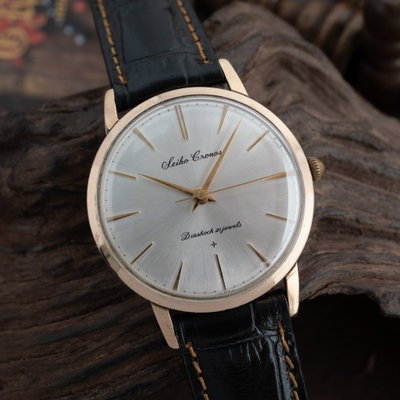
Seiko · Cronos · J14021 · 1959
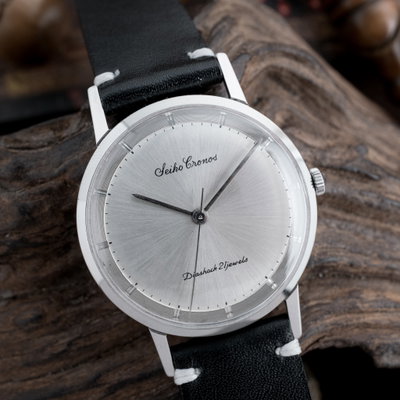
Seiko · Cronos · J14021 · 1959
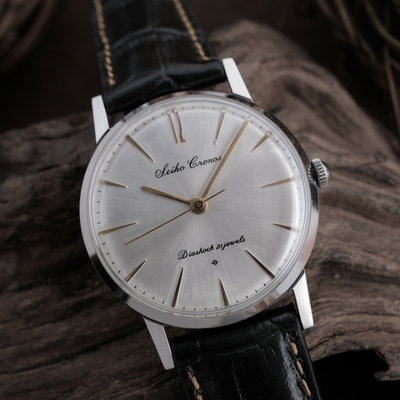
Seiko · Cronos · 14036 · 1959
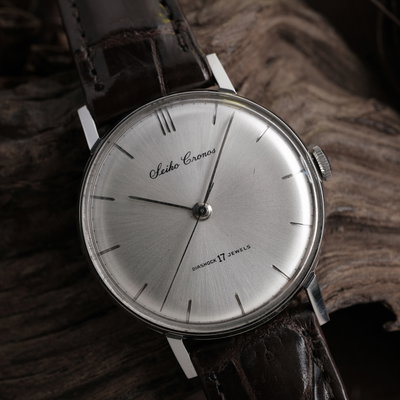
Seiko · Cronos · J14006 · 1959
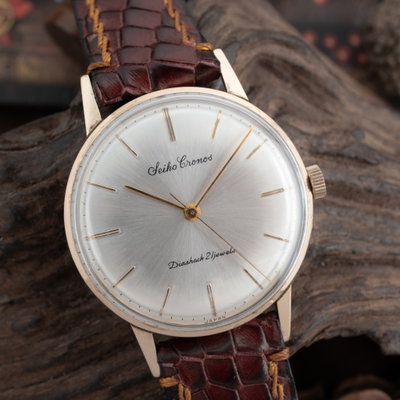
Seiko · Cronos · 15001A · 1959
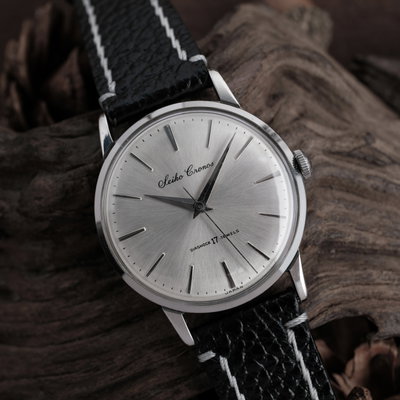
Seiko · Cronos · J14004 · 1968
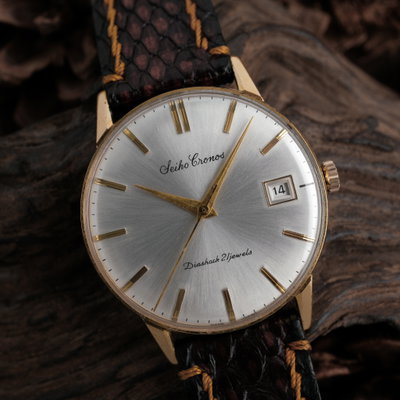
Seiko · Cronos · 15020
Seiko · Cronos · J14021 · 1960
More Seiko references
Related pages
Frequently asked questions
Ready to hunt for your own?
More than 100 vintage watches go under the hammer every week.