Seiko Lord Matic 5606-8040 Reference Guide
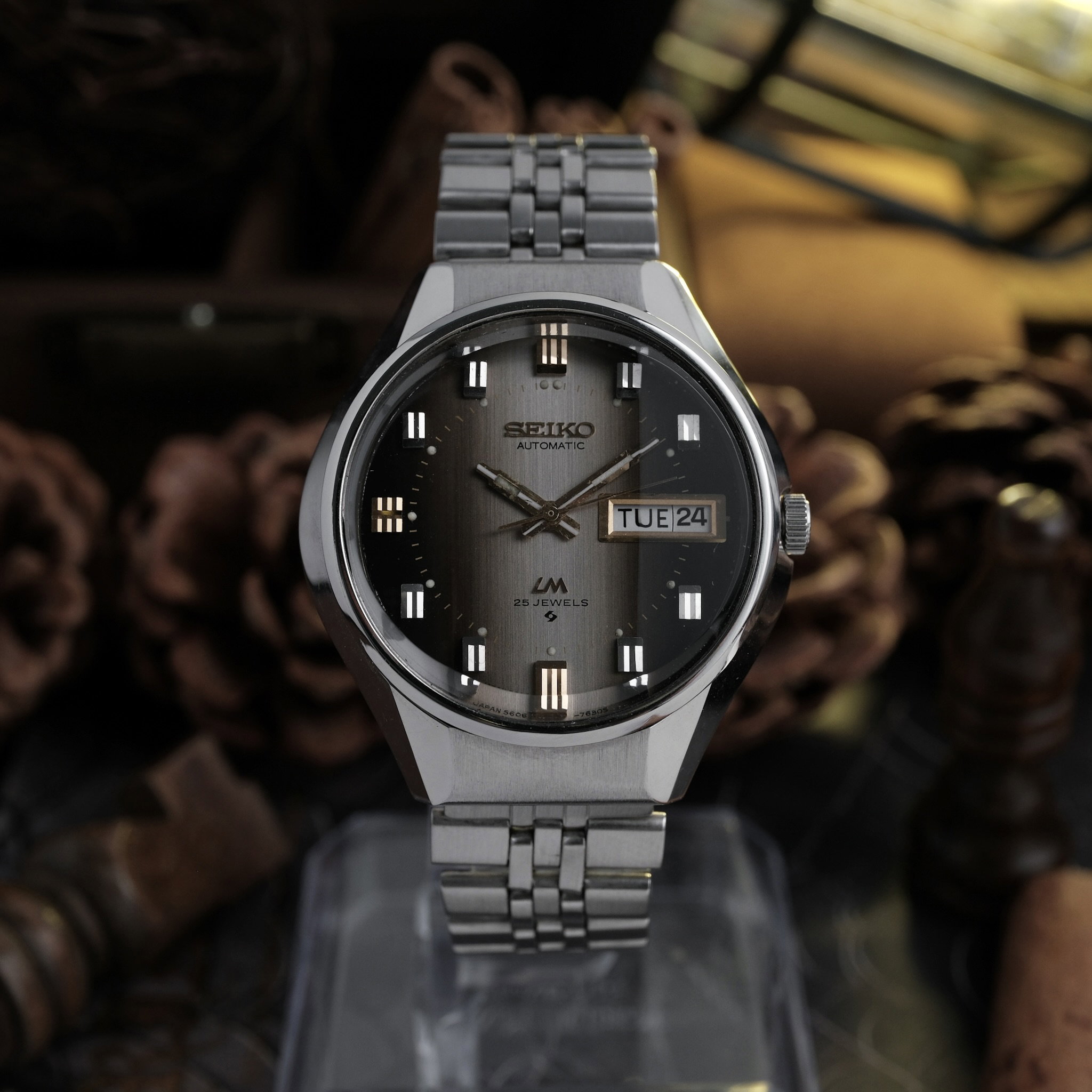
The Seiko Lord Matic 5606-8040 is a 36 mm 1974 automatic best bought for a clean gradient dial, sharp case geometry and correct caliber 5606A.
We auction more than 100 vintage watches a week.
Get first access: new Seiko 5606-8040 drops and alerts before auctions end.
Browse 14 live Seiko auctionsThe Lord Matic 5606-8040 puts Seiko's more experimental 1974 design language into a 36 mm stainless steel case. Its geometric faceted crystal amplifies the vertically brushed gradient dial, while the automatic caliber 5606A provides the mechanical identity. This is a vintage Seiko that makes sense as a complete object rather than as a movement or dial bought in isolation.
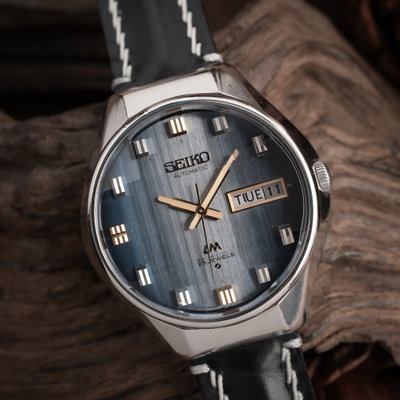
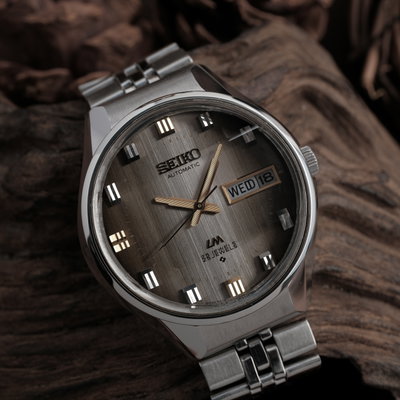
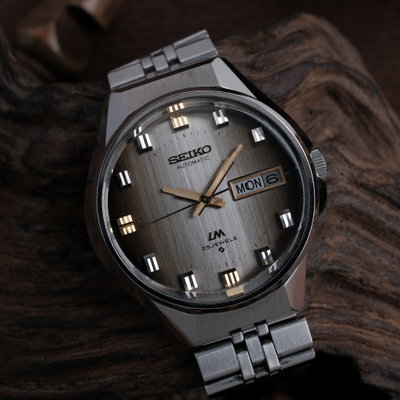
Across the examples we have handled, the decisive variation is the dial: blue gradients run from silver-blue toward navy, while grey versions shift through taupe as the light changes. Applied faceted indices may carry silver-tone or gold-tone accents. Buy the cleanest convincing dial with strong case lines, because refinishing the dial or rounding the case removes more character than ordinary surface wear.
Model
Lord Matic
Reference
5606-8040
Known production year
1974-1974
Case diameter
36 mm excluding the crown
| Case material | Stainless steel |
| Movement | Automatic caliber 5606A |
| Jewel count | 25 jewels |
| Dial executions | Vertically brushed gradient grey or blue with applied faceted indices |
| Crystal | Geometric faceted crystal |
The model landscape
The blue 5606-8040 dial moves from a lighter centre to a dark outer edge, with vertical brushing visible through the transition. The grey execution is quieter, changing between grey and taupe rather than making the same saturated contrast. Gold-accented applied indices are also known, so gold-tone furniture is not by itself evidence of a franken watch.
The strongest version pairs an undisturbed gradient dial with crisp case transitions and the geometric faceted crystal. Between a vivid blue example with oxidised hands and a cleaner grey example with sharp lines, take the grey watch. The colour premium is difficult to defend once damaged hands or a refinished surface interrupt the design.
On the wrist
At 36 mm excluding the crown, the 5606-8040 wears compactly by current standards without losing its visual weight. The faceted crystal and applied indices throw light across the dial, making the watch look more dimensional than the diameter suggests. Blue gives the reference a stronger 1970s presence, while grey sits more quietly with tailoring.
An integrated bracelet is documented on the reference and makes the case read as one continuous geometric form. Its condition matters because stretch, distorted links or poor end fit can change how the watch sits. The available evidence does not establish that every 5606-8040 left the factory on the same bracelet configuration, so a bracelet claim should be judged on fit and construction rather than confidence alone.
What goes wrong
Heavy oxidation on the handset is the clearest documented damage, and it should be called damage rather than patina. A clean dial cannot cancel corroded hands sitting directly above it. Redials are costlier mistakes: a flat replacement finish or lost vertical brushing removes the feature that separates this reference from an ordinary silver or blue dress watch.
Polishing rounds the sharp case transitions, while bracelet stretch loosens the integrated shape and deep crystal scratches disrupt the facets. None is corrected by calling the watch serviced. The service history is unknown unless paperwork accompanies the individual watch, and caliber identity alone establishes neither mechanical condition nor the date of its last overhaul.
Dating this watch
| Serial range / caliber | Year | Note |
|---|---|---|
| 5606 | 1968-1976 | caliber production window |
Dating data comes from our decoder tables; treat years as approximate.
What to check before you buy
- Dial execution: Known 5606-8040 dials use vertical brushing beneath a grey-to-taupe or blue gradient, with applied faceted indices. A flat single-colour refinish does not match these documented executions.
- Movement identity: The movement should be Seiko's automatic caliber 5606A with 25 jewels. Another caliber raises a married or franken concern, although the correct caliber alone cannot prove that case and movement began together.
- Case and crystal: The stainless steel case measures 36 mm excluding the crown and works with a geometric faceted crystal. Soft, mushy case transitions indicate polishing, while rounded or deeply scratched facets weaken the intended geometry.
- Hands and dial relationship: Hand oxidation is documented on the reference and must be treated as damage, not attractive patina. Replacement hands may be period-correct without being original, so matching style cannot establish untouched status.
- Bracelet fitment: An integrated bracelet is documented on the 5606-8040, but the evidence does not establish one mandatory bracelet for every example. Poor end fit, distorted links or pronounced stretch still count against the watch.
- Crown and caseback limits: The available evidence does not establish a definitive crown or caseback configuration for every 5606-8040. Without documentation, those parts should not be declared original or rejected from unsupported visual rules.
Other 5606-8040 examples we auctioned
10 Seiko 5606-8040 auctioned
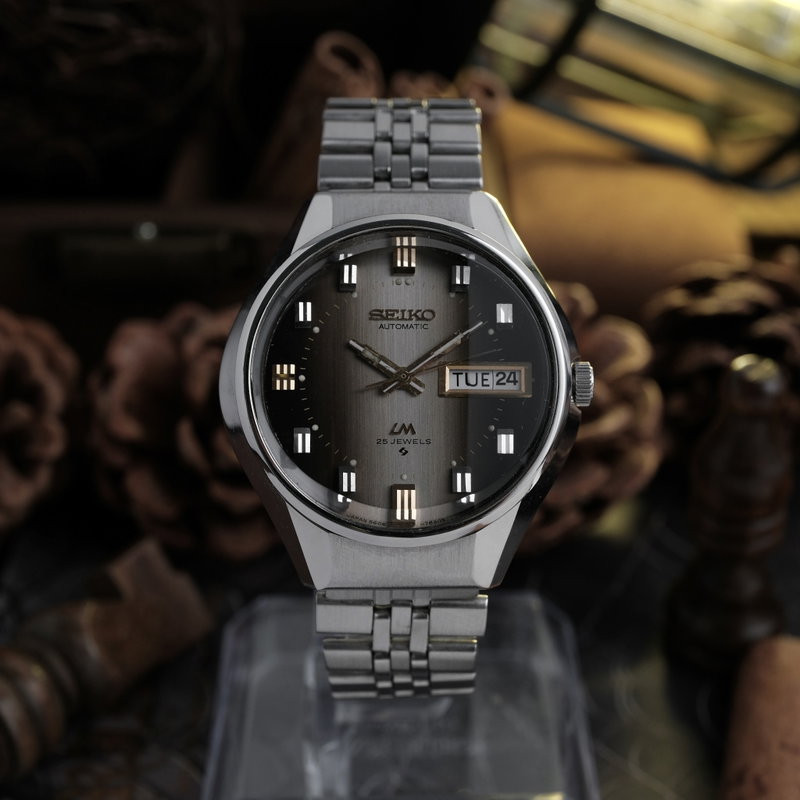
Seiko · Lord Matic · 5606-8040 · 1974
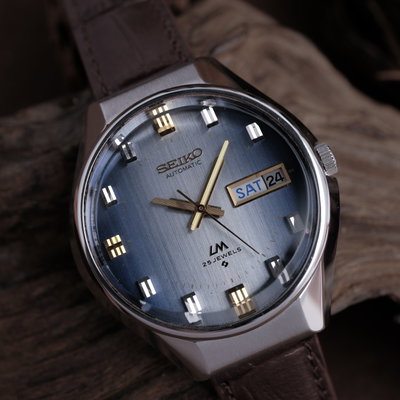
Seiko · Lord Matic · 5606-8040 · 1974
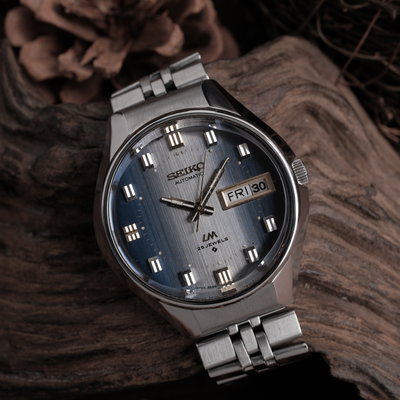
Seiko · Lord Matic · 5606-8040 · 1974
Seiko · Lord Matic · 5606-8040 · 1974
Seiko · Lord Matic · 5606-8040 · 1974
Seiko · Lord Matic · 5606-8040 · 1974
More Seiko references
Related pages
Frequently asked questions
Ready to hunt for your own?
More than 100 vintage watches go under the hammer every week.