Seiko Lord Matic 5606-7260 - A Reference Guide for Collectors
Buy the 5606-7260 for its clean sunburst dial first, then choose 34 mm or 36 mm according to wrist presence and confirm the 5606A movement.
We auction more than 100 vintage watches a week.
Get first access: new Seiko 5606-7260 drops and alerts before auctions end.
Browse 24 live Seiko auctionsThe vintage Seiko Lord Matic 5606-7260 is defined by a compact stainless steel case, a sunburst dial and an automatic 5606A movement. Examples handled from 1972 and 1973 establish two useful buying paths: a 34 mm blue-dial watch and 36 mm silver-dial watches. That choice changes the watch more than the small difference on paper suggests.
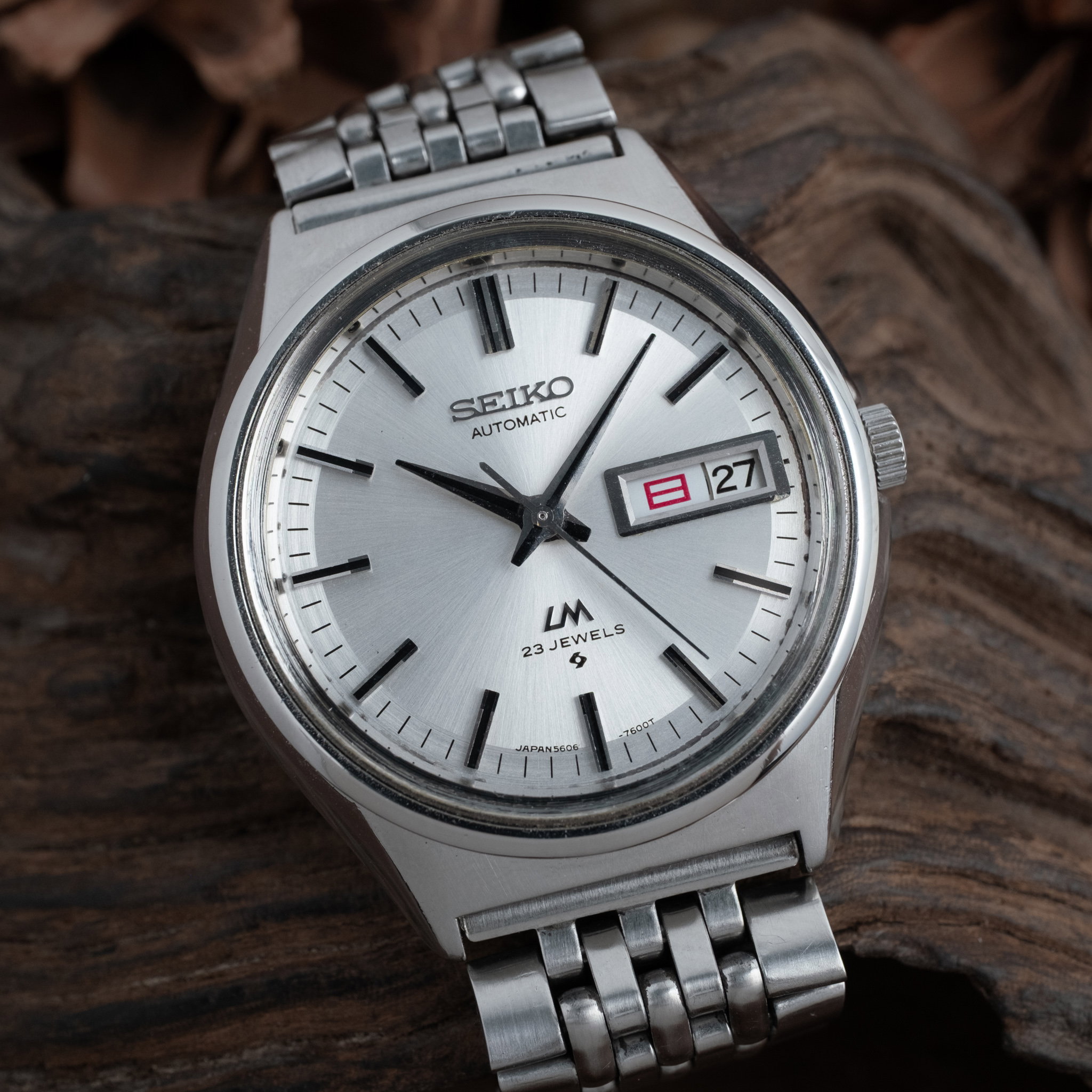
A used Seiko Lord Matic 5606-7260 should be bought on its dial before anything else. Silver examples have applied faceted markers with dark central stripes, while the blue example pairs applied markers with a Kanji and English day display. A clean dial matters more than a replacement crystal or uncertain service history because a redial permanently changes the watch collectors are paying to own.
Reference
5606-7260
Model
Lord Matic
Known production years
1972-1973
Case material
Stainless steel
| Known case sizes | 34 mm and 36 mm, excluding the crown |
| Movement | Automatic Seiko caliber 5606A |
| Jewel count | 23 jewels |
| Known dial finishes | Blue sunburst and silver sunburst |
| Display | Day-date |
| Known day languages | Kanji and English |
The model landscape
The 1972 example establishes the smaller configuration: a 34 mm stainless steel case, blue sunburst dial and automatic 5606A caliber. Its Kanji and English day wheel sits beside the date at three o'clock, and the applied indices keep the darker dial readable. This is the more compact and visually assertive version.
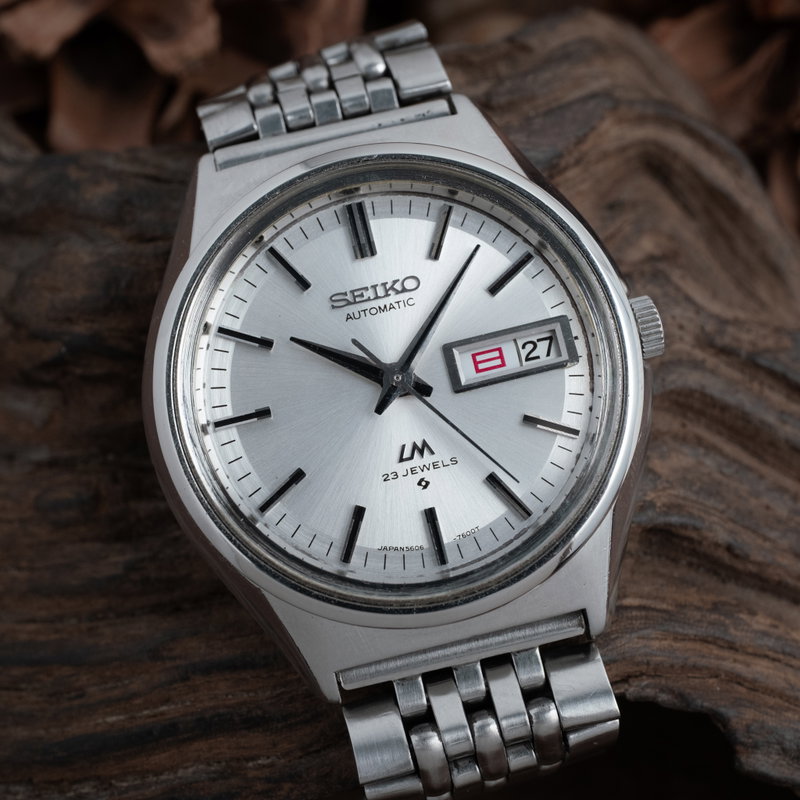
The 1973 watches establish a different configuration at 36 mm, with silver sunburst dials and applied faceted indices. Dark stripes through the markers sharpen the contrast, while the polished hands and applied Seiko and LM signatures keep the layout restrained. Between equal-condition examples, choose blue for stronger colour and the silver 36 mm version for greater wrist presence.
Where the value sits
The dial carries the decisive premium on the 5606-7260. A clean sunburst finish should retain its radial change under angled light, and the applied Seiko and LM signatures should remain separate from the printed text. A refinished dial costs more in collector value than light case wear, so an honest dial outranks a brighter case with softened edges.
Case size creates the next meaningful spread. The 34 mm blue watch wears compactly, while the 36 mm silver version occupies more of the wrist without changing the reference. Bracelet fit also matters: a signed bracelet belongs naturally with the compact 1972 configuration we have handled, but period-correct is not proof that a bracelet has remained with the watch since sale.
Condition faults should be named rather than folded into a broad grade. Moisture spotting on the sunburst surface, oxidation on the hands and softened case facets are distinct problems with different consequences. The service history is unknown without documentation, and a clean exterior does not establish the condition of the 5606A movement.
Dating and serials
Known 5606-7260 examples span 1972-1973, which is the useful reference-level production window established here. The 5606 caliber family has a broader production window of 1968-1976, so that range alone cannot assign a particular 5606-7260 to one of the two known years. It dates the caliber, not the complete watch.
A 1972 or 1973 attribution should also agree with the watch as a whole: reference, case, dial layout and 5606A movement must form a coherent configuration. A movement from the broader caliber window does not by itself prove that the case and movement left the factory together. Without documentation, we prefer not to speculate beyond what the complete watch establishes.
Dating this watch
| Serial range / caliber | Year | Note |
|---|---|---|
| 5606 | 1968-1976 | caliber production window |
Dating data comes from our decoder tables; treat years as approximate.
What to check before you buy
- Dial configuration: A correct candidate should use a blue or silver sunburst dial with applied indices and applied Seiko and LM signatures. Silver examples handled have faceted markers with dark central stripes; flat paint or crude printing points to a redial.
- Hands and day-date: The hands should suit the applied dial furniture and show no unexplained mismatch in finish. The day-date aperture belongs at three o'clock, and the 1972 blue configuration is established with a Kanji and English day wheel.
- Case and movement pairing: The stainless steel case should carry the 5606-7260 reference and contain an automatic 5606A movement with 23 jewels. A genuine movement in a genuine case is not enough if the two came from different watches; that is a married watch.
- Case geometry: Assess the edges and facets before accepting a bright case as a virtue. Repeated polishing softens the geometry and rounds transitions, while the known 34 mm and 36 mm sizes mean diameter alone cannot settle authenticity.
Other 5606-7260 examples we auctioned
More Seiko references
Related pages
Frequently asked questions
Ready to hunt for your own?
More than 100 vintage watches go under the hammer every week.