Vintage Rado Mackenzie: variants, value and buying advice
The vintage Rado Mackenzie to buy is a 36 mm steel example with a coherent dial, intact rotating anchor and the least dial damage, not the brightest polished case.
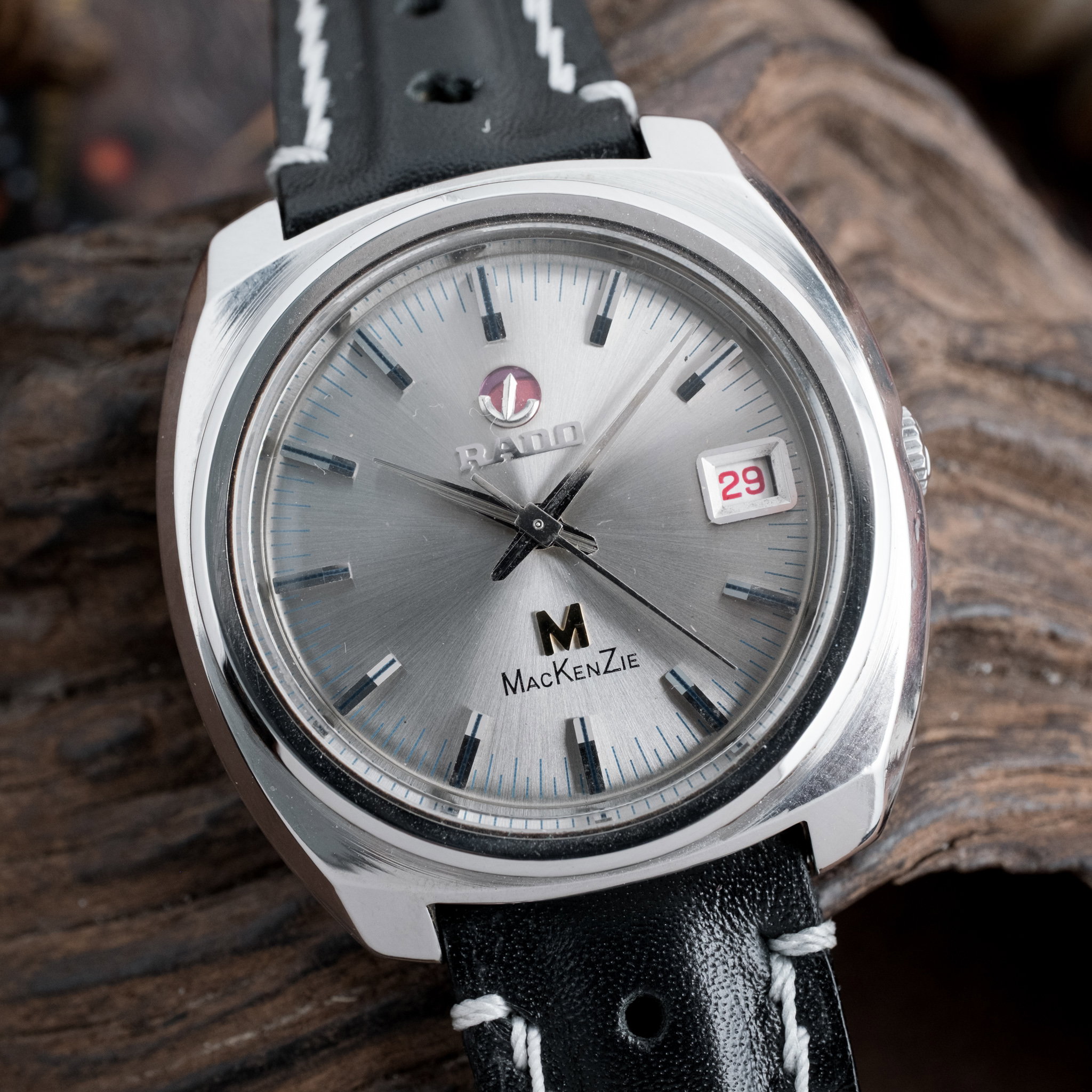
The vintage Rado Mackenzie belongs to the 1970s, when the brand paired cushion-shaped stainless steel cases with high-contrast dials, applied furniture and a date at 3 o'clock. Both Mackenzie and MacKenZie spellings occur on the dial, while the rotating anchor gives the watch its most recognisable moving detail.
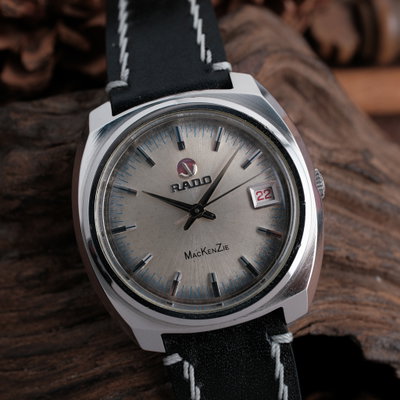
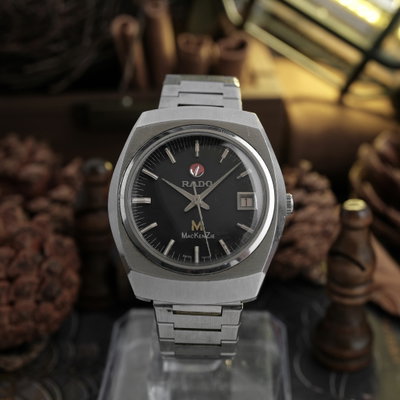
The version to want is determined first by the dial. Ref. 7300215 combines a silver sunburst surface with a red date display and an AS 1858 automatic movement, while ref. 73007951-1 pairs a matte black dial with an ETA caliber 2797. Ref. 74210024 offers another black-dial execution with white printing and a red date display, although the caliber is not established by the watches handled. Service history is unknown unless documentation accompanies the individual watch.
Production period
1970s
Case diameter
36 mm excluding the crown
Case material
Stainless steel
Case form
Cushion-shaped
| Movement in ref. 73007951-1 | Automatic ETA caliber 2797 |
| Movement in ref. 7300215 | Automatic AS 1858 |
| Jewel count | 25 jewels on the established automatic calibers |
| Dial executions | Silver brushed, silver sunburst and matte black |
| Date position | 3 o'clock |
| Distinctive dial detail | Applied rotating anchor logo |
The model landscape
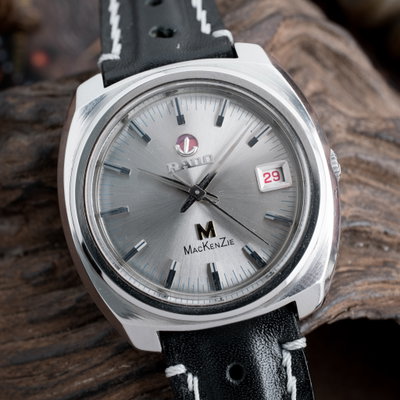
The clearest split is between silver and black dials. Ref. 7300215 uses silver sunburst brushing, applied indices with black inserts, gold-tone branding and a red numeral date display. Ref. 73000176 also has a brushed silver base, but the known example carries heavy dark spotting around the perimeter. Between those two, the cleaner sunburst dial is the safer purchase because peripheral staining permanently changes both contrast and value.
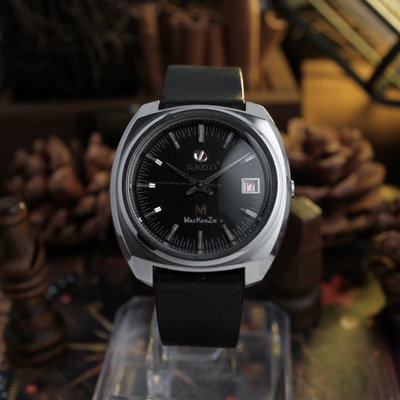
The black-dial choices are not interchangeable. Ref. 73007951-1 has matte black paint, applied silver-tone furniture, an ETA caliber 2797 and widespread micro-spotting described as stardust ageing. Ref. 74210024 carries crisp white printing, applied indices and a red date display, with oxidation visible on the hands rather than staining across the dial. The latter has the stronger condition profile when its black surface remains free from moisture damage.
Movement identity must follow the individual reference rather than the Mackenzie name alone. Ref. 73007951-1 is known with ETA caliber 2797, while ref. 7300215 is known with AS 1858; both are automatic and carry 25 jewels. Ref. 74210024 is recorded only as mechanical, so assigning it a caliber would be speculation. A used Rado Mackenzie assembled from a plausible dial, unrelated movement and another case is franken even when every component is genuine Rado.
On the wrist
The 36 mm measurement excludes the crown, yet the cushion case extends steel into the corners and frames the dial with a substantial 1970s outline. Applied indices remain easy to pick out on both the silver sunburst and black executions, while the date at 3 o'clock adds a strong colour accent when fitted with red numerals.
Dial finish changes the wearing character more than the shared dimensions. Silver sunburst brushing reacts to changing light and makes the applied gold-tone elements on ref. 7300215 conspicuous. Matte black on ref. 73007951-1 suppresses reflections, although dense micro-spotting reduces the clean contrast that makes the layout work. Ref. 74210024 is the legibility choice when its black surface, white print and applied furniture remain clearly separated.
What goes wrong
Heavy dial damage is the costliest fault. Ref. 73000176 demonstrates the severe end of the spectrum: dark peripheral staining, spotting and a bright centre create a pronounced vignette that cannot be treated as even patina. Ref. 73007951-1 can show micro-spotting across the whole matte surface, while the hands on ref. 74210024 may oxidise even when the dial stays clean. A refinished dial costs more than every other flaw combined because it removes the factory surface rather than preserving it.
Case wear requires equally plain language. Polishing softens the cushion outline and rounds the transitions between the top surface and case sides; scratches are less consequential because they leave that geometry intact. The rotating anchor should remain present and visually coherent with the applied furniture, but its survival does not prove the rest of the dial untouched. Replaced crowns, crystals and gaskets are consumable-service issues, and without supporting records their originality should not be claimed.
Movement substitutions create the most convincing franken Mackenzies because more than one automatic caliber belongs within the model family. An ETA caliber 2797 is established for ref. 73007951-1, while AS 1858 is established for ref. 7300215; crossing those known pairings needs evidence rather than assumption. The service history of an undocumented example remains unknown. Between a polished case with a clean factory dial and a sharper case with a redial, take the factory dial.
What to check before you buy
- Dial configuration: Ref. 7300215 should be assessed against its silver sunburst dial, applied indices with black inserts, gold-tone branding and red date display. A different combination may be period-correct Rado work, but it is not automatically correct for this reference.
- Movement and reference pairing: ETA caliber 2797 is established for ref. 73007951-1, while AS 1858 is established for ref. 7300215. A swapped genuine movement can make the watch franken or married, so brand signatures alone are insufficient.
- Printing and applied furniture: On black ref. 74210024, the MacKenZie text and minute track are white, with applied indices and an intact rotating anchor. Blurred replacement printing or furniture that conflicts with this layout requires a redial or parts-swap explanation.
- Case geometry: The stainless steel case should retain a readable cushion outline and distinct transitions between its upper surface and sides. Rounded corners and blended planes diagnose polishing, even when the remaining surface is bright and free of scratches.
- Damage versus factory finish: Matte black micro-spotting and heavy peripheral staining are ageing or damage, not alternate factory finishes. A service dial is a genuine replacement and differs from a redial, but neither status can be assigned without evidence from the individual watch.
Recent Rado results
More Rado references
Related pages
Frequently asked questions
Ready to hunt for your own?
More than 100 vintage watches go under the hammer every week.