Rado Green Gazelle: what to buy and what to avoid
Choose a Green Gazelle for its dial and faceted case first, then confirm that the automatic caliber, date layout and signed details agree with the watch.
We auction more than 100 vintage watches a week.
Get first access: new Rado watch drops and alerts before auctions end.
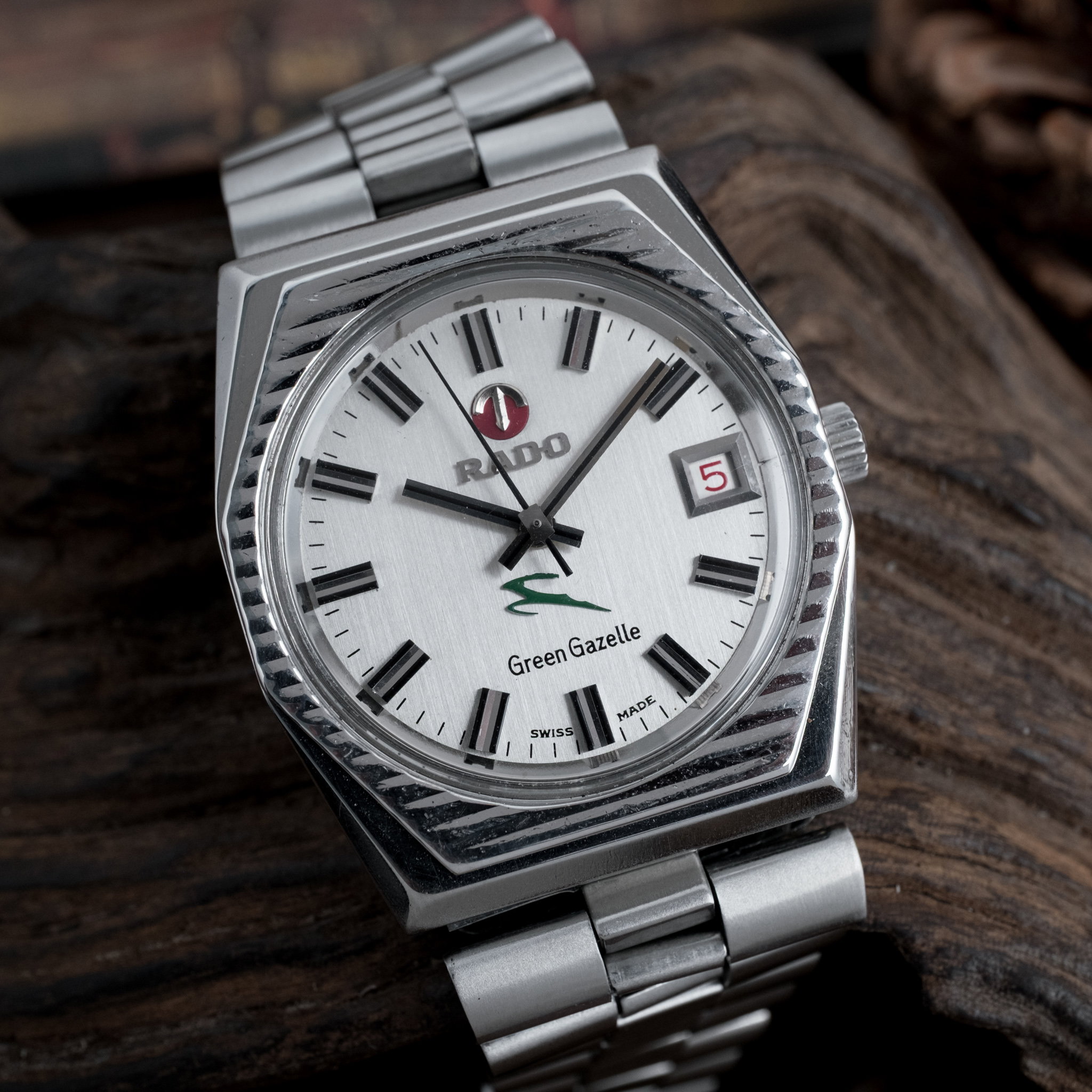
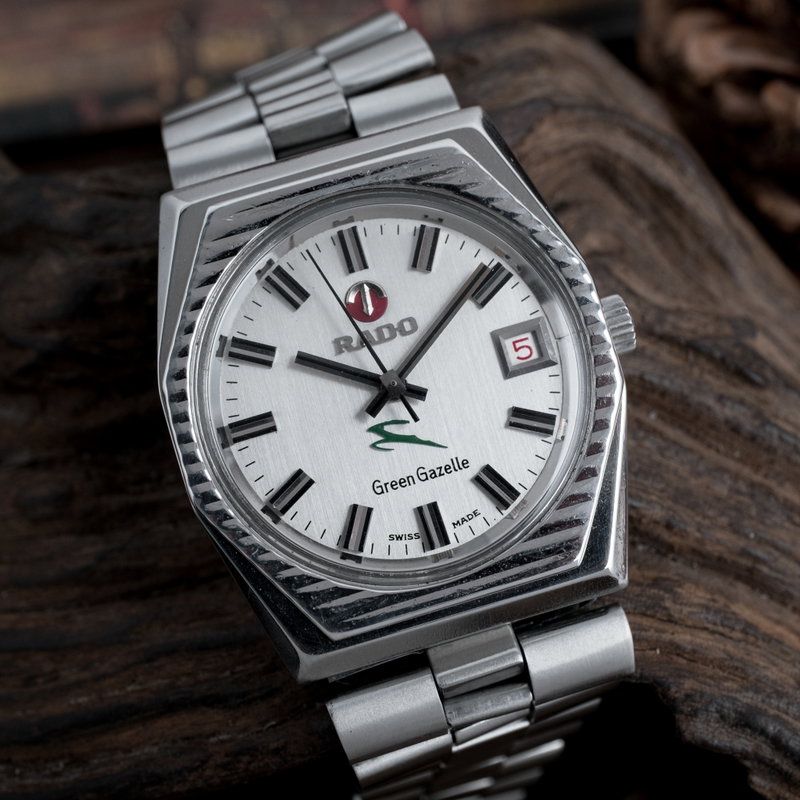
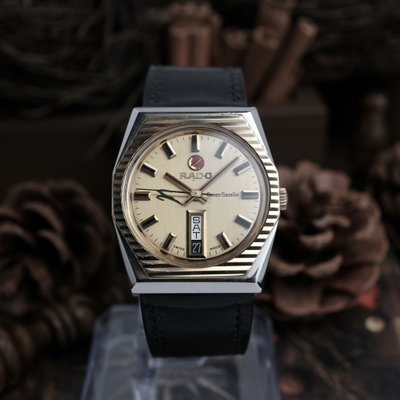
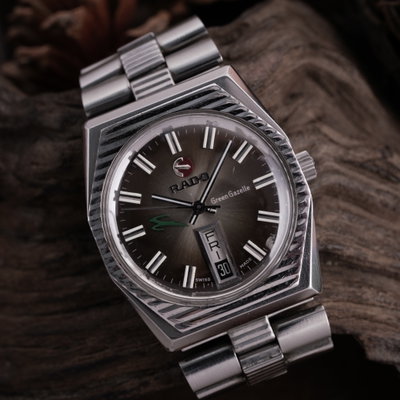
Browse 20 live Rado auctionsThe Green Gazelle name does not mean a green dial. The 1970s watches handled here use vertically brushed silver or champagne surfaces, plus a gradient brown sunburst option, with the colored gazelle emblem providing the model identity. A rotating Rado anchor at 12 and a faceted bezel complete a design that is far less conventional than a round dress watch from the same decade.
At 33 mm without the crown, the Green Gazelle is compact across the wrist but visually broader because of its angular case and bezel. Silver dials give the applied indices and baton hands the clearest contrast, while the brown gradient version puts more emphasis on the dial itself. The automatic movements encountered include calibers 2783, 2789 and 2797, so caliber alone cannot identify the model.
Model
Rado Green Gazelle
Production period documented
1970s
Known references
11984, 11986, 11988
Case size
33 mm excluding the crown
| Documented movements | Automatic calibers 2783, 2789 and 2797 |
| Documented jewel counts | 17 jewels and 25 jewels for caliber 2789 |
| Case materials documented | Stainless steel, with steel or gold-tone and gold-plated bezel configurations |
| Dial finishes documented | Vertically brushed silver, vertically brushed champagne and gradient brown sunburst |
| Calendar displays documented | Date and day-date configurations |
The model landscape
References 11984, 11986 and 11988 belong to the Green Gazelle landscape, but the visible configuration matters more than the number alone. Reference 11984 has been encountered with calibers 2789 and 2797, which means a movement mismatch cannot be diagnosed from a single assumed caliber. The day-date arrangement seen with caliber 2789 must be judged as a complete configuration, while other examples use a date window at 3.
The silver vertically brushed dial is the safest place to start. It makes the faceted indices, black inserts and Green Gazelle emblem easy to read, and it suits the steel case without letting the gold-tone bezel dominate. Choose it over the brown sunburst version when legibility and versatility matter more than stronger color contrast.
Where the value sits
The dial carries the largest share of the Green Gazelle's value. Clean vertical brushing, intact applied furniture and a crisp gazelle emblem outweigh ordinary case wear, while spotting on a gradient brown dial must be priced as damage rather than called patina. A redial costs more in lost confidence than wear to the steel case, because the unusual texture and model-specific emblem are difficult to reproduce convincingly.
A gold-plated or gold-tone bezel adds another condition variable that an all-steel presentation avoids. Once plating wears through on raised facets, polishing cannot put it back, and replating changes the surface rather than preserving it. A signed bracelet adds coherence, but severe stretch or poor end-link fit reduces its practical value even when the signature is correct.
What goes wrong
Dial spotting is the first fault to price, followed by bezel wear and softened case geometry. The faceted bezel and angular case lose definition when polished, especially where crisp planes should meet; a shiny surface does not compensate for rounded edges. Hands can oxidize, black index inserts can disappear, and an applied anchor that no longer moves should be disclosed rather than treated as harmless decoration.
Movement identity needs equal care because Green Gazelles have been handled with calibers 2783, 2789 and 2797. A caliber from that set is not proof by itself: the date or day-date display, dial apertures and movement must form a plausible whole, otherwise the watch may be franken or married. Service history is often unknown, and without documentation no claim beyond present running behavior is justified.
What to check before you buy
- Dial identity: The dial should combine the Rado signature and applied anchor at 12 with the Green Gazelle emblem above 6. Missing, blurred or newly painted model graphics warrant treating the dial as refinished.
- Dial texture and furniture: Silver and champagne examples use a vertical brushed finish with applied faceted indices, while the brown option has a gradient sunburst surface. Flat paint or inconsistent furniture points to a redial or mixed parts.
- Calendar and caliber agreement: Green Gazelles have been handled with calibers 2783, 2789 and 2797, using date or day-date displays. The movement, dial apertures and calendar mechanism must agree as one configuration.
- Case and bezel geometry: The angular steel case and faceted bezel should retain distinct planes and edges. Rounded transitions indicate polishing, while exposed base metal on a gold-plated bezel records permanent plating loss.
- Hands, indices and anchor: Baton hands should make visual sense with the applied indices and their dark inserts, and the anchor is designed to rotate. Correct-looking individual parts do not excuse a handset or dial combination that conflicts.
Recent Rado results
11 Rado watches auctioned
Rado · Green Gazelle
Rado · Green Gazelle
Rado · Green Gazelle
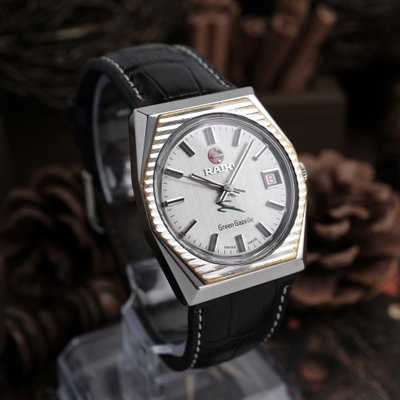
Rado · Green Gazelle · 11984
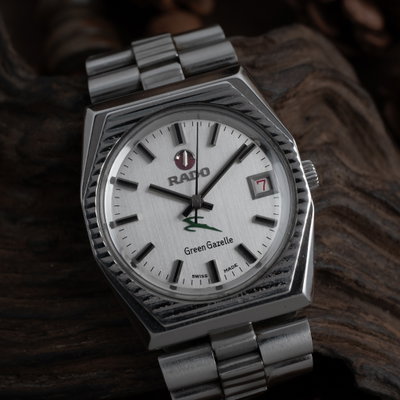
Rado · Green Gazelle · 11984
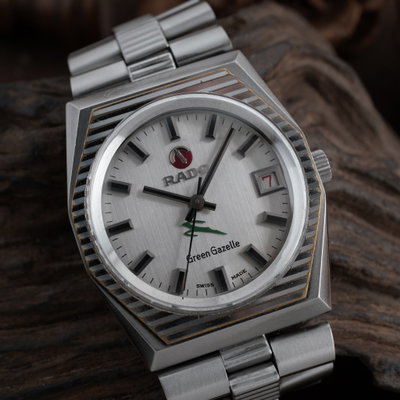
Rado · Green Gazelle · 11984
More Rado references
Related pages
Frequently asked questions
Ready to hunt for your own?
More than 100 vintage watches go under the hammer every week.