Rolex 6694 Oysterdate Precision Reference Guide
Rolex reference 6694 is the manual-wind Oysterdate Precision to buy for its compact Oyster case, date display and strong dial-led variety.
We auction more than 100 vintage watches a week.
Get first access: new Rolex 6694 drops and alerts before auctions end.
Browse 1 live Rolex auctionThe Rolex 6694 is a compact, manual-wind Oysterdate Precision with a date display and a production history running from 1963 to 1982 in the watches handled here. It gives you the Oyster case without turning daily wear into automatic Rolex ownership, and winding it is part of the routine rather than an occasional intervention.
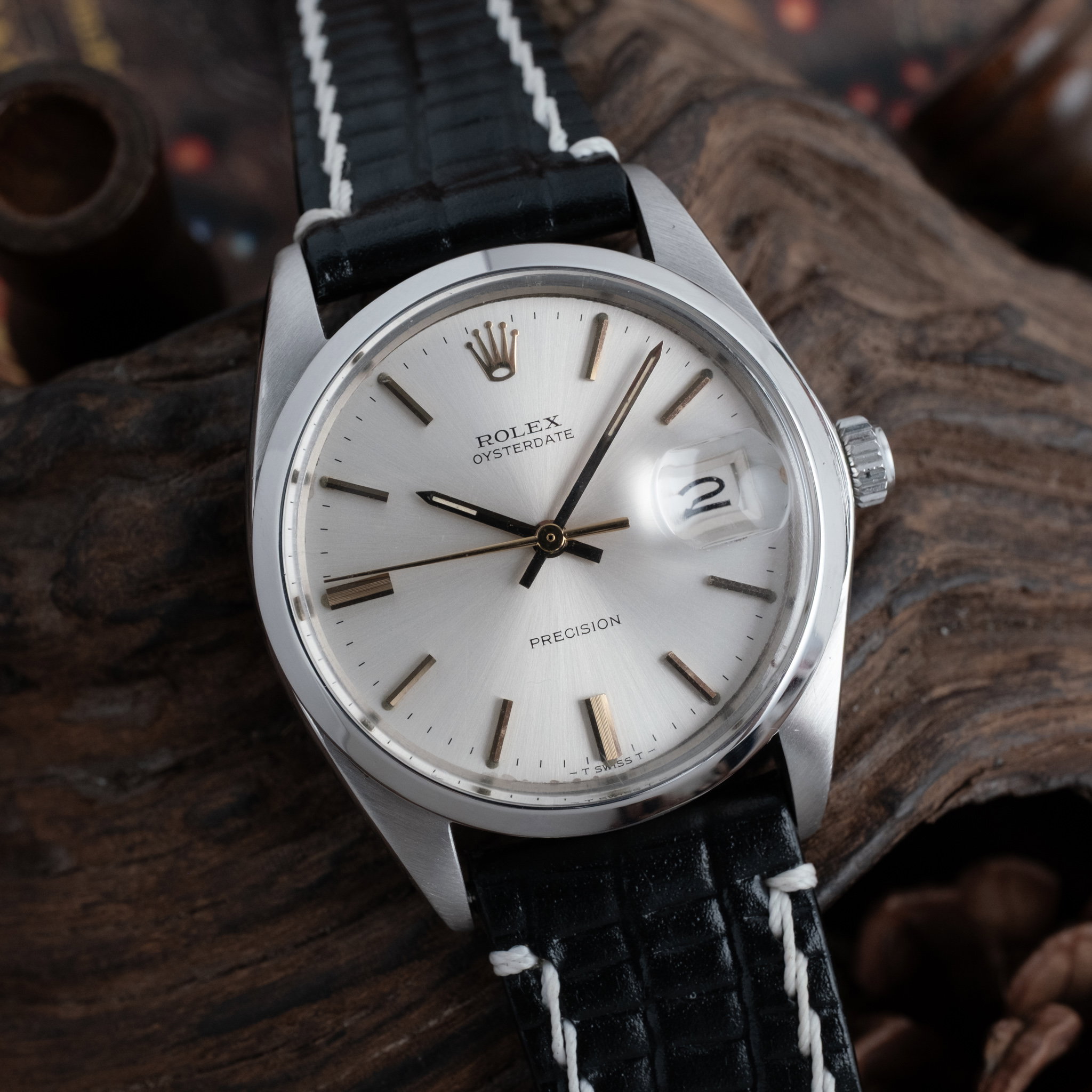
The strongest version is the one with the most convincing dial and case, not automatically the earliest year or loudest colour. Black dials with gilt-tone text and blue sunburst dials with applied gold-tone indices are both established configurations, while the related Oyster Precision may appear beside the Oysterdate Precision in photographs and should not be confused with reference 6694.
Brand
Rolex
Model
Oysterdate Precision
Reference
6694
Known production-year span
1963-1982
| Movement type | Manual wind |
| Documented caliber | 1225 in a 1982 example |
| Documented jewel count | 17 jewels in a 1982 example |
| Case material | Stainless steel |
| Documented case measurements | 34 mm and 36 mm, excluding the crown |
| Documented dial configurations | Black with gilt-tone text; blue sunburst with gold-tone applied indices |
The model landscape
Reference 6694 combines a stainless steel Oyster case, manual winding and a date display. The known examples span 1963 to 1982, with caliber 1225 identified in a 1982 watch. Earlier examples in the handled group are recorded simply as manual wind, so assigning that caliber to every year would go beyond the evidence.
Dial choice changes the character more than the underlying watch. A black surface with gilt-tone text reads formal and compact, while blue sunburst catches light and makes the applied gold-tone furniture more prominent. Between an attractive colour with weak printing and a quieter dial with crisp, coherent printing, take the quieter dial. A redial costs more in lost appeal than ordinary case wear.
On the wrist
The 34 mm steel examples from 1963 and 1968 wear as compact vintage watches, with the Oyster case giving more visual weight than the diameter suggests. A 1982 example was recorded at 36 mm excluding the crown, but that isolated measurement is not enough to establish a separate factory case size. Verify the actual watch rather than buying from a copied specification.
Manual winding makes the crown a working component, not just a setting control. The watch suits a cuff and remains legible through applied baton indices, but dark dials need stronger contrast between hands and surface. Gold-tone hands and indices warm both the black and blue configurations without changing the practical, restrained proportions.
What goes wrong
The dial is the expensive fault. Refinished printing, replaced luminous material and mismatched hands can turn a visually clean 6694 into a weaker purchase, while a genuine service dial is a factory replacement and must not be described as original to the watch. On blue sunburst dials, uneven colour or a flat repainted surface matters more than minor honest marks.
Case work leaves permanent evidence: softened lug edges, rounded transitions and heavily polished surfaces cannot be returned by servicing. Replaced crowns also need to be identified, and repeated winding makes crown and stem condition especially relevant. Water resistance is unknown unless tested for the individual watch, regardless of the Oyster name.
The service history is unknown unless paperwork accompanies the watch. Caliber 1225 is established for the 1982 example, but movement identity alone does not prove that a case, dial and movement left the factory together. A franken combines parts that never shipped together; a married watch joins a case and movement from different watches.
What to check before you buy
- Dial identity and finish: The dial should read Oysterdate Precision and suit the watch's date display. Known configurations include black with gilt-tone text and blue sunburst with applied gold-tone indices; flat repainting or weak printing indicates a redial.
- Hands and luminous material: Gold-tone baton hands occur with the documented black and blue dials. Compare their style and ageing with the applied indices and lume plots; a sharp mismatch can indicate replacement hands or relume.
- Case geometry: Assess the stainless steel Oyster case for defined lug edges and balanced transitions. Soft, rounded lugs point to polishing, while an outlying measurement should be checked directly rather than explained as a factory variant.
- Movement agreement: The watch must contain a manual-wind movement consistent with the Oysterdate Precision configuration. Caliber 1225 with 17 jewels is established for a 1982 example, but that does not authenticate earlier watches by assumption.
- Assembly consistency: The case, movement, dial and hands must make sense together for reference 6694. A genuine service dial remains a replacement, while a franken uses parts that never shipped together and a married watch joins another case and movement.
Other 6694 examples we auctioned
10 Rolex 6694 auctioned
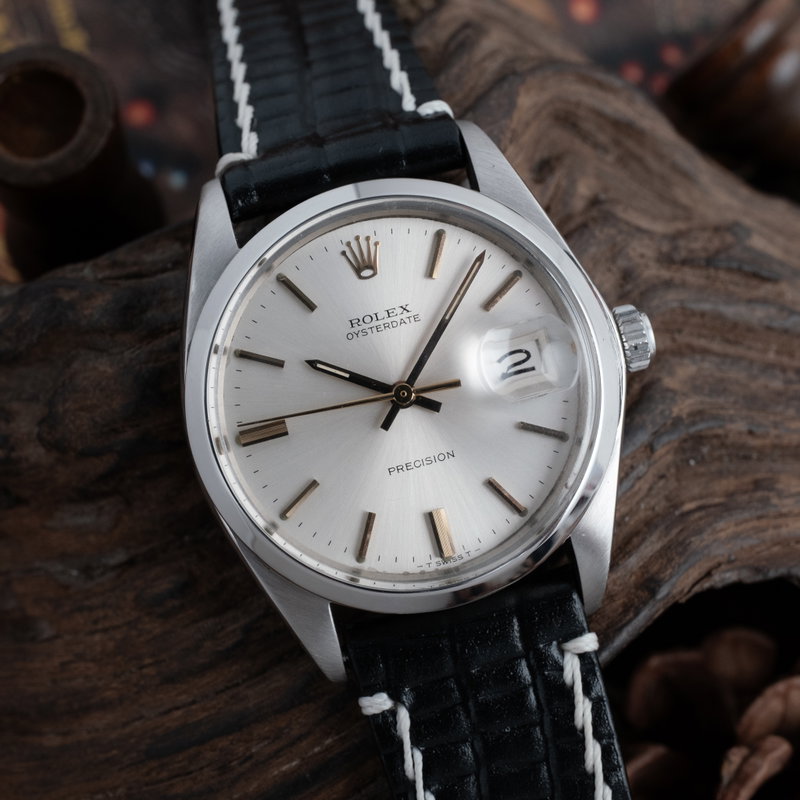
Rolex · Oysterdate Precision · 6694 · 1972
Rolex · Oysterdate Precision · 6694 · 1968
Rolex · Oysterdate Precision · 6694 · 1968
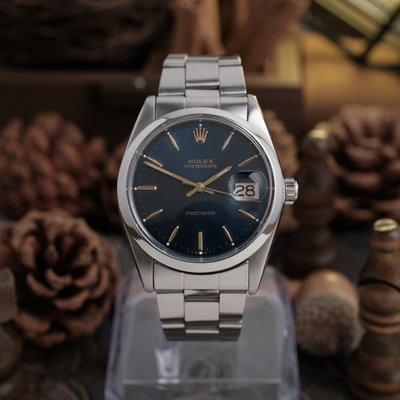
Rolex · Oysterdate Precision · 6694 · 1963
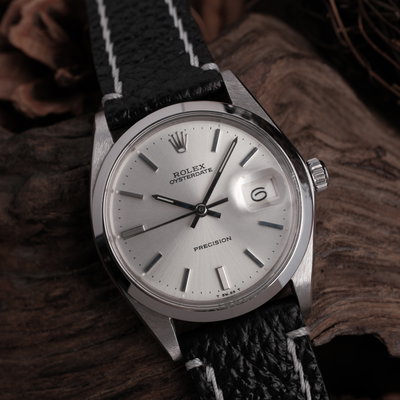
Rolex · Oysterdate Precision · 6694 · 1969
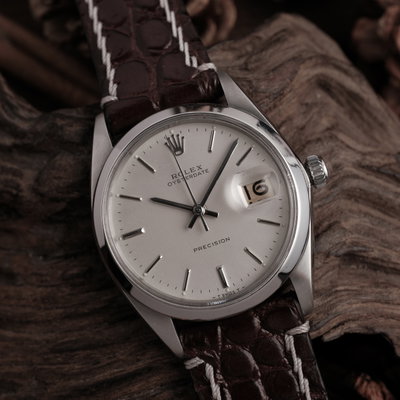
Rolex · Oyster Precision · 6694 · 1969

Rolex · Oysterdate Precision · 6694 · 1973
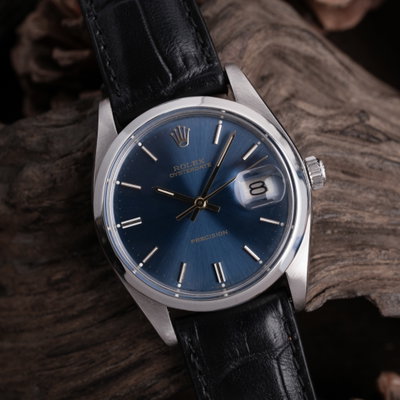
Rolex · Oysterdate Precision · 6694 · 1982
Related pages
Frequently asked questions
Ready to hunt for your own?
More than 100 vintage watches go under the hammer every week.