Vintage Oris Pointer Date: What to Buy and What to Avoid
Buy the dial first: on a vintage Oris Pointer Date, refinishing and plating loss matter more than small differences in case size or movement type.
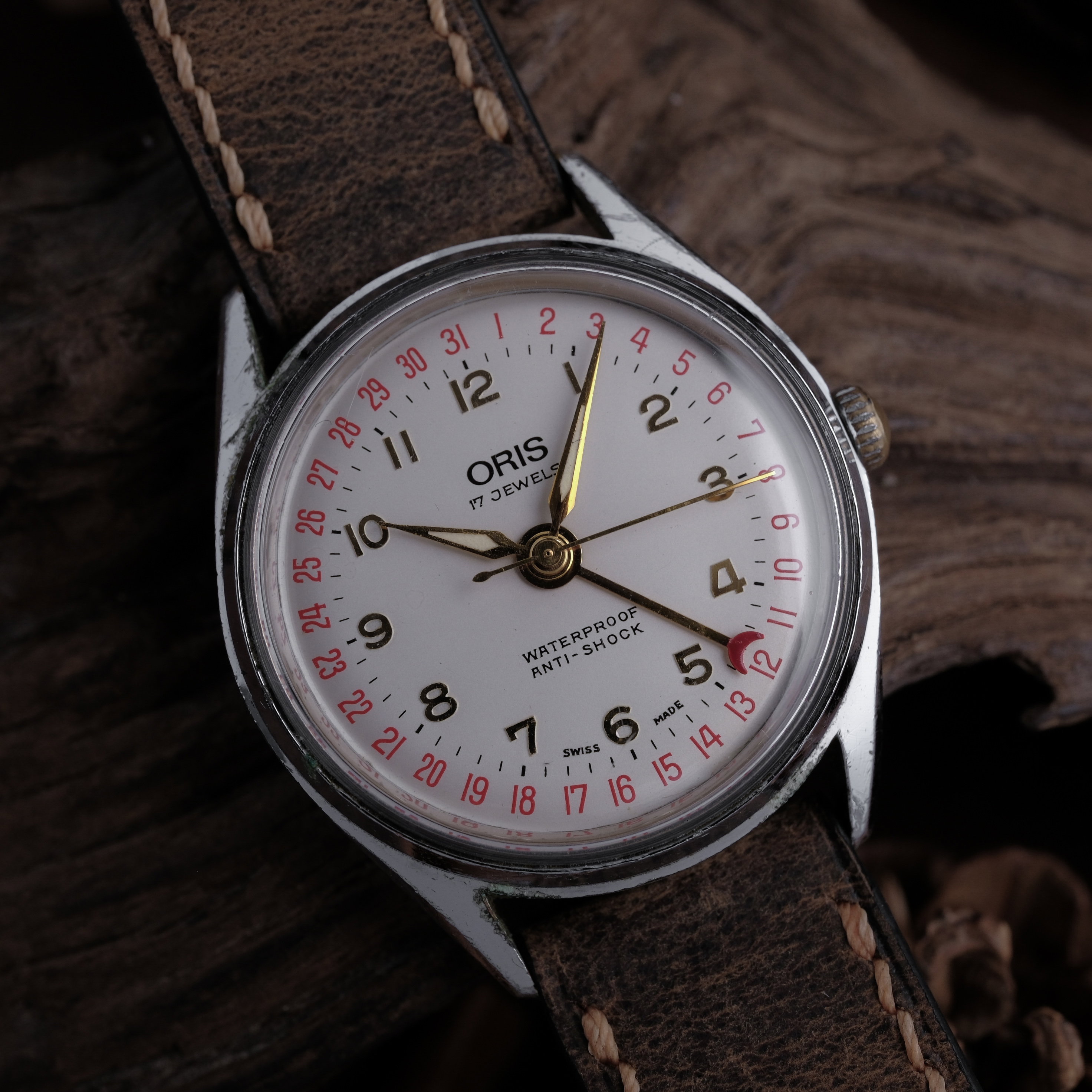
We auction more than 100 vintage watches a week.
Get first access: new Oris watch drops and alerts before auctions end.
The Oris Pointer Date puts the calendar on an outer track and indicates it with a central crescent-tipped hand. That layout gives the watch its identity, but it also makes replaced hands, redials and mismatched parts unusually visible.
The model spans distinctly different forms in the watches handled: 1960s manual-wind pieces at 32 or 34 mm, and 1990s automatic pieces at 34 mm. The earlier watches use restrained silvered or white dials, while later examples add guilloche centres, blue date tracks and exhibition casebacks.
Handled production periods
1960s and 1990s
Handled case sizes
32 mm and 34 mm, excluding crown
Manual-wind calibers
302 and 705
Automatic caliber
574
| Handled case materials | Chrome-plated, base metal, stainless steel and gold-tone |
| Calendar display | Central crescent-tipped pointer hand with outer date track |
| Later caseback | Exhibition caseback on handled caliber 574 examples |
The model landscape
The earlier choice is between the 32 mm chrome-plated 7285B with caliber 302 and the 34 mm base-metal 7295 with caliber 705. The smaller watch wears as a period dress watch; the larger case gives the Arabic numerals and outer date scale more room. Both are manual wind, and both depend heavily on dial preservation because the calendar printing dominates the face.
The 1990s 7403-40B changes the proposition: a 34 mm stainless-steel case, automatic caliber 574, guilloche dial and exhibition back. The 7403 also uses caliber 574 but has a gold-tone case. Between those two later versions, stainless steel is the safer buy because worn plating cannot be returned by routine service.
Where the value sits
A refinished dial costs more than every minor case mark combined. On the early watches, the silvered or white surface must agree with the applied gold-tone furniture and printed outer date track. On the later caliber 574 pieces, the guilloche centre and blue date scale should remain distinct rather than being flattened beneath new paint.
Case material creates the next spread. Chrome plating on the 7285B and the base-metal construction of the 7295 can wear through at the lug tips and case edges, while the stainless-steel 7403-40B avoids that permanent fault. A correct crescent date hand matters across every version, since an ordinary replacement removes the model's defining display.
What goes wrong
Plating loss is the first fault to price, especially around lug tips and case edges. Over-polishing can then soften lug profiles, while a replacement crown may no longer suit the case. None of these faults is corrected by movement service, and replating changes the case surface rather than preserving it.
Dial damage includes spotting, staining and refinishing. A service dial is a genuine factory replacement and must not be described as original to the watch; a redial is different again. The movement and case must also belong together, since combining correct Oris parts from different watches creates a married or franken example. Service history is unknown without supporting documentation.
What to check before you buy
- Dial and date display: The outer date track must remain cleanly separated from the hour furniture, and the central date hand must end in the characteristic crescent tip. Fresh printing over a worn dial surface indicates a redial.
- Movement and reference pairing: The handled 7285B uses manual-wind caliber 302, the 7295 uses caliber 705, and the 7403 and 7403-40B use automatic caliber 574. A different pairing needs evidence rather than assumption.
- Case construction: The 7285B is chrome-plated, the 7295 combines base metal with a stainless-steel back, and the 7403-40B is stainless steel. Exposed base metal at edges confirms plating wear, not patina.
- Later dial finish: On handled 7403 and 7403-40B examples, the silver dial has a central guilloche texture and a blue outer date track. Flat repainting or blurred texture is evidence against an untouched dial.
Recent Oris results
13 Oris watches auctioned
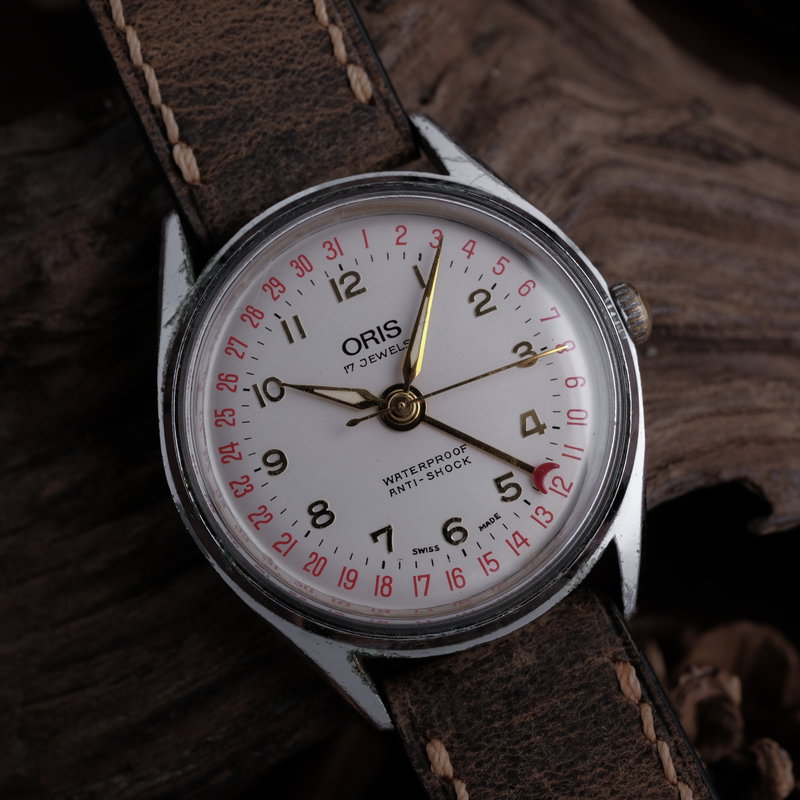
Oris · Pointer Date · 7295 · 1965
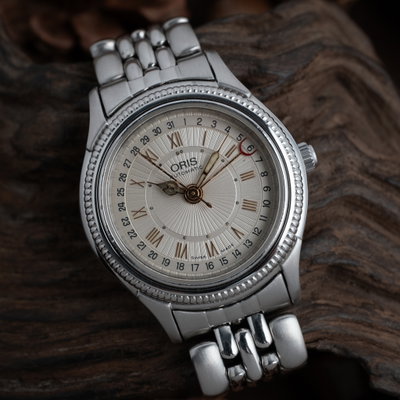
Oris · Pointer Date · 7466
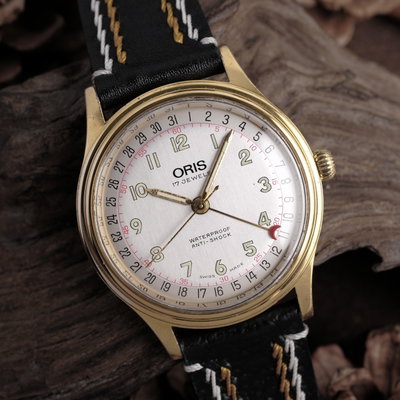
Oris · Pointer Date · 7376
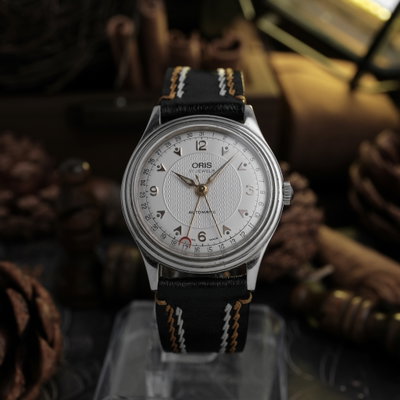
Oris · Pointer Date · 7403-40B
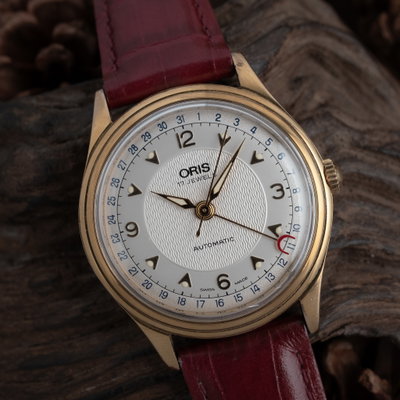
Oris · Pointer Date · 7403
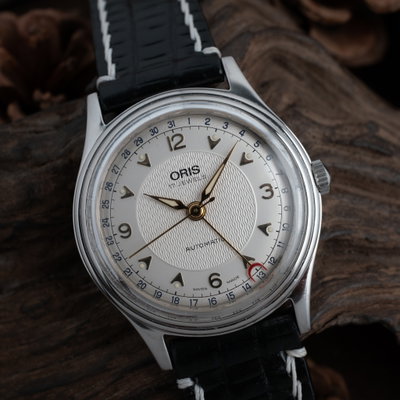
Oris · Pointer Date · 7403-40B
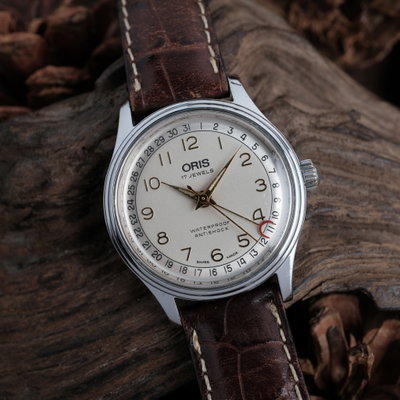
Oris · Pointer Date · 7285B
Related pages
Frequently asked questions
Ready to hunt for your own?
More than 100 vintage watches go under the hammer every week.