Vintage Citizen Alarm: What to Buy and What to Avoid
The vintage Citizen Alarm to buy pairs an honest silver dial with a sound manual-winding alarm movement, preferably in steel rather than worn plating.
We auction more than 100 vintage watches a week.
Get first access: new Citizen watch drops and alerts before auctions end.
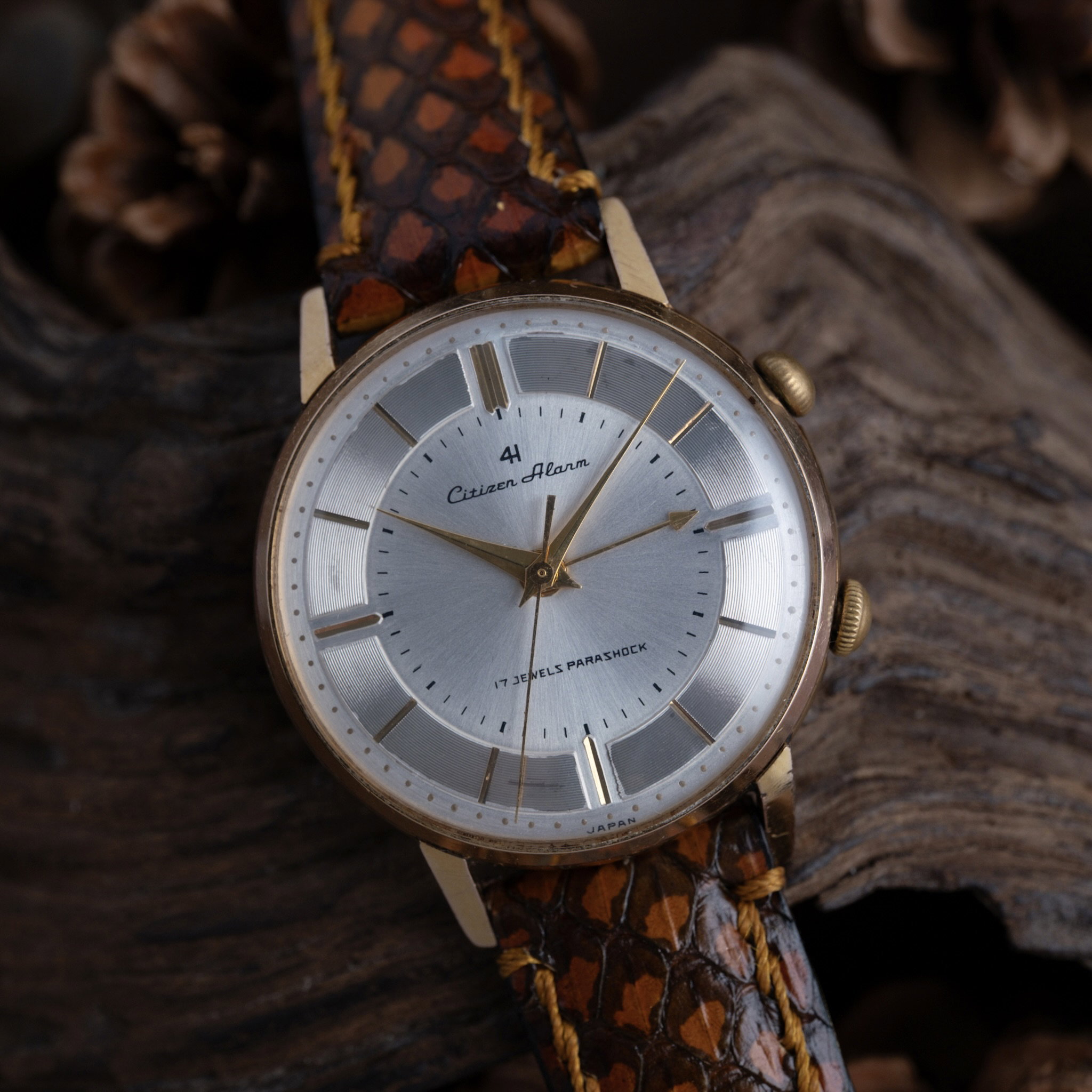
Browse 4 live Citizen auctionsThe Citizen Alarm turns a mid-century dress watch into a mechanical reminder, using a manual-winding alarm movement, two crowns and a rotating inner alarm disc. Examples handled from 1961 through 1967 show the model in both stainless steel and gold-plated cases, with silver dials carrying much of its visual identity.
The steel 36 mm version is the safer used Citizen Alarm to own. It avoids irreversible plating loss, while the 35 mm gold-plated version offers a dressier profile but demands closer scrutiny around the lugs and crown openings. In either case, the dial matters more than cosmetic case wear, and a properly operating alarm matters more than a polished shine.
Known production span
1961-1967
Case sizes handled
35 mm and 36 mm, excluding crown
Movement type
Manual-winding mechanical alarm
Jewel count
17 jewels
| Case materials handled | Stainless steel and gold plate with stainless-steel back |
| Gold plating specification | 20 microns on reference 15710 |
| Dial layouts handled | Silver sunburst, two-tone and dual-texture with concentric detailing |
| Defining controls | Dual crowns with rotating inner alarm disc |
What it was built for
The Citizen Alarm was built to place an audible reminder on the wrist before electronic alerts became ordinary. Its separate crown and rotating inner alarm disc let the wearer set the warning mechanically, while the 17-jewel manual-winding movement powers both timekeeping and the alarm function.
That complication changes ownership. The watch needs deliberate winding and setting, and the alarm should release cleanly rather than merely produce a faint vibration. Service history is often unknown, so a running watch is not automatically a healthy alarm watch - the winding, setting and strike functions all need to operate without slipping or binding.
The model landscape
The clearest choice is between steel and gold plate. A 36 mm stainless-steel case gives the Citizen Alarm a little more wrist presence and removes the risk of base metal showing through. Gold-plated examples can be 35 mm, including the 20-micron 15710 with a stainless-steel back, and wear smaller and more formally.
Dial treatments range from silver sunburst centres with grooved outer tracks to two-tone and dual-texture layouts with concentric patterning. Applied faceted indices give the dial structure, but the rotating alarm disc is the defining element. Between a clean steel example and a brighter plated watch with wear-through, take the steel watch unless the plated example has the clearly better dial.
What goes wrong
Plating loss is the first fault to price into a gold-plated Citizen Alarm. It begins at exposed edges, especially the lugs and crown openings, and no normal service replaces missing plate. Case polishing creates a different problem by softening lug geometry, while mismatched replacement crowns can compromise both appearance and operation.
The alarm mechanism adds faults that a standard manual-wind watch does not have. A worn or poorly serviced example may wind, yet fail to set securely or strike with useful force. The rotating inner disc must move through its setting range without dragging against the hands or dial furniture.
The dial carries the largest premium. A redial can erase the original sunburst, concentric grooves or two-tone separation, and incorrect hands or an unrelated movement can make the watch franken rather than merely serviced. A genuine service part is not the same as a redial, but without documentation its installation date is unknown.
What to check before you buy
- Dial print and texture: The silver dial should retain its stated sunburst, two-tone or concentric texture without paint pooling over the grooves. Flat colour, blurred printing or texture buried beneath lacquer points toward a redial.
- Hands and alarm disc: The hands must clear the applied indices and rotating inner alarm disc throughout a full setting cycle. Contact, scraping or an alarm marker that cannot align cleanly indicates incorrect parts or poor assembly.
- Case and crowns: Steel cases should retain defined lug edges, while gold-plated cases must be checked for wear-through at the lugs and crown openings. The two crowns should fit coherently and operate their separate functions without slipping.
- Caseback and material: Gold-plated examples in the handled group use a stainless-steel back, so the material transition should be deliberate and clean. Distorted edges or heavy polishing can obscure case definition and suggest repeated opening.
- Movement operation: The 17-jewel manual-winding alarm movement must wind, set, run and trigger the alarm. A running seconds hand proves only timekeeping; failure to release or a slipping alarm control remains a material mechanical fault.
- Redial and franken tells: Applied indices, dial texture, hands and alarm disc should form a coherent period-correct assembly. A genuine service component differs from repainted dial work, while unrelated major parts make the watch franken rather than simply serviced.
Recent Citizen results
10 Citizen watches auctioned
Related pages
Frequently asked questions
Ready to hunt for your own?
More than 100 vintage watches go under the hammer every week.